
 •
Rating:
•
Rating:
THE REVIEW
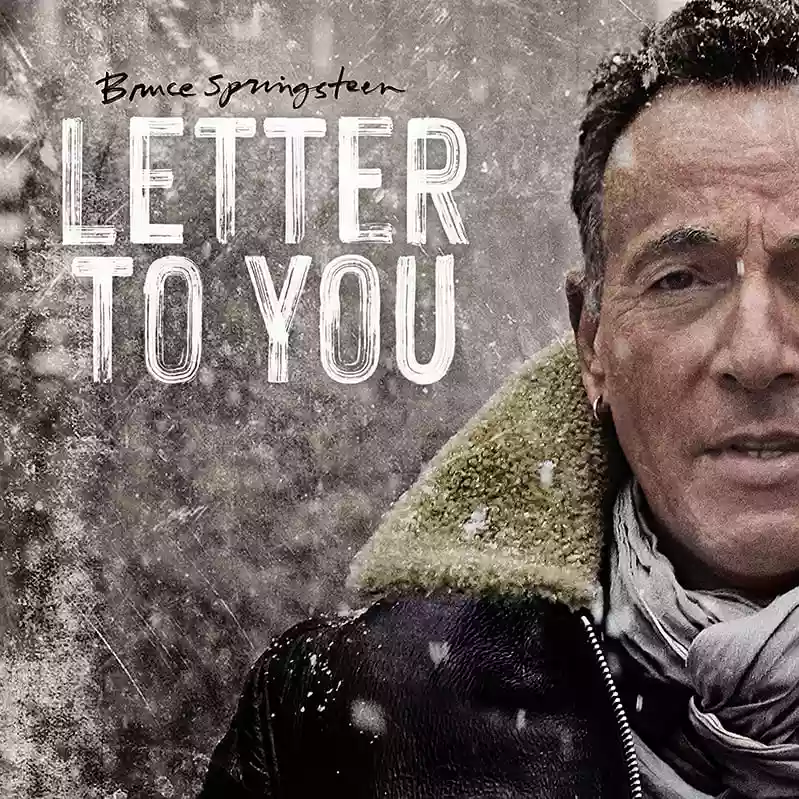
“Well sons they search for fathers, but the fathers are all gone” - The sons search for fathers, but the fathers are no longer there – thus expresses Bruce in the old, indeed very old, Song for orphans, almost at the turn of the end of the album, the penultimate track.
I believe that here lies the spark that ignited the inspiration for this beautiful work, just over a year after an album as beautiful as it was courageous, as was Western Stars.
I was talking about Song for orphans, a piece written in the early '70s, probably 1972, it was part of that treasure trove of songs written before the contract with Columbia, when Springsteen was with Laurel Canyon and was dividing his time between rock and acoustic music; this was at the time an acoustic piece, far from Dylan's folk-blues, probably from this draft was born, during the Columbia period, Mary Queen Of Arkansas, which ended up in Bruce’s first work, Greetings from Asbury Park (1973).
The sense of bewilderment that young singer-songwriter felt 49 years ago is the same that still inhabits his spiritual and artistic strings, pervading this new Letter to you.
Here the song abandons its acoustic nature and becomes a wonderful rock ballad, suspended between the best Dylan of the mid-60s and Springsteen’s Darkness On The Edge of Town period, reminiscent of that splendid The promise which didn’t even end up on that masterpiece album.
If someone wanted the musical features of this album and the Springsteen & E Street Band trademark, they find them in this track, as in the equally old If I was the priest, born as a piano piece (the early live versions from 1971 are beautiful), which in 2020 becomes an irresistible rock ballad, all guitar-bass-piano-harmonica, with extraordinary vocal harmonies by Steven Van Zandt and Patti Scialfa.
The sense of bewilderment in this work is largely dominated by the specter of death or more generally the fragility of the human condition, “One minute you're here, Next minute you're gone”- "One minute you're here, the next minute you're gone " – as he says in the touching opening track, One minute you're here, an acoustic jewel, musically sparse (guitar and touches of piano/keyboard) with a voice at extremely high levels of depth and expressiveness, confirming that when Springsteen moves into the acoustic territory, he displays all his artistic uniqueness (and superiority).
This is perhaps the most submissive piece of the new album, elsewhere Springsteen grabs the transience of human life by the neck and strikes it with rock, powerful, direct, and extraordinarily cathartic: behold, Burnin' Train, a fast rock n' roll shot on dark tracks by a sprightly E Street Band, with Max Weinberg dominating with his classic snare drum; Ghost, with its march-like rhythm, a bit tribal, where the guitar plays with the bass, reminded me of the rhythm of Born to run (who would have thought in 2020!); House Of A Thousand Guitars, slower than the previous ones, but equally tense, with a sound less muscular and more nostalgic, “Well it’s all right, yeah it’s all right”- it’s all okay, it’s all okay- says Bruce as long as there will be one (or a thousand) guitars playing in a stadium, in a small bar or simply in a room at home (how can we not think of the hated lockdown in the era of Coronavirus); Letter to you, a rock ride punctuated by the "low" notes of Springsteen's old Fender, battered as we see in the beautiful inner photos of the booklet, as battered is his soul in the letter written with ink and blood to the people who have followed his works and his life for half a century.
The album closes with I'll See You In My Dreams, an emotional country-rock piece that reminded me of This hard land: quoting Dylan, in an extraordinary, although underrated, piece from Down in the groove (1988), “For death is not the end”- Because death is not the end- as long as there is a band, an old guitar, always that Fender there, to support the dream of a better life.
Loading comments slowly
Summary by Bot
Bruce Springsteen’s 'Letter to You' is a powerful rock album that revisits old songs with renewed energy, blending acoustic and rock elements. The album deeply explores themes of mortality, human fragility, and artistic legacy. Standout tracks like 'Song for Orphans' and 'If I Was the Priest' showcase Springsteen’s unmistakable voice and connection to his past work. With evocative performances from the E Street Band, the album is both a tribute and a cathartic expression of life’s fleeting nature.Tracklist
01 One Minute You're Here (00:00)
02 Ghosts (00:00)
03 Song For Orphans (00:00)
04 I'll See You In My Dreams (00:00)
05 Letter To You (00:00)
06 Burnin' Train (00:00)
07 Janey Needs A Shooter (00:00)
08 Last Man Standing (00:00)
09 The Power Of Prayer (00:00)
10 House Of A Thousand Guitars (00:00)
11 Rainmaker (00:00)
12 If I Was The Priest (00:00)
Bruce Springsteen
Bruce Springsteen (born 1949 in Freehold, New Jersey) is an American singer-songwriter and bandleader best known for his work with the E Street Band. His career spans from the 1960s/1970s to the present, with landmark albums such as Born to Run, Darkness on the Edge of Town, Nebraska and Born in the U.S.A.90 Reviews
Other reviews
By DavidWillpower
Bruce simply does what every artist should do, which is bring out everything good inside, putting in the soul and heart, without fear of expressing oneself.
'Ghosts' is an anthem to rebel against death through death itself, filled with a sense of liberation and revenge.
By carmineman
A grand return, an album full of strength and quality.
10 thrilling and beautiful pieces.
By Effekappa
It’s the return of the Bruce that a rock lover like myself desired, certainly much more in the classic Springsteen style compared to Western Stars.
Death is not the end, we see each other again in dreams: when people dear to us die, the memory inevitably becomes eternal.
