
 •
Rating:
•
Rating:
THE REVIEW
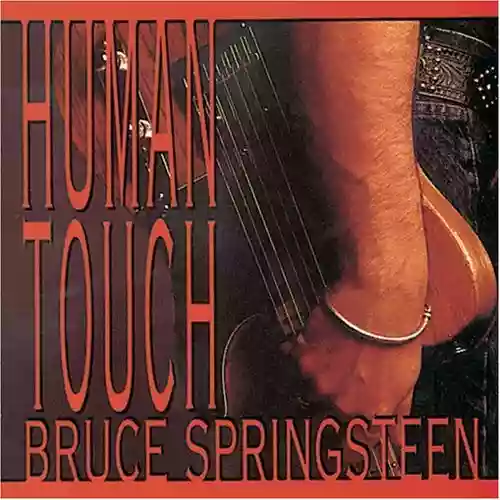
Can a war machine like the E Street Band, which set stages on fire first in America and then around the world, be set aside to be replaced by another four unfortunate souls who will have no place in rock history? If your name is Bruce Springsteen, it's possible. And as we often know, geniuses are self-destructive, and this time the choice to change the band is not due to personal commitments of each member and not even a collective choice, but only that of the leader. Year of (mis)fortune 1992; Bruce Springsteen returns to the limelight with new unreleased material five years after "Tunnel of Love." And he does it simultaneously with "Lucky Town," which, along with this "Human Touch," sees the light on March 31, 1992. The only survivor of the E Street Band is the pianist Roy Bittan. This album, contrary to the other, shows a more "populist" vein, and the markedly radio-friendly sound of the work seems to denature notable compositions such as "I Wish I Were Blind," "57 Channels (And Nothin' On)" and "Soul Driver". The album quickly enters the charts in second place and just as quickly exits them, causing a significant decline in sales (down 66% compared to the mid-1980s), especially in the United States, where Springsteen's name begins to no longer enjoy the same popularity as the previous decade. The fact of having found family stability, following his marriage to Patti Scialfa in 1991, has ambivalent effects on the new compositions because, on the one hand, the current sentimental situation and the veiled skepticism toward the past allow Springsteen to bare himself and develop a personal quest, but on the other hand, that same sensitivity makes him lose the emotional tension and energy typical of his previous works, with the result that the new ones seem to lack adequate intensity.
The lyrics, as usual, are always well written but add absolutely nothing relevant to the Boss's career; even the best episodes are not highlighted to their fullest potential due to not entirely adequate arrangements. Thus, we move from rocking episodes specifically thought for the stage like "All Or Nothing At All", a song which lyrically is just filler, or "The Long Goodbye", where the new Springsteen bids farewell to the old one. The title track remains the most inspired track of the album, and the absence of the E Street Band is not necessarily felt. "Soul Driver" and "57 Channels (And Nothin' On)" would have worked marvelously in an acoustic album, much like the beautiful "With Every Wish". "Cross My Heart" and "Gloria's Eyes" flow without particular jolts. Here we also find the only two Springsteen songs whose music was co-written with pianist Roy Bittan: "Roll Of The Dice" and "Real World". The former finally brings back a smile thanks to its lively music and prominent piano, while the latter is sacrificed by an overly pompous arrangement. "Man's Job" is pleasant but nothing more. The album concludes with the two most hated songs in Springsteen's repertoire: "Real Man", which personally amuses me, perhaps for that prominent synthesizer or the strong vocal interpretation, which in recent renditions has gradually diminished. And then the last "Pony Boy", a traditional lullaby dedicated to his newborn son. What effect does it have to hear Springsteen sing a lullaby? Ask any fan and judge by their expression.
I remember that this album, when I discovered it, I liked it, but I hadn't yet come to terms with "The River," "Darkness on the Edge of Town," and "Born to Run." So, the impression is that if you don't know the Boss, you might even appreciate this album. If nothing else, you'll find it an honest album. If you love him, however, you'll wrinkle your nose. Yet judging by the outtakes from that period, such as "Seven Angels," "Leavin' Train," "Waitin' On The End Of The World", and "30 Days Out", there were all the cards in place to make a great album. But maybe it's just the charm of the "outtake." I wonder if Springsteen himself believed in this change of course since, in the concerts, the instrument that was prominently featured was Roy Bittan's piano. And inevitably, empty seats began to appear in the audience. Fortunately, this is the past. In the last ten years, Bruce and the E Street Band have given us more unforgettable moments.
Until next time...
Loading comments slowly
Summary by Bot
Human Touch is Bruce Springsteen’s 1992 album released alongside Lucky Town, featuring a new lineup with only Roy Bittan from the E Street Band. The album's poppier, radio-friendly production diluted some strong songwriting, resulting in mixed reviews and lower sales. While some tracks show promise, overall, the album lacks the emotional intensity typical of Springsteen's best work. Fans were divided, and the album is seen as an honest but flawed effort in his discography.Tracklist Lyrics Videos
Bruce Springsteen
Bruce Springsteen (born 1949 in Freehold, New Jersey) is an American singer-songwriter and bandleader best known for his work with the E Street Band. His career spans from the 1960s/1970s to the present, with landmark albums such as Born to Run, Darkness on the Edge of Town, Nebraska and Born in the U.S.A.90 Reviews
Other reviews
By Night87
If the album ended here, you could save 60% of it, let’s say.
Another artist in a period of creative crisis would have done worse, and surely from this point, Bruce’s revival began.
By fyguns
The work alternates snappy tracks with slower ones, and in my opinion, it is with the latter that Bruce keeps the entire album afloat.
Human Touch -save 2 or 3 songs- is an album a bit deflated and in many parts quite unoriginal.
