
 •
Rating:
•
Rating:
THE REVIEW
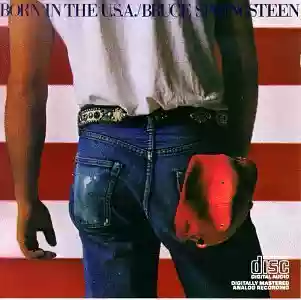
How can one classify BORN IN THE U.S.A.? How to define the album that made Springsteen a global rock icon, reaching vast audiences (while at the same time perplexing many old fans)?
Undoubtedly BORN IN THE U.S.A. represents both the bane & boon of every self-respecting Springsteen enthusiast: often criticized for being too "easy," catchy, trendy; many times (excessively) idolized as an absolute rock gem.
To provide a judgment on BORN IN THE U.S.A., as with any other album, one cannot overlook its "contextualization": we are in the midst of the '80s, Springsteen has just released an "airy" work like THE RIVER (1980) and a reflective one like NEBRASKA (1982); his creative level (which has always been high) is at its peak, demonstrated by the large number of tracks Bruce records during this period (many of these, after circulating for years in bootleg circuits, we'll find in TRACKS and THE ESSENTIAL). Certainly, the style of the album appears carefree, positive, lavish; but this often contrasts with the thoughtfulness of the lyrics of many tracks like the title-track, "Glory Days," "My Hometown," and others.
The album is masterfully produced, the sound is sumptuous, the E-Street Band runs perfectly, and Bruce is in dazzling form. The title track, one of the most famous tracks in rock music history and certainly the one that most represents Springsteen, needs few comments: "Born In The U.S.A." is something you either love or hate (or love AND THEN hate?). "Cover Me" starts and continues with a guitar riff repeated endlessly, but the result is good (and even better live); the carefree "Darlington County" and "Working On The Highway" engage you with their relentless rhythm and prepare the ground for the slower "Downbound Train": perhaps a less prominent track compared to others more celebrated, I consider it one of the best on the album both for the lyrics and the arrangement. The excellent yet brief "I'm On Fire" introduces us to another gem of the album: "No Surrender" explodes with all the force of its choirs, guitars, and Weinberg's incessant work behind the drums. "Bobby Jean" features a strong presence of the synthesizer and Bruce's intense singing, "I'm Goin' Down" is another engaging track but comes across as a bit repetitive, and I consider it the least successful episode of BORN IN THE U.S.A. One cannot resist the initial riff of "Glory Days," nor its chorus; it is followed by the famous "Dancing In The Dark," a pop track that -despite everything- I find irresistible. "Dancing In The Dark" was not supposed to appear on the album, composed and included at the last moment, it provided the decisive contribution for the album's final consecration. After two exhilarating pieces, the vigor subsides to make way for the beautiful and reflective "My Hometown," which closes the album beautifully.
In conclusion, I consider BORN IN THE U.S.A. beautiful but not essential as some would have you believe, it was very successful, but I certainly don't place it at the top of the Boss's discography, in which there are other works perhaps less "trumpeted," but certainly more intense and mature than this one.
Loading comments slowly
Summary by Bot
Born In The U.S.A. is a milestone album that propelled Bruce Springsteen to global fame with its catchy rock sound that contrasts thoughtful lyrics. The review highlights the album's polished production, standout tracks like the title song and Dancing In The Dark, while noting it is not Springsteen's most essential work. The mix of accessible melodies and depth makes it both beloved and critiqued among fans.Tracklist Lyrics Videos
Bruce Springsteen
Bruce Springsteen (born 1949 in Freehold, New Jersey) is an American singer-songwriter and bandleader best known for his work with the E Street Band. His career spans from the 1960s/1970s to the present, with landmark albums such as Born to Run, Darkness on the Edge of Town, Nebraska and Born in the U.S.A.90 Reviews
Other reviews
By Massimof
"The first song, 'Born in the USA' left me breathless. A full and unstoppable torrent."
"At 'My Hometown' I got emotional and cried. And crying at that age is hard."
By VU
You can't even remotely compare 'Born In The U.S.A.' to Bruce's past masterpieces like 'The River' or 'Born To Run,' but this still remains Springsteen's last great album.
The entire CD suffers from this inconsistency between great songs ('Bobby Jean') and others truly unlistenable due to their excessive 'commerciality' ('I'm Going Down').
By Franz il biondo
Born In The USA is a hundred-mile-an-hour journey through the Southern United States.
Born In The USA is above all a painting, a snapshot of 80s America, always racing and searching for answers.
