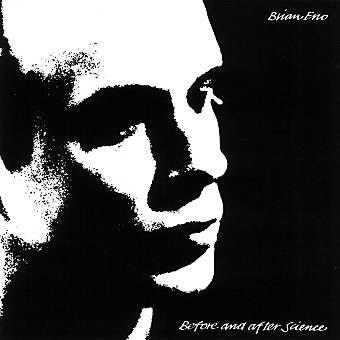

 •
Rating:
•
Rating:
THE REVIEW
"Here we are, stop by this river. You and I, underneath the sky that's ever falling down, down, down... Ever falling down."
"Elsewhere" is a state of mind. A blank page. The continuous road line I have in front of my windshield. It has no ideas or declensions; it follows the perpetual and regular motion of an imaginary destination. These roads and places daily flee from innocent secrets, hide the lives of men in squared houses scattered among fields of orchids and red tulips, in a tiny and shabby bar with peeling walls, or in the off-road vehicle of the civil guard parked by the edges of the trees, guardians of the forest. Dreaming is sometimes a tortuous path, a Rubik's cube behind subtle sensations and hermetic seasons. My hands are fixed on the steering wheel, and the speedometer needle is steady at the average of seventy forbidden by the sign on the straight road. "Elsewhere" I could lose myself in vague and abstract thoughts while the green countryside flows by the windows. In a long, endless pacifying silence where individualism returns as the protagonist, and the main road leads to the sacred river, guardian of angels and demons. The asphalt now disappears into rushing waters, the sky is the sovereign mirror of the earth, and the earth the absolute reflection of the skies.
I look for an old Sony cassette in the glove compartment and find it. Side A "Before And After Science", Side B "Q: Are We Not Men?, A: We Are Devo!" A child smiles and waves at me from the swing of a small lawn; I steer right before stopping at the intersection. No One Receiving. I release the clutch and slowly accelerate. The percussion carpet of Phil Collins plays relentlessly and familiarly, a precursor of ethno/world scents and white-funk contaminations; an unprecedented chimera in '77. The voice of the demigod Eno declaims in a narcotic mantra, supported by the bass lines of Brian Turrington. Backwater is a pop/rock nursery rhyme with new-wave embroidery, with quick yet effective melodic synth incursions, and Kurt's Rejoinder a brief atmospheric syncopation. I observe, with passive detachment, a dog with a sad look and gray patches, walking tiredly along the ditch. Meanwhile, I bob my head back and forth to the pressing and danceable notes, among piano dissonances, epileptic electronics, and neurotic guitars, of the cerebral King's Lead Hat (an anagram of Talking Heads, of which Brian Eno was a historical producer and almost a fifth member for three albums, up to the epochal Remain In Light). Here He Comes is an immortal gem, demonstrating the immense intellectual class of the former Roxy Music in an often underrated pop context: a light and refined melody, simple and so perfect that it seems to have a new beginning every time, like cyclical smoke circles in the air. Julie With... lives on impalpable and rarefied pauses, on the deafening memory turned into a silent shroud of misty keyboards. Spatial and temporal suspensions bearing the unmistakable hallmark of the artisan/manipulator Eno, a subliminal and ethereal ambient-pop. If human thought had a sound to represent it, perhaps it would be this.
Through Hollow Hills is a wonderful instrumental dedicated to Harold Budd, clouds of dreamy electronics over metaphysical landscapes dear to Salvador Dalí. Approaching a huge gate, I decide to turn back and engage reverse for a quick U-turn. I savor again the infinite backdrop of the fields I left, the smell of fertile nature in spring, the farmer herding a disobedient flock. By This River probably does not belong to this world, at least not to the world of ostentatious and blind superficiality of these years. By This River is a prayer gathered in the depths of the soul, the zen calm in universal chaos, a masterpiece of melancholic piano notes and soft keyboards embraced by the minimal singing of Eno. The memorable inner journey of the "before and after science" ends with the moved finale of the elegiac Spider And I, which erases torment and doubt in a cosmic peace of senses, dominated by an eternal and solemn synth.
Someone said that time is the memory of man, dust in the hourglass of our existences. Before And After Science by Brian Eno then transcends discussions, fashions, eras, and governments. A work of extreme and lucid popular synthesis, it crumbles what has been to open the doors to a new era, "beyond science" and damnably influential on our present. Incredible to say for an album released in 1977, made by what remains the greatest producer in history with contributions from Robert Fripp, Phil Manzanera, Collins, and Cluster: the alchemist Brian Eno does not smooth corners or edges, his extraordinary touch is almost invisible during recording, making his works "natural" and austere in their strict formal rigor.
So I head back home, caressing the thought of this quiet and absorbed Sunday afternoon, and turn left at the stop near the intersection. That subdued-paced dog, glimpsed a while ago, sits in the shade of the big golden hayfield. It doesn't look at me; its eyes are distant, seeking shelter from loneliness. The blond child is still on the lawn playing, hears the car noise and gives a shy wave. He smiles at me, serenely. I see him and wave back. Even though I haven't opened my mouth, I would have liked to shout at him with all my lungs just "hello."
Loading comments slowly
Summary by Bot
The review offers a poetic and emotional exploration of Brian Eno’s 1977 album 'Before And After Science'. Highlighting its ambient and art-pop elements, the reviewer praises its innovative sound, intellectual depth, and lasting influence. Each track is portrayed as part of a meditative journey that blends ethereal atmospheres with experimental rock and pop. The album is celebrated as timeless and highly influential.Tracklist Lyrics Videos
Brian Eno
Brian Eno is a British musician, composer and producer, widely recognized as a pioneer of ambient music and an influential collaborator and producer across rock and electronic music since the 1970s.43 Reviews
Other reviews
By trellheim
A journey. Physical and mental. A shift, almost a leap into the void, an unknown city and an unknown album.
Ten small sound paintings... a visual journey, as well as a mental one, that reveals a little of what truly lies before and after science.
By zaireeka
I like to think that the musician... consciously separated his album into two parts.
The end of childhood, which clearly coincides with... our clear awareness of not being immortal.
