
 •
Rating:
•
Rating:
THE REVIEW
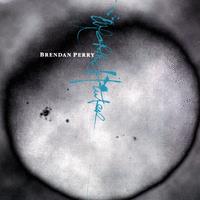
The first rumors about Brendan Perry's solo debut began circulating as early as the end of 1994, but “Eye Of The Hunter” only came to light five years later.
This long interval might have led one to think that the first work of the male half of the Dead Can Dance would be a particularly rich and elaborate album, as much as or more than the records created with his adventure companion Lisa Gerrard. Nothing could be further from the truth.
“Eye Of The Hunter” is an intimate, sparse, and surprisingly straightforward album considering the author's past works. The eight tracks on the album are dominated by acoustic guitars and see Perry in the guise of a dark-hued folk singer-songwriter; unsurprisingly, the beautiful cover of Tim Buckley’s “I Must Have Been Blind” blends perfectly with the rest of the songs. The percussion is reduced to a minimum (making a timid appearance only in “The Captive Heart”), with the elaborate orchestrations of the past almost entirely absent, making Perry’s wonderful voice the absolute protagonist, resonating deeper and richer than ever before.
The lyrics are as always polished and introspective and represent the only element of continuity with the past. The initial 1-2-3 of “Saturday’s Child,” “Voyage Of Bran,” and “Medusa” can compete with his best compositions in Dead Can Dance, with “Medusa” in particular undoubtedly one of his personal masterpieces, enhanced by the album's most intricate arrangement and with a bitter and spiteful lyric. “Sloth” and the previously mentioned “I Must Have Been Blind” are the “lighter” tracks of the album, which closes with the lengthy, dreamlike and immensely evocative “Archangel,” where Perry’s voice switches between a reverb-laden falsetto and the dark crooner tones that made him famous.
“Eye Of The Hunter” is not a masterpiece, but I personally believe it is the best solo work produced by the two halves of Dead Can Dance after their breakup, if only because musically it has the courage to detach from what was produced in the past and to seek different paths, whereas Gerrard (as excellent as she is) has essentially continued to move along the same tracks traversed during her collaboration with Brendan Perry.
A dark and introspective work, surely not to be listened to every day, but still of great value, allowing one to see Perry in a different light than the one that made him famous, certainly of interest to Dead Can Dance fans.
Loading comments slowly
Summary by Bot
Brendan Perry's 'Eye Of The Hunter' is a sparse, intimate folk album that diverges from his work with Dead Can Dance. Featuring mostly acoustic guitars, minimal percussion, and introspective lyrics, it highlights Perry's deep and rich voice. The album stands out for its simplicity and emotional depth, with notable tracks like 'Medusa' and a Tim Buckley cover. Praised as the best solo work by either half of Dead Can Dance, it offers a fresh artistic perspective.Tracklist Lyrics Videos
Brendan Perry
Brendan Perry is an English singer and multi-instrumentalist, co-founder of Dead Can Dance with Lisa Gerrard. Active since 1981, he is renowned for his baritone voice and atmospheric, folk-tinged compositions. His solo albums include Eye of the Hunter (1999), Ark (2010), and Songs Of Disenchantment – Music From The Greek Underground (2020).02 Reviews
