
 •
Rating:
•
Rating:
THE REVIEW
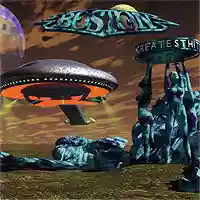
The undertaking of this still-unreviewed 1997 Greatest Hits is a good excuse for a more general discussion about the celebrated American melodic hard rock band it honors, which is still active despite their sparse discographic production at counterproductive levels (six albums in thirty-eight years!), and unfortunately, their increasingly convoluted inspiration, so much so that the last episodes of some quality date back almost twenty years, namely to their fourth album "Walk On".
The Italian perception of the Boston's musical genre, that is AOR—meaning with this acronym that kind of rock that's tough yet very melodic, almost completely made in the USA, possibly brimming with pompous keyboards and lush choruses in the refrains, interspersed with ballads mostly of clear aphrodisiac intent, not unleashing the solo instruments toward full jam sessions and improvisations, but instead constraining them to brief and incisive interventions so as not to bore the predominantly superficial and "pop" audience with too many prolixities... well, the perception of this genre in our parts has always been cold, instinctively idiosyncratic.
We are Europeans, and evidently, when America forcefully transmits its native musical intuitions to us (in the eighties, AOR definitely ruled on the other side of the Atlantic... even mediocre-talented bands managed to sell millions of records), we do not get enthused. It's quite a different story compared to when the American market served as a sounding board for excellence from Great Britain (Beatles, Zeppelin, Pink Floyd, Queen, AC-DC, and so on): the USA fell in love with them with generous foreign love, and promptly all of Europe followed suit, putting them in turn on a pedestal.
With Boston (and with Journey, Foreigner, Toto, etc., to name the tip of the AOR iceberg, more or less), the average Italian rock fan has always turned up their nose and brushed the matter off with at least disinterest, if not outright condemnation. Personally, having verified that even in this musical genre, exactly as in all others, there are the champions, the good ones, the mediocre ones, and the unbearable ones, I still maintain eternal gratitude and respect for its excellences, among which certainly rank the first two albums by Boston, namely the eponymous debut of 1976 and the follow-up "Don't Look Back" of 1978, works that are not by chance dominating this collection, accounting for nine of the fifteen tracks in total.
The first album by Boston represents, in many respects, the authentic and complete first example of AOR, a genre considered quintessentially eighties, so much so that its first work, in the most common and generic opinion, is that "Escape" seventh album by Journey dated 1981. Everything was there already in that explosive 1976 debut, amazingly born in a basement in Boston, that of Tom Scholz's home where the guitarist, organist, and composer spent much of his free time after returning from his daily job as an engineer at Polaroid. From it are extracted for this collection the indispensable "More Than A Feeling", the rather known and valued "Piece Of Mind", the splendid "Long Time" preceded by the instrumental "Foreplay" (and with these three tracks, we are looking at the re-proposal of the entire first side of that LP) and then the two rock 'n' roll tracks "Smokin'" and "Rock'n'roll Band". For my personal tastes, I agree with 80%, meaning that I would have overlooked the inclusion of "Peace Of Mind" to make room instead for the spectacular "Hitch A Ride", one of my absolute favorites, featuring magical arpeggio work on the 12-string and then an exciting crossover solo between Tom Scholz's two solos and Barry Goudreau's.
Regarding the second and equally excellent work "Don't Look Back", the extracts are four and include the eponymous song and then the incredible power ballad "A Man I'll Never Be" as well as "Feelin' Satisfied" and "Party". No complaints about the first two choices, two of the career's best, but I regret the absence of "It's Easy", a piece of incredible dynamics thanks to the play of the 12-string acoustics that hide behind the electrics' distortions and the rhythm hits to then suddenly and spectacularly come to the fore in syncopations. "Used To Bad News" is also, in my opinion, a superior episode to both those chosen on the second side, if only for the brief but striking solo of the Hammond organ by Scholz.
The third album, "Third Stage", is represented by the celestial ballad "Amanda", elected the second most famous track of the band after the absolute evergreen "More Than A Feeling", as well as by "Cool The Engines"... mmh, I prefer the concluding "Holyann", featuring a devastating solo of Scholz in addition to a fine arpeggio in the arrangement. The fourth album "Walk On" is finally (the last two, terrible albums came out after this one) dedicated to the only extract "Living For You", another excellent ballad, indeed the most remembered piece from that work.
The album is then enriched by three unreleased songs, one of which is proposed in two different productions: it's titled "Higher Power" and is a not-to-be-missed hard rock episode, with a particularly insistent and intrusive guitar stopping. Much better is the ballad "Tell Me" placed at the beginning, a decent soft number for the Argentine voice of the late Brad Delp, which, however, at that point in his career, had lost much of its shine. The last unreleased track is none other than the American anthem, the unmistakable "Star Spangled Banner", once also tackled by Jimi Hendrix, an anthem that some time before Boston was asked to perform at the opening of an American football game and ended up this way in their discography.
Boston has been a great band, for a long time now they have been worth nothing, and what little they have the courage to publish at decade intervals is truly unrecognizable and mediocre. This Greatest Hits relies mostly on the distant past of their career, and even with some reservations on the track choices, it must be considered a true guide on how to conceive, arrange, and perform a certain type of aesthetical rock through impeccable architectures, huge guitar sounds, beautiful voices, arrangements, and performances redone to the limit yet still able to compensate with other qualities for their undeniable lack of instinctiveness. It is rock played "with the head", with the impulsivity well tamed... but good music doesn't only come from anger or instinct, artistic passion can also effectively channel through the paths of reasoned research and perfection: Steely Dan, Pink Floyd, and many others, and Boston with them, teach that.
Loading comments slowly
Summary by Bot
This review of Boston's 1997 Greatest Hits album offers a thoughtful discussion about the band’s influential role in the AOR genre. It praises the first two albums as career highlights and critiques track selections while acknowledging the album as an essential guide to melodic hard rock. The review underlines Boston's technical precision and lasting musical impact despite their limited and uneven later output.Tracklist Lyrics
Boston
Boston is an American rock band formed in Boston, led by guitarist/engineer Tom Scholz. Their 1976 debut became one of the best‑selling rock debuts, powered by meticulously crafted guitars and Brad Delp’s soaring vocals. Signature songs include More Than a Feeling and Amanda.13 Reviews
