
 •
Rating:
•
Rating:
THE REVIEW
In 1975, Tom Scholz was still an engineer at Polaroid in Boston who, in his spare time, cultivated his major passions: basketball and especially music. When he's not working or shooting and dunking (he's 1.98 meters tall) on the basketball court, he retreats to his basement where he keeps mixers, a 12-track recorder, instruments, and a series of electronic devices he designed and assembled to modify sound as he wants.
Meticulous and obsessively perfectionist, he developed and refined a handful of songs beyond any human limit, delegating only the vocals to his friend Brad Delp. After years of bombarding every record label and producer in America with demos, he finally found in John Boylan of CBS the sponsor he was looking for. Boylan, ecstatic with the incredible sound quality of Tom's home recordings, did something unheard of: he took the demos to Los Angeles, had Delp re-record all the vocal parts, found a drummer to replicate Tom's exact rhythmic arrangements, strike for strike, hired a second guitarist and a bassist to complete the band, and, risking his reputation, "pretended" to produce the album, deceiving his bosses, who would have never tolerated a record produced by an unknown in his home on amateur equipment!
In the spring of 1976, the album "Boston" was released: 19,000,000 (19 million) copies sold, the best-selling debut record in history, the best-selling U.S. album of the '70s (fourth overall, preceded by "The Wall," "Led Zepp IV," and "Rumours"). Not bad for a "basement" product! A couple of years later, CBS was all nervous because the meticulous Scholz still hadn't delivered the tapes for the second album (he's now the official producer, of course). They almost snatch them from him as he continues to polish them (at his home, now everyone knows, and everyone is okay with it), unsatisfied with this or that. It's 1978, and "Don't Look Back" is released, which couldn't repeat the first album's performance: to date, almost 8 million copies sold (gulp!).
After another two years, those at CBS, always greedy, are eagerly waiting again, but this time nothing is ready. The fellow musicians on this adventure also get frustrated, wanting a normal career with albums + tours at a suitable pace, their leader doesn't care about success and money; he insists on perfecting his music, which to them amounts to "sabotaging" the band. Lawsuits and complaints fly, but Scholz wins them all, even against CBS! He is obviously left alone again, with Delp, without a band and without a contract, as years pass and the memory of Boston fades incredibly and inevitably.
Eight years after the second album, however, "Third Stage" is released under a new record label. This time 6 million copies sold, the opportunity is seized also thanks to the excellent single "Amanda," and Boston is back in the spotlight, with hopes for a more consistent presence in the market from Boston... good evening! Scholz surprises everyone by founding a company (the "Rockman") for the mass production of electronic gadgets he invented to manipulate sound and starts a business. Result: no new Boston records but a significant number of guitarists around the world (including Italy) enjoying the rich sounds crafted by Rockman preamps; for some time, every recording studio, every music store is adorned with machines conceived and produced by Tom Scholz. This phase too eventually ends, Tom sells the entire business to Dunlop, and in 1994, once again eight years after the previous one, he releases the fourth album "Walk On." However, this time, things are shaky; Brad Delp is not on vocals, questionable choices are made such as the use of electronic drums, a heresy for classic rock... sales are insufficient, and not just because the times have changed.
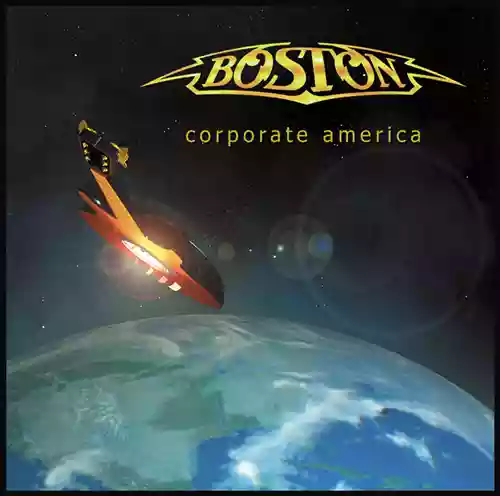
In 2004 (eight years later, can you believe it!), when no one is thinking about Boston anymore, this fifth album is released: huge disappointment! Scholz, already eccentric as I've tried to explain, this time appears to have lost his mind: eight whole years to put together nine insignificant tracks plus a self-cover from the previous album (???... and the previous version was better). And he, once the supreme and combative leader of his music, composes maybe half of it, adds a swarm of people so you no longer know who's singing or playing what: And then the legendary Brad Delp returns but without his voice! He sings (a little, two or three pieces) an octave and a half lower than he once did, where his magical timbre has no way to shine... And why are there four guitars? (Scholz, Gary Phil, Anthony Cosmo, the brother of the other singer Fran Cosmo (already the official singer in "Walk On") and some Kimberley Dahme... Oh! it must be this Kimberley's fault; Scholz must clearly be in second marriage with her. She plays acoustic guitar, bass, and sings, but with the monumental sound of Boston, it doesn't fit at all. Help!
Don't look for this album but go listen to, if you don't know or have listened to them inattentively, the first three by Boston. Their music isn't exactly what attracts the taste of the average Italian enthusiast: very American, a bit superficial... but there is a structural, "architectural" strength in their most successful tracks, real tenets of how to arrange rock, making an ordinary melody immortal... and then the bombastic electric guitars of Scholz, enormous, resonate; his remarkable Hammond flourishes (originally a keyboardist, he switched to guitar later in life), and Brad Delp's celestial voice, pure and melodic...
They (used to) always make the same song, but it was a great song! Who knows if Tom might reconsider for the next album (which will be released, calculating, in 2012... right, engineer Scholz?).
Loading comments slowly
Summary by Bot
The review traces Boston's rise from Tom Scholz's home recordings to massive 70s success. It highlights frustration and long delays between albums, culminating in the 2004 'Corporate America,' which disappoints due to diluted vocals, over-complexity, and uninspired tracks. Fans are urged to revisit Boston's first three albums for their timeless rock architecture and powerful melodies.Tracklist Lyrics Videos
Boston
Boston is an American rock band formed in Boston, led by guitarist/engineer Tom Scholz. Their 1976 debut became one of the best‑selling rock debuts, powered by meticulously crafted guitars and Brad Delp’s soaring vocals. Signature songs include More Than a Feeling and Amanda.13 Reviews
