
 •
Rating:
•
Rating:
THE REVIEW
I had been feeling better for days, on the upswing, and then suddenly old tensions resurfaced. I found myself saying harsh words to people who absolutely didn’t deserve them. When that happens, it’s too late: you realize that in order to feel okay, you somehow have to free yourself from the “schifo” you feel inside.
To pick myself up, I look for sonic beauty. In my music collection, nothing lifts me right now like Bobby Womack. His music isn’t just pain, but pure ecstasy that washes over me, full and total, sharp and precise like a blade. I thought of this metaphor while rereading “Il Maestro e Margherita”, where Bulgakov describes love at first sight like this:
“L’amore ci si parò dinnanzi come un assassino sbuca fuori in un vicolo, quasi uscisse dalla terra, e ci colpì subito entrambi. Così colpisce il fulmine, così colpisce un coltello a serramanico!”
For me, with Womack, it was the same. I have “Secco” to thank for introducing me to him: it must have been ten years ago, so time’s a cheat; it’s probably been at least fifteen.
Bobby Womack grew up in Cleveland, in the Midwest, in the mid-1940s, in an extremely poor family. Music, and especially gospel, immediately became the only way to escape the harsh reality of life. The first trauma was the death of his mentor, the great Sam Cooke: an event that darkened his music. From Sam he inherited the ability to write songs that are immediate and accessible but with an extraordinary melodic elegance. At only twenty, he married Sam’s widow, creating a real scandal in the scene. After that, there’s nothing particularly new to add: drug problems, a tormented love life, and guilt marked his existence. All of this explains why his lyrics are, from the start, so intense and his voice so irresistibly desperate.
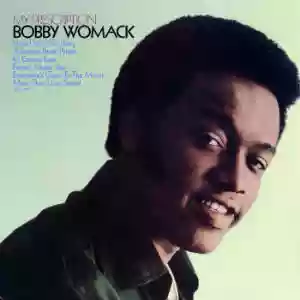
“My Prescription” came out in 1970, but by 26 Bobby had already lived so much. The album, his second, might still be a bit raw but it’s already brimming with pain, melody, and charm. When I listen to tracks like “How I Miss You Baby”, it feels like I’m tiptoeing into a story of wounds still open and bleeding. These are passions hard to explain. I sit there, dazed, listening and relistening in a trance, savoring a song that’s magnetic in its simplicity.
My favorites are “More Than I Can Stand” and “I Can’t Take It Like A Man”, in which Womack alternates between vibrato and rasp, and shifts in tonality for an exceptional blend, while strings and horns enhance the many melodic waves without ever going overboard. In general, “My Prescription” blends soft, incisive basslines with rhythmic, vibrant guitars, delicate strings, and subtle percussion, always supporting but never overwhelming Womack’s voice, which is and remains the main instrument. Chips Moman’s production is warm, letting each instrument breathe, and the arrangements amplify the emotion of every song, highlighting the pauses, the silences, and the sighs in the voice.
The covers — “Everyone’s Gone to the Moon” and “I Left My Heart in San Francisco” — are utterly transformed and make sense because Womack enriches them with intense vocal phrasing, rhythmic changes, and soulful arrangements that make every note charged with emotion and feeling.
What’s missing? The lyrics, which are about love but without illusions: they tell of loneliness, emotional dependency, fragility, and the weight of mistakes. Womack doesn’t seek redemption or repentance but accepts pain with sincerity, without embellishment or rhetoric.
“My Prescription” is an invitation to let go, to confront your own imperfections and accept yourself. I decided to start from here because right now it suits me perfectly for what I’m going through, and it fits me damn well. Listening to it for me is like looking in the mirror with a soundtrack that speaks of heart, resilience, and so much vulnerability.
I don’t think it can be considered Bobby’s best work, but it deserves to be considered a classic. I hope these words will draw someone closer to his magnificent discography and encourage them to write a review to give proper credit to “Communications”, “Understanding”, “Across the 110th Street”, and his other masterpieces conspicuously and unjustifiably absent here: on the most fiko website on the Internet.
Loading comments slowly
Summary by Bot
This review highlights the excellence of Bobby Womack's album 'My Prescription'. Praising its soulful sound, the review positions the album as a standout in Womack's discography. The reviewer expresses strong admiration for both the vocals and production quality. 'My Prescription' is recommended for fans of deep, heartfelt soul music. The album’s impact and lasting appeal are emphasized throughout.Tracklist
01 Arkansas State Prison (02:55)
02 Don’t Look Back (02:45)
03 Everyone’s Gone to the Moon (02:34)
04 Fly Me to the Moon (In Other Words) (02:08)
05 How I Miss You Baby (03:17)
06 I Can't Take It Like a Man (03:03)
07 I Left My Heart in San Francisco (02:21)
08 I’m Gonna Forget About You (02:23)
09 It's Gonna Rain (02:21)
10 More Than I Can Stand (02:50)
11 Thank You (04:05)
12 Tried and Convicted (02:45)
Bobby Womack
Bobby Womack (Robert Dwayne Womack) was an American soul and R&B singer, guitarist, and songwriter from Cleveland, Ohio. Mentored by Sam Cooke, he began with his family group The Womack Brothers/The Valentinos, wrote It’s All Over Now, and recorded enduring classics including Across 110th Street. Active from the 1950s until his death in 2014.01 Reviews
