
 •
Rating:
•
Rating:
THE REVIEW
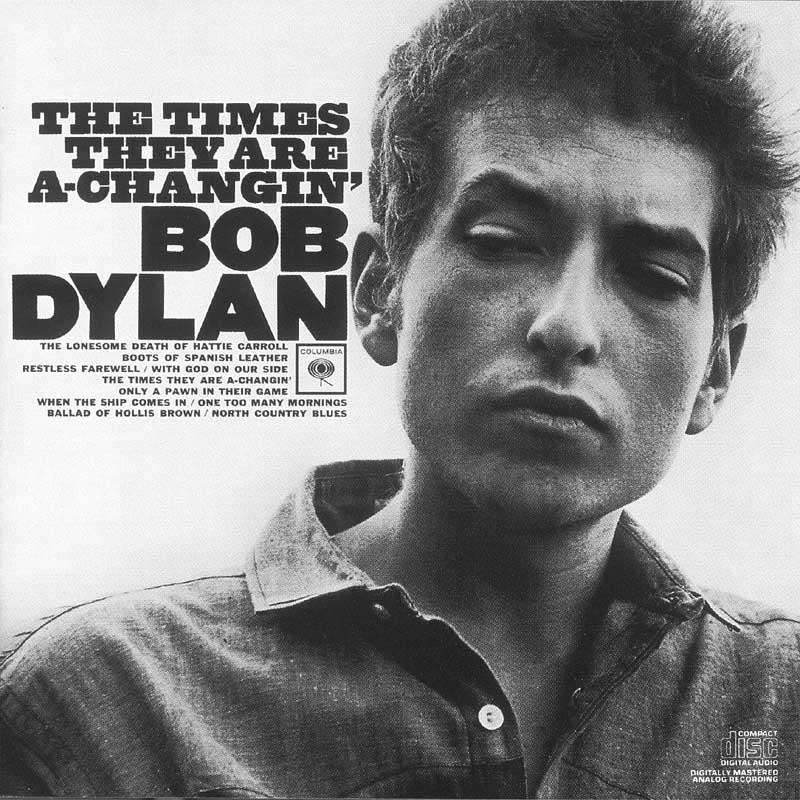
Times are changing, or rather, getting worse. Young Dylan, after the good performance offered with "The Freewheelin' Bob Dylan," changes little and dares a lot: very simple music (the guitar chords are always the same three, the harmonica, although deadly, is static and repetitive), fierce and unconventional lyrics. A way to express all his anger (and all his unease) against a violent and blatantly inhuman world. It's not a masterpiece album, but it is perhaps the most political, and in some way, the most controversial work of a Bob Dylan torn apart by doubts, hopes, and perhaps betrayed ideals. This time the game gets tough: no concessions to poetry or rhetoric, only disgust and anger.
Dylan is against everyone and everything. He spares no one, attacking politics and business fiercely. Also, and especially, because of this, the album was not liked by either the left or the right. Evidently, the heavy American intervention in Vietnam had shocked Dylan's conscience and the conscience of many pacifists like him.
"The Times They Are A Changin" is a beautiful, stunning song, even nastier and more grumpy than "Blowin In The Wind," fierce and hopeless. "Come around people, wherever you are, the waters around you have grown and you'd better start swimming or you'll sink like stones because the times are changing", this is the somewhat loose translation of the beginning of the track. Dylan lashes out at the world, the rulers, the prudes, the fathers and mothers who listen to "Love me tender" and despise the slightly free avant-garde culture of the early sixties, the critics, the writers, and even the singers. The anger is strong, almost unbearable: times are changing, they are seriously changing.
Despite a couple of songs not exactly up to par ("North Country Blues" and "Boots Of Spanish Leather") the album climbs through paths and alleyways that lead to an extreme awareness of self. Dylan knows himself and knows how far he can go: he knows he can afford to rail against the rich and religion. "With God On Our Side" is still valid today: wars in God's name, Bob explains, are unjust and counterproductive (as well as downright barbaric). In this world of ours, made of Shiites and Sunnis, Allah and Jesus Christ, pagodas and monasteries, a song like this can evoke only two reactions: surrender to faith in Dylan; rejection of any musical dogma and anger towards an alleged cheap artist. I, personally, side with the former.
But 1964 (the year the record was released) is also the year when, before dying triumphantly, the protest against blacks was born, those who have no rights and are considered no better than cattle to be sent to the slaughterhouse. "Only a pawn in their game" is brilliant, perhaps too exciting, definitely grandiose. It's a song, a hymn of pain, a protest, a way to be heard: the harmonica, as always, flies high (and who wouldn't miss it if it weren't so). But Dylan, after all, is just a 23-year-old lad, perhaps too mature for his chronological age, certainly a half-genius. Times are changing, Bob knows it well, who after this album, evidently tired of being considered a prophet or, worse, a politician, decides to change direction and steer towards violent, strong, and rock rhythms. The dullest fans will not understand this historical turning point (and will boo him loudly), but it will be this turning point that will allow Dylan to experiment with new musicalities (and therefore new sounds) without having to philosophically moralize.
Dylan was growing up. Times were changing. Finally.
Loading comments slowly
Summary by Bot
Bob Dylan’s album 'The Times They Are A-Changin'' is a politically charged work filled with fierce lyrics and simple folk instrumentation. It captures Dylan's anger and frustration with social injustices and the Vietnam War. Though not his masterpiece, the album marks an important turning point in his career toward bold protest and self-awareness. Some tracks falter, but the overall impact remains powerful and relevant.Tracklist Lyrics Videos
Bob Dylan
American singer-songwriter Robert Allen Zimmerman, known as Bob Dylan, is a major figure in 20th-century popular music, noted for pioneering songwriting and continual reinvention across folk, rock, country and blues.127 Reviews
Other reviews
By ilsuonatorejones
No doubt about it, an album that sends chills down your spine, guitar and harmonica, and even the voice is an instrument.
The new times are at hand and Goliath will be defeated by the new Davids.
