
 •
Rating:
•
Rating:
THE REVIEW
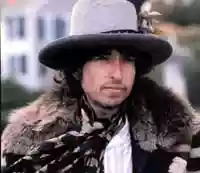
It was a Bob Dylan in deep personal crisis who wandered from one city to another in America with his travelling troupe in 1975 and 1976, partly foreshadowing what would become, a few years later, the “Neverending Tour”, which continues to this day.
He was coming out of a marriage in pieces, the one with Sara Lowndes, the “Sad eyed Lady of the Lowlands” so marvelously depicted in an epic song from 1966, featured on “Blonde on blonde”.
Artistically, however, the musician is in one of his most inspired phases, being in the middle of “Blood on the tracks” and “Desire”, his two greatest masterpieces of the ’70s.
In this supergroup, in addition to Bob, of course, there are Bobby Neuwirth, T-Bone Burnett, Steven Soles and Mick Ronson on guitars, Scarlet Rivera on the violin, David Mansfield on steel guitar, mandolin, dobro, and violin, Rob Stoner on bass, Howie Wyeth on piano and drums, Luther Rix on drums, percussion, and congas, and Ronee Blakely on backing vocals. Also, there is the extraordinary participation in four tracks by Joan Baez and in one by Roger McGuinn.
The first thing you notice is the high level of the recording and the sound. It starts with a track that was originally on the country album “Nashville skyline”, and here it is revisited in a powerful rock version with the guitars prominently featured. “It ain’t me babe”, a song almost always present in his live shows, is here in a curious version that resembles a bit of “Memphis blues again”. Great is the version of “A hard rain’s a-gonna fall”, although those used to the usual sweet acoustic version may be a bit perplexed. Here it's all-out rock-blues. “The lonesome death of Hattie Carroll” is a ballad taken from his third album, “The times they are a-changin’”. Then a song which, at the time of the Rolling Thunder Revue, had not yet been released, and therefore was unknown to most: “Romance in Durango”, needless to say more. Another track from the not yet published “Desire”, is “Isis”, sung with an intensity and participation that are simply astonishing. “Mr. Tambourine Man” begins a fantastic acoustic moment that also includes “Simple twist of fate”, and then the entrance of the Lady Joan Baez performing in duet with Bob three golden pieces of the Dylan repertoire, “Blowin’ in the wind”, absolutely not to be missed with Bob singing and Joan providing the counterpoint, “Mama, you been on my mind”, dedicated to Baez’s mother, and then the perhaps most beautiful track of the entire double live, “I shall be released”, enchanting.
The second CD (yes, because it’s a double featuring a box with a 56-page booklet containing numerous details about the tour, also rich from an iconographic standpoint) starts with another acoustic piece, “It’s all over now, baby blue”. “Love minus zero/No limit” in this case shows why it’s one of his most “covered” songs, another great acoustic version. The acoustic moment continues with “Tangled up in blue”, a song that must have been quite troubled, considering that over the years it underwent several lyrical changes (during his Christian period, the Italian poet of the ‘300 had become a passage from Genesis). Then it's the turn of a traditional, “The water is wide”, for which Baez returns to the stage. The acoustic moment ends, electric guitars are picked up again, and it's immediately a rock-blues ride, “It takes a lot to laugh, it takes a train to cry”, one of the tracks from the historic “Highway 61 Revisited”. Then back to ballads with “Oh, sister”. Then comes one of the most representative Dylan tracks of the period, that “Hurricane” which was dedicated to the black boxer Rubin Carter, unjustly imprisoned and accused of murder. It moves to another ballad present on “Desire”, that “One more cup of coffee” which also recently appeared on the new album of Robert Plant “Dreamland”. One of the most touching moments of the concert is when Bob intones a piece of infinite sadness. That piece is heartfeltly dedicated to his wife Sara who is leaving him. That piece is simply titled “Sara”. Of course, “Just like a woman” couldn't be missing, then it closes with Roger McGuinn helping Bob in the conclusive “Knockin’ on Heaven’s door”, saved by Bob in its definitive version before any Guns’n’Roses could come and despoil it.
What else to add? That this album might even make those reconsider who view Bob Dylan as a concert jukebox, an inexpressive and full-of-himself man. This album is undoubtedly one of the best live recordings in history and it's a great thing that Columbia decided to release it, moreover in a luxurious package, after years of “piracy”.
Loading comments slowly
Summary by Bot
This review highlights Bob Dylan’s 1975 Rolling Thunder Revue live album during a deeply personal yet artistically inspired phase. Featuring an extraordinary ensemble with Joan Baez and Roger McGuinn, the double album delivers powerful rock and acoustic versions of Dylan classics. The recording quality and packaging receive high praise. It’s described as one of the best live recordings in history and a must-have for fans.Tracklist Lyrics
Bob Dylan
American singer-songwriter Robert Allen Zimmerman, known as Bob Dylan, is a major figure in 20th-century popular music, noted for pioneering songwriting and continual reinvention across folk, rock, country and blues.127 Reviews
