
 •
Rating:
•
Rating:
THE REVIEW
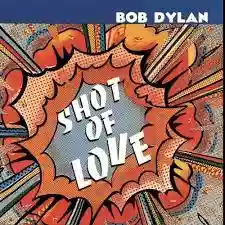
1981, music is changing, especially "old" rock seems almost suffocated by new "rock vanguards" like New Wave and Heavy Metal, at opposite ends, climbing the charts and convincing crowds of fans. Dylan, gives a final twist to his old music which had already undergone two epochal transformations, from the folk of his beginnings to the subsequent rock-blues with which he laid the foundations for a type of rock artist that many would draw inspiration from. This Shot of Love closes the "Christian" trilogy, after Slow Train Coming (1979) and Saved (1980); of the three albums, it is considered the weakest and this is precisely the point on which I think I will spark quite a bit of controversy, because, contrary to many authoritative opinions, I believe this album is the most inspired of the three. The writer considers Slow Train Coming and Saved (the first half a notch above the second) to be two excellent albums, "half-masterpieces" as a dear friend of mine used to say when he didn't want to use the (heavy) word masterpiece too lightly. One of the reasons the album was belittled is the fact that the final twist to the old music I mentioned earlier leads the artist into pop territory, after the Gospel that had seasoned the rock of the first two chapters of the Christian trilogy, now Dylan's rock "gets dirty" with pop, but still leaves the absolute beauty of the compositions contained in this work very much alive, indeed more prominent compared to the "forced" gospel of the previous works. Shot of Love opens the album and is a "perfect" song, dominated by an incredible musical balance, rock on an almost reggae rhythm with gospel choirs that recall its origin from the previous repertoire: I consider this piece a jewel of composition. It is followed by another incredibly innovative piece, Heart of Mine, after many years a love song, the last very dark ones we heard in the older (1975) Blood on the Tracks: we are in the field of the purest pop with an almost funky flavor; Dylan hosts two great musicians, friends, Ringo Starr and Ronnie Wood. Another masterpiece is Lenny Bruce, dedicated to a Jewish comedian who gained some success in America in the early '60s, but was also heavily opposed for the profanity he often used in his shows, which was very illegal at the time: the piece is a delicate blues-gospel piano piece, the result, as admitted by Dylan himself, of a fleeting sudden inspiration and recorded directly. Pure reggae and gutsy blues can be heard respectively in Dead Man, Dead Man and Trouble, two well-crafted tracks that lead to the concluding Every Grain of Sand, in my opinion one of Dylan's most beautiful songs, a liturgical hymn, a pop prayer, on whose chords many pieces have been composed in the following years.
To whom do I recommend this album? To all those who think they are great connoisseurs of Dylan, but have never heard this gem or, if they have, only gave it a superficial listen.
Loading comments slowly
Summary by Bot
This review reassesses Bob Dylan's 1981 album Shot of Love, often considered the weakest of his Christian trilogy, arguing it is the most inspired. The album blends Dylan's rock roots with gospel and pop influences, featuring standout tracks like 'Shot of Love' and 'Every Grain of Sand.' With guest appearances by Ringo Starr and Ronnie Wood, the album reveals overlooked depth and musical balance. Recommended for Dylan fans and those unfamiliar with this underrated work.Tracklist Lyrics Videos
Bob Dylan
American singer-songwriter Robert Allen Zimmerman, known as Bob Dylan, is a major figure in 20th-century popular music, noted for pioneering songwriting and continual reinvention across folk, rock, country and blues.127 Reviews
Other reviews
By ilsuonatorejones
"If it weren’t for one of Dylan’s ten best songs present on this album, 'Every Grain Of Sand', there would be no reason to talk about 'Shot Of Love'."
"Pearls are lost to nothingness."
