
 •
Rating:
•
Rating:
THE REVIEW
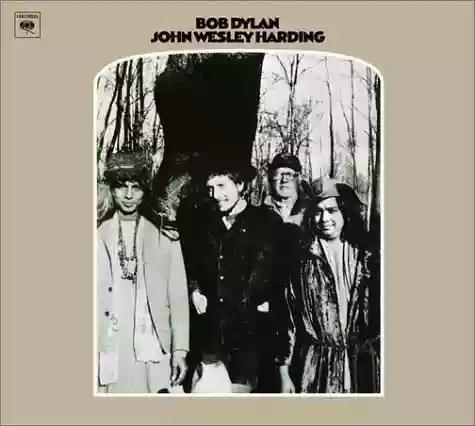
I underestimate the work of Dylan after his electric breakthrough: 1967, “John Wesley Harding” is released, an acoustic counterpart to the electric masterpiece “Blonde on Blonde”. Not much appreciated: a step backward? Not at all! A step forward, a change, moving towards country, as rock was becoming tiresome.
It talks about the Bible, honest outlaws, masters and slaves, friends, the poor and vagrants, dreams and visions by Dylan as only Dylan can. An album is born, teetering between the pointless and the masterpiece, with a certain underlying unity. The guitar is often played with the capo on the fourth or fifth fret, a trick that gives a bright sound (annoying?), bass, drums, and harmonica, almost always in E and F, which are the two keys that reach the highest notes in blues harp, thus also bright (not annoying, finally Dylan shows he can handle the harmonica decently).
Great songs are not lacking, but this time no track exceeds five minutes, the average for Dylan, except “Frankie Lee and Judas Priest”. Masterpieces: above all, the metaphorical and visionary “All Along the Watchtower”, four chords that will never change, and are still the same today, a unique case in the twisted versions Dylan provides of his own songs. Jimi Hendrix made a memorable cover of it. Then “I Dreamed I Saw St. Augustine”, “I Pity The Poor Immigrant” and the wonderful “Dear Landlord”. These alone would have made any album great. There are also weaker tracks, like the title-track, “Down Along The Cove”, “I’ll Be Your Baby Tonight”... but they are forgivable, the album holds together and almost never disappoints. Dylan's eighth album, fourth turnaround... and we're close to the much-debated “Nashville Skyline”.
Loading comments slowly
Summary by Bot
John Wesley Harding marks a significant acoustic shift for Bob Dylan after his electric breakthrough. The album blends country influences with evocative, metaphorical lyrics exploring themes like outlaws and dreams. Standout tracks like "All Along the Watchtower" and "I Dreamed I Saw St. Augustine" showcase Dylan's artistry. While some songs are weaker, the album remains cohesive and influential. This work paved the way toward Dylan’s later country-inspired sound.Tracklist Lyrics Videos
Bob Dylan
American singer-songwriter Robert Allen Zimmerman, known as Bob Dylan, is a major figure in 20th-century popular music, noted for pioneering songwriting and continual reinvention across folk, rock, country and blues.127 Reviews
Other reviews
By lector
On the morning of July 29, 1966, Bob Dylan died.
That voice is not his, it is different... It is Bobby’s.
