
 •
Rating:
•
Rating:
THE REVIEW
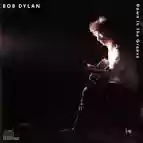
Reviewing an album like this, within Dylan's vast production, can be like walking on a slippery floor, because the fact is that comparing it with his earlier works (the 60s and 70s) is unfeasible, as is the comparison with that masterpiece, published a year after this work, titled Oh Mercy.
It's 1988, Dylan is coming from two albums, Empire Burlesque (1985) and Knocked out loaded (1986), which not for the songs themselves (some very good) were flawed for how the tracks were recorded, with a very non-rock sound that stripped the rock-blues soul from the tracks that were fed by that sound: as if the author had given carte blanche to his technicians to ruin what he had produced (I'm waiting for some Bootleg series to maybe recover demo versions of those tracks).
Here's the first beauty of this "little disc": the tracks, some (quite a few) not by the author, are played with a "raw" attitude and this is a significant step forward from his predecessors and compared to much of the "plastic" rock production of the 80s (Dylan not intended alone).
Let's Stick Together is a good reinterpretation of a 1962 rhythm n' blues piece by a lesser-known American artist, Wilbert Harrison; Dylan adds a very acidic touch to the piece, accompanying the guitars with a strong Stones attitude, with his typical blues harmonica.
When did you leave haeven ? is a 1936 jazz piece by Walter Bullock and Richard Whiting; Dylan reinvents it, dressing it with few instruments, keyboard, rhythm guitar, and drums, giving it a "gospel" value.
Death is not the end, is an unreleased track by Dylan, and it shows; in my opinion, it's one of his most beautiful songs, a lullaby, played, also in this case, with essential instruments, including very well-done backing vocals, that give this masterpiece a strong gospel touch. The cherry on the musical cake, the harmonica played softly by Dylan. The track contains the "atmospheres" of Hallelujah by the great Cohen, even though they are two completely different things, yet equally beautiful. Dylan has practically never played it live, but many artists have "appropriated" this jewel (a bit like Cohen's Hallelujah): among these, I recall the wonderful version proposed in 1996 by Nick Cave.
Another strong piece of the album is Silvio, music by Dylan and lyrics by his old friend Robert Hunter of the Grateful Dead: the song is a delightful boogie-woogie, which doesn't seem recorded in 1989, but in 1970 or so. Worth noting in the backing vocals, also in this case done as they should be, is the other Grateful Dead, Jerry Garcia.
Ninety miles an hour (down a dead end street) by Don Robertson, a pioneer of rock n' roll music, a great pianist (he played with Elvis). Also, in this instance, Dylan reinvents the track, which from the original classic rock n roll, becomes a gospel piece, sparse, all voice, organ, and choruses (in the choruses, the great Bobby King who is always a pleasure to hear).
The album closes with Ranck strangers to me by Albert E. Brumley, a pioneer of Christian gospel music, reiterating, in my opinion, the strong rock-gospel inspiration of this Dylan work.
Anyone approaching Dylan for the first time should stay away from this work, there are much better places to start.
However, those who already know him, but maybe want to delve deeper, will find in this album many cues to understand the musical reasons that led this great artist to jump from the very first folk phase, from late 60s-early 70s rock, to the gospel phase of the late 70s.
Loading comments slowly
Summary by Bot
Bob Dylan's 1988 album Down in the Groove shows a raw, gospel-influenced sound that contrasts with his flawed previous records. The album includes notable reinterpretations of older songs and collaborations with artists like Robert Hunter and Jerry Garcia. Though not recommended for newcomers, it offers insight into Dylan's musical transitions. Highlights include the gospel feel of tracks like 'Death is Not the End' and 'Silvio'.Tracklist Lyrics
Bob Dylan
American singer-songwriter Robert Allen Zimmerman, known as Bob Dylan, is a major figure in 20th-century popular music, noted for pioneering songwriting and continual reinvention across folk, rock, country and blues.127 Reviews
Other reviews
By De-cano
It’s a weak album, the usual two chords, the usual hoarse voice, practically an aging rocker, and not aging well!
I just wanted to warn you not to buy this album because it’s rehashed stuff from a person who exhausted his creative vein a while ago.
