
 •
Rating:
•
Rating:
THE REVIEW
DANCE BENEATH THE DIAMOND SKY
or the Minstrel's party
Before I discuss the album, I want to briefly talk about the musical tastes of a few friends. You can skip the entire first paragraph if you like, but I think it helps to understand the exceptional impact of this LP.
The Captain is a tall and athletic young man, friendly, loyal, and altruistic: his musical interests focus on Davide Van De Sfroos, the great folk singer from Lake Como, and Oliver Onions, meaning those "from the music of Bud Spencer and Terence Hill." His ideal evening is strolling along the street, gazing at the Geox shop windows, the shoe that breathes.
The Black Rider is very educated and confident in his broad knowledge across various humanistic and scientific fields: he has more varied tastes, with a CD collection ranging from Pink Floyd to Blues Brothers, from De André to Black Sabbath, from the drums of the Bronx to reggae. The genre he appreciates the most is hard rock blended with blues. His ideal evening is sitting in a Baudelairean venue with a glass of absinthe.
Finally, there's Edera, who studies cultural heritage and has musical interests closer to mine, particularly enjoying the sophisticated pop-rock of Bowie and Queen, the electronic minimalism of Kraftwerk and Sigur Ros, and the sweet darkness of Nick Cave. She feels a (not so) vague dislike for Bob Dylan and similar artists, and her ideal evening is relaxing on the couch with a good orange and cinnamon tea or browsing through stalls at some village festival.
Now let's return to our Duluth minstrel: this is one of the few albums I can comfortably play in the car if I have these three characters with me.
In my opinion, Dylan has been teasing us from the very start of his career, and here he demonstrates it in an absolutely brilliant manner, because not only does he rearrange all his most famous tracks, but he does so in a playful and—strange word for the singer—FUN way.
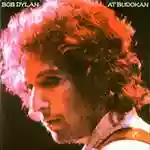
The focus is on the lyrics, needless to say, among the most beautiful in the history of humanity, because otherwise, this 1979 concert is a celebration of the freedom to (I repeat) have fun by transforming one's creations. The most prominent instruments are the electric guitar, saxophones, and the backing singers' voices that weave fantastic embellishments around Dylan's powerful vocal performance.
The party kicks off with the pounding riff of "Mr. Tambourine Man," transitions to the country dance folk of "Love Minus Zero," and after the electrifying blues of "Ballad Of A Thin Man," we hear the reggae of "Don't Think Twice." "Maggie's Farm" is a maelstrom of brass and choruses, and saxophones reign in "Like A Rolling Stone."
The second disc opens with a sweet gospel lullaby titled "Blowing In The Wind," giving way to an equally calm minor-key performance of "Just Like A Woman," one of my favorite tracks. "Oh Sister" becomes a blues narrative for bass and voice, and "All Along The Watchtower" is a glam-soul puffed up with embellishments and bright guitar-violin duets. Flute and voice make "I Want You" sparse and more romantic, while it returns to playful and thunderous glam with "All I Really Want To Do." The flute returns with a reggae rhythm in "Knocking On Heaven's Door," and deafening hard rock riffs in "It's Allright Ma." This magnificent celebration of rock concludes with "The Times They Are A-Changing," which, initially essential then grand, combines the main trademarks of the live performance, namely the choruses and saxophones.
Dylan continues to rework and rewrite his music anew for each tour, but I don't know if he's ever returned to such overall vocal and orchestral power...
...but at least I know what to play in the car for my demanding friends without anyone complaining!
Loading comments slowly
Summary by Bot
The review praises Bob Dylan's 'At Budokan' live album for its playful yet powerful reinterpretations of classic songs. Highlighting the prominent use of electric guitar, saxophones, and backing vocals, the album is seen as a celebration of creativity and musical freedom. The reviewer appreciates how Dylan's work appeals to diverse musical tastes, making it suitable even for a varied audience. It is described as a must-listen for fans and newcomers alike.Tracklist Lyrics
Bob Dylan
American singer-songwriter Robert Allen Zimmerman, known as Bob Dylan, is a major figure in 20th-century popular music, noted for pioneering songwriting and continual reinvention across folk, rock, country and blues.127 Reviews
