
 •
Rating:
•
Rating:
THE REVIEW
"Ernold Same woke up from the usual dream / in the usual bed / at the usual time / looked in the usual mirror / made the usual face / and felt the usual way every day / (..) poor Ernold Same / his world remains the same / today will always be tomorrow (..) poor, old Ernold Same, / he has that feeling again / that tomorrow will change nothing"
("Ernold Same")
An almost paralyzing lack of meaning and hope.
"The Great Escape" is a transitional album, but in the best sense of the term; it is a splendid transitional album: it stands between the Blur of "Parklife" and the Blur of "Blur", which magnificently represent the two sides of the band. And it is a sad album, even though its melancholy is sometimes deliberately hidden.
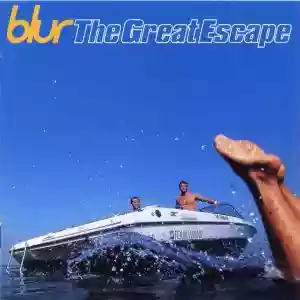
Look at the cover: seemingly summery, with individuals diving happily and carefree into the sea. Open the package: a menacing shark is waiting for them.
Indeed, tracks like the irresistible and captivating "Country House", "Charmless Man", or "It Could Be You" have a sunny and fundamentally entertaining melody.
But listen to the dark and lysergic "He Thought Of Cars", the schizophrenic punk rage of "Globe Alone", the madness of "Mr Robinson's Quango", the melancholy of "Best Days", "The Universal", or "Entertain Me" and you will realize that there is very little sunny about this album.
And then there's "Ernold Same", a drunk and sad waltz, revived after the final, melancholic "Yuko and Hiro", in the form of a ghost track, a way to close the album that they would reprise in "Blur".
Albarn, Coxon, James, and Rowntree now have a style and talent in making music that is enviable: they are eclectic, brilliant, curious, genius. The masterpiece they would release two years later has its foundations here.
"The Great Escape" had begun; and it was possible to foresee where it would lead them.
Loading comments slowly
Summary by Bot
Blur's The Great Escape is a brilliant transitional album capturing the shift between their Britpop era and a darker, more complex sound. Despite a facade of catchy, upbeat tunes, it explores deep melancholy through its lyrical themes and diverse musical styles. The album balances entertaining melodies with emotional depth, foreshadowing the band's future masterpiece. It remains a significant and influential work in Blur's discography.Tracklist Lyrics Videos
Blur
English rock band formed in Colchester; core members include Damon Albarn, Graham Coxon, Alex James and Dave Rowntree. Rose to prominence during the Britpop era and later explored experimental and electronic sounds. Active from 1989 to present.49 Reviews
Other reviews
By Tegucigalpa
This album is the symbol of that crappy sub-genre that churned out artists the likes of Menswear and Suede.
‘The Great Escape’ is the British equivalent of ‘Nord sud ovest’ by 883 — an extraordinary, involuntary, sociological snapshot of the brain-dead youth of the country that buys it en masse.
By Boop07
Blur, who with their previous classic Parklife had created a masterpiece of balance between Pop, experimentation, and aesthetics, followed the same path in The Great Escape but with much less convincing results, except for the single Stereotypes.
The group’s historical defeat for the position as the main reference point in their home music scene and the end of the genre they themselves had created would soon be almost beneficial for greater affirmation on the international scene.
