
 •
Rating:
•
Rating:
THE REVIEW
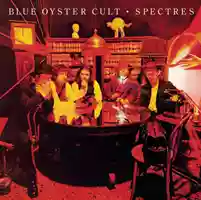
In the collective imagination, and, if we want, of the average American, the music of Blue Öyster Cult is associated with the opening track of this album, "Godzilla", with its driving riff (which Cobain almost plagiarized for "Smells like...") and its imaginative themes, where science fiction meets certain B-movie horror: essentially, the average American got to know Blue Öyster Cult, marking their national success, with a track that trivializes, almost to the point of ridicule (hopefully with self-irony) the sound of the quintet, as well as the themes addressed in the band's songs. The Elsewhere that characterizes their poetry is not merely suggested here, but revealed and unmasked in the form of the mutant dinosaur, which throws us into despair almost like at the end of the TV version of IT and upon seeing the giant spider.
This premise allows us to say almost everything about "Spectres" ('77): an album in which the quintet's hard rock tinged with blues, jazz, and psychedelia is forced, even more so than in the previous "Agents of Fortune", into the forms of consumer music, depleting its allure.
In addition to the considerations made for Godzilla, similar arguments could be presented regarding other tracks on the album, including the rhythmic but boring "R.U. Ready to Rock", the melodic - albeit simpleton - "Celestial the Queen", the embarrassing "Going Through The Motions" (with Ian Hammer), the predictable "Searchin' For Celine", rather than the banal "Fireworks" and "I Love the Night", more worthy of a more melodic Supertramp album than the New York group's.
Overall, these are tracks with undeniable radio appeal, also easy to memorize and sing, ideal for a long car journey, almost serving as a soundtrack for a four-wheel adventure: there's nothing wrong with this, except that thousands of bands in the '70s were making music of this genre (unwitting models for the worst Red Hot that have plagued us for some years), while those who appreciate Blue Öyster Cult seek sensations and anxieties, awakenings of hidden fears, suggested fears.
By vulgarizing their language, the group has essentially betrayed their enthusiasts, though gaining swarms of admirers in the American middle class typical of Matt Groening's stories, as far removed as possible from the counterculture of the Big Apple in which the lyricist-producer Sandy Pearlman and the five musicians originally moved.
Fortunately, even on this album, something can be saved: let's immediately clarify that these are tracks that, in the group's first three albums, would have deserved at most the role of filler, but so be it. "Golden Age of Leather" is memorable for the variety of musical themes and the agility of the arrangement (qualities that, in truth, did not interest the group at its origins!), while "Death Valley Nights" stands out for its dark intimacy, ideally reconnecting to the "black" side of "Tyranny and Mutation". The concluding "Nosferatu", perhaps with some excessive length, benefits from an oppressive atmosphere and some flashes of class, especially in the vocal performance, again recalling the atmospheres of the early albums.
After listening to "Spectres" and overcoming the initial bewilderment, those who love the group can only shrug, returning to listen to the group's previous works. Those unfamiliar with the Cult of the Blue Oyster may mistakenly take the five for yet another '70s "Arena Rock" band, worthy of ending up in some compilation alongside a multitude of neglected and negligible groups. Truly a shame.
Loading comments slowly
Summary by Bot
This review critiques Blue Öyster Cult's 1977 album Spectres as a commercial-leaning record that dilutes the band's unique hard rock blend with blues and psychedelia. While tracks like 'Godzilla' offer imaginative themes, much of the album falls into predictable and simplistic territory. Though there are a few redeeming songs recalling the band's earlier dark atmospheres, overall the album is seen as a disappointment that may mislead new listeners into thinking of BÖC as just another generic arena rock band of the era.Tracklist Lyrics Videos
Blue Öyster Cult
Blue Öyster Cult is an American rock band formed in New York in 1967, known for dark, theatrical hard rock blending sci-fi, horror, and occult-tinged storytelling. The group’s classic era spans the early-to-mid 1970s and includes influential albums and staples like “(Don’t Fear) The Reaper.”22 Reviews
