
 •
Rating:
•
Rating:
THE REVIEW
For fans of the New York group, Blue Öyster Cult's career unofficially ends in 1981, following the release of the excellent "Fire Of Unknown Origin" and the departure of drummer/singer Albert Bouchard, whose rhythms characterized the quintet's best pieces with their typical lurching and almost jazzy feel, especially in the early albums from the 1971-1974 period.
The following years, also marked by the departure of bassist and composer Joe Bouchard - Albert's brother - were characterized by changes that did not benefit the band, and the release of albums that were certainly not bad (I am especially thinking of "The Revölution By Night" from '83) which, however, suffered from updating the group's hard sound to lighter and more radio-friendly sounds, akin to certain AOR of the time.
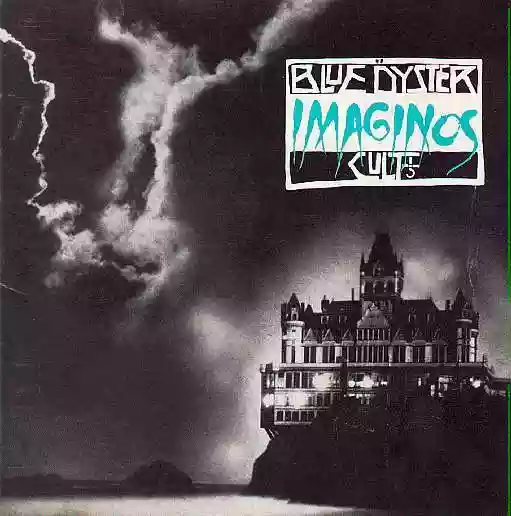
An unexpected and successful return to the studio by the original lineup happens, however, between 1987 and 1988, when the group members and Blue Öyster Cult's historic producer, Sandy Pearlman, return to record some old repertoire and unreleased songs within the concept album "Imaginos", originally intended for a solo album by the resurrected Albert Bouchard.
The main theme of the album, whose lyrics are forcibly cryptic - and naturally occult - as fans of the group well know, stems from the usual suggestions of Pearlman and Bouchard: the history of man, from minor episodes to great discoveries, is probably influenced by occult intelligences of alien origin, guiding humanity step by step, even through their emissaries, to unknown destinations. Sci-fi and gnosis are integrated into an apparently "low" and popular discourse, but perhaps more cultured than it may seem at first glance, referring to the limits of human knowledge, the relationship between man and the universe... all seasoned with an underlying nihilism, in my opinion indebted to Pearlman's Jewish roots and singer Eric Bloom.
The album, hailed by many as an authentic masterpiece, has a substantially "episodic" value, resulting, in my opinion, quite artificial, although this does not detract from the value of some pieces, which are indeed well-made and very interesting, considering the context (late '80s) in which they were performed.
Overall, the group's style is updated compared to the past, with greater emphasis on keyboard arrangements - giving almost sci-fi touches - and greater compactness in guitar sounds, here played by Donald "Buck Dharma" Roeser and exceptional guests, including some well-known names in American hard rock (Joe Satriani, Aldo Nova, Kenny Aaronson), as well as Robbie Krieger of the Doors.
Paradoxically, it is precisely the rhythm section of the Bouchard brothers - an added value to the group at least in the first phase of their career - that is penalized by the update of the quintet's sound: the expressive freedom and interplay of bass and drums are sacrificed for uniform and uninventive rhythmic solutions, adhering to certain hard rock of the time, now oblivious to its trivial blues origins and the improvisational spaces that were inherent to it at the end of the '60s.
All this makes the work appear overly orderly, too prim, too artificial, without adding much, therefore, to Blue Öyster Cult's career, whose return to the music scene was hailed as a masterpiece more for sentimental reasons, or again, in response to the relative musical desert in which they operated within hard rock, at a time when the genre's cutting edge was, rather, the thrash of certain epigones, primarily Metallica.
This does not take away, of course, that flashes of class and interest can still be seen in the album, making the listening of "Imaginos" pleasant, elevating it certainly above the average of other works of the genre, as well as Blue Öyster Cult's discography from '81 onwards.
The interpretation of individual pieces by Bloom, in fact, appears particularly expressive, alternating almost theatrical declamations with spirited gallops; the overall atmosphere of the pieces - what one would call the group's mood - remains overall unsettling and disturbing, also thanks to theses that, in suggesting the existence of alternative realities, show us the boundaries - close to us - of the unknown. The technical expertise of the group and the guest musicians appears, moreover, beyond doubt.
The most significant pieces of the album, in this perspective, are the powerful "I Am the One You Warned Me Of", the melodic "Del Rio's Song", although the apex of the album is reached with the hypnotic "In the Presence of Another World". Interesting, although inferior to the originals, are the self-covers of "Astronomy" and "Subhuman" (now "Blue Öyster Cult").
Overall, a more than dignified album, but inferior to the works of the past.
Loading comments slowly
Summary by Bot
Imaginos marks Blue Öyster Cult's late 80s reunion with original members and producer Sandy Pearlman, presenting a concept album blending occult and sci-fi themes. While some tracks shine with strong performances and atmospheric depth, the album overall feels too polished and artificial, lacking the improvisational spirit and raw energy of their early 70s prime. Despite this, it remains a respectable effort, especially given the evolving rock landscape at the time. The lyrical ambition and guest musician talent add value, though it falls short of the band's classic masterpieces.Tracklist Lyrics Videos
Blue Öyster Cult
Blue Öyster Cult is an American rock band formed in New York in 1967, known for dark, theatrical hard rock blending sci-fi, horror, and occult-tinged storytelling. The group’s classic era spans the early-to-mid 1970s and includes influential albums and staples like “(Don’t Fear) The Reaper.”22 Reviews
