
 •
Rating:
•
Rating:
THE REVIEW
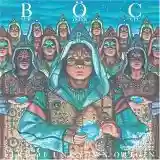
Released in '81, Fire of Unknown Origin is the last BÖC album to feature the band's original lineup: after its release, Albert Bouchard, an excellent drummer and one of the true souls of the group, would leave the band for an uncertain and inconsistent solo career.
In short, FOUO can be defined as a return of the band to the theatrical and sinister sounds that characterized the first three studio albums by BÖC, without abandoning the melodic approach that emerged in the albums released in the latter half of the '70s. The songwriting appears particularly mature, and the production is excellent, with modern sounds that do not detract from the impact of the compositions. The title track, at the album's opening, characterized by Allen Lanier's keyboards, never so present in the previous decade, is marked by a latent tension and a nod to the well-known alien themes of many BÖC pieces: the crescendo of the chorus, in particular, gives a strong emphasis to the piece, with Eric Bloom in top form. The second track, Burnin' for You, is one of BÖC's most successful singles: it is essentially a rock song with a strong radio appeal, featuring great guitar work and a decidedly catchy and hook-laden chorus. It perhaps clashes with the band's traditional sound, marking a clear shift of the group towards the AOR popular in the early '80s, with bands like Foreigner and Toto. The following track, Veteran of the Psychic Wars, is instead one of the group's masterpieces, the last true gem of their career, at least until Imaginos (1988): a rhythmic fabric characterized by Albert Bouchard's pulsating drums supports Bloom's declamations, in a nightmare-like atmosphere carved by the keyboards and the always appropriate guitar interventions by Donald Roeser. Sole Survivor, opened by Joe Bouchard's bass, is distinguished by its driving choruses and a melody that is hard to forget, without losing any impact: a piece surely destined for fiery live performances. Heavy Metal: The Black and Silver is another compositional peak of the album, with a tough guitar riff and particularly nasty and aggressive vocals: an ideal modern reinterpretation of pieces like Stairway to the Stars and Transmaniacon MC. Vengeance (the Pact) is an excellent track with a structure very similar to the previous Sole Survivor: excellent use of choruses, excellent refrain, aimed at creating a true anthem. It is a track comparable, in certain tones, to the pieces played in the same years by Judas Priest, an epic heavy rock. Joan Crawford changes the game once more: it is a track with the group's classic theatrical style, introduced by an excellent piano solo and marked by a compelling chorus: splendid is the central break, in which the return from the underworld of the actress to whom the piece is dedicated is described, and her intention to settle the scores with her daughter, who in those years authored a critical biography of her mother. A dark rock piece, in the sense that can be given to BÖC's tracks, not without irony. The last track of the album is the atmospheric pop rock of Don't Turn Your Back, where the mysterious traits of the group's music return to blend with an easily listened melody, excellently arranged with the balanced contribution of all the musicians, with an intriguing bass accompaniment. Inferior to the masterpieces of the early '70s, FOUO is probably the best Blue Öyster Cult album in the second part of their career, released at a time when the group's fame was experiencing some decline. For the band's fans, it is poignant, either for the farewell to the original lineup or because it revisits, in an adult and now detached way, the typical traits of the group's previous production, in a high and unrepeatable class cliché, with that touch of self-indulgence allowed to the greats. To listen to, with eyes glancing between the album cover and the stars.
Loading comments slowly
Summary by Bot
Fire of Unknown Origin (1981) marks the last album with Blue Öyster Cult's original lineup, showcasing mature songwriting and theatrical, sinister sounds. The album blends melodic rock with themes of alienation and fantasy, highlighted by classics like "Burnin' for You" and "Veteran of the Psychic Wars." With excellent production and a balance between modern and traditional rock, it remains one of their strongest late-career works.Tracklist Lyrics Videos
Blue Öyster Cult
Blue Öyster Cult is an American rock band formed in New York in 1967, known for dark, theatrical hard rock blending sci-fi, horror, and occult-tinged storytelling. The group’s classic era spans the early-to-mid 1970s and includes influential albums and staples like “(Don’t Fear) The Reaper.”22 Reviews
