
 •
Rating:
•
Rating:
THE REVIEW
After the disappointing showing with Mirrors ('79), an album overly inclined toward the soft rock of the west coast, Blue Öyster Cult entered the most critical phase of their decade-long career, having to decide whether to continue their personal conversion to pop rock, emphasizing the path started with Agents of Fortune ('76), or return to their roots, to the dark and visceral hard rock that characterized the early part of their career.
Cultösaurus Erectus ('80) confirms the band's difficult moment; it is an album of compromise, where the light attitude of the group's recent works is partially abandoned in favor of a potent hard rock, played with superb skill and produced extremely professionally by Martin Birch, who, in the early '70s, had helped build the wall of sound of Deep Purple. Like all transitional albums, Cultösaurus Erectus suffers from the underlying uncertainties of the band and the difficulty BÖC faced in repositioning themselves in a music scene now dominated by younger and more aggressive bands, mainly from across the Atlantic, where the Cult’s aesthetic seems a bit faded, although it is by far the best work produced by the group since the mentioned Agents of Fortune.
The album opens with the excellent Black Blade, where the classic sci-fi themes of the group mingle with the renewed sounds imprinted by Birch, with Roeser’s guitars weaving a skewed and spaced-out rhythm: Bloom’s vocals return to the old theatrical and spoken passages, right up to the implosive finale, complete with a digital voice guiding the listener to unknown worlds. The following track, Monster, with its tight riff, is distinguished by the sudden jazz-inflected horn breaks, resuming the violent and incisive main theme. Divine Wind, with more restrained tones and almost new wave guitar work, sounds almost like a Vera Gemini part. II, although it becomes rather repetitive over time: this does not take away from the melancholy and unease emanating from the piece that remain impressed in the listener’s mind for a long time. Deadline, characterized by numerous melodic openings, is perhaps too tied to the recent past to please the group’s aficionados, and seems destined for intense play on major FM rock stations: a typical car radio track, so to speak. The Marshall Plane, with fake live overdubs, continues with a somewhat stale rock (and a central interlude that explicitly quotes Smoke on the Water... tribute to the producer?), although the vocals remain first-class, wicked enough. Hungry Boys, marked by Lanier's insistent piano, is another rather easy song, possibly too similar in development to the contemporaneous Rough Boys by Pete Townshend (in Empty Glass). Very similar to the previous track is Fallen Angel, melodic and compelling, although from its listening, the main change in the ‘Cult’s style is evident: the unease that oozed from the grooves of the first albums, implicit and destined to grow with the listening of those tracks, is here returned in its external profile: the whispers of the earlier albums are echoed by the cries of these more recent pieces, intense yet perhaps artificial, repetition of a pattern that now seems stale. Lips in the Hills fortunately lifts the fortunes of the album, thanks to a dry, powerful and stentorian riff, an excellent introduction to the stunning Bloom: almost a new version of Hot Rails to Hell, updated for the times. Unknown Tongue closes the album more than worthily, sorrowful and morbid at just the right level, renewing the glories of the past, although the more discerning listener has now realized that the New York combo might have already given their best.
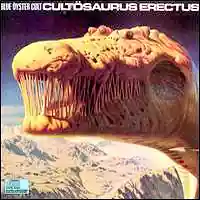
An interesting but not indispensable album then, inferior to the subsequent Fire of Unknown Origin, but always well packaged, with the usual care for the cover artwork. The rating is an appropriate average, although the Cultösaurus lets us know, not without self-irony, how by 1980 the Öyster Boys had already matured and, musically speaking, had become prehistoric.
Loading comments slowly
Summary by Bot
Cultösaurus Erectus marks a crucial turning point for Blue Öyster Cult, balancing between their pop rock past and a return to hard rock roots. Produced by Martin Birch, the album showcases skilled musicianship and thoughtful songwriting but reveals the band's uncertainty amid shifting music trends. While not the group’s best work, it contains memorable tracks like Black Blade and stands out as their strongest effort since Agents of Fortune. Fans may find the album interesting though it lacks the lasting impact of later releases.Tracklist Lyrics Videos
Blue Öyster Cult
Blue Öyster Cult is an American rock band formed in New York in 1967, known for dark, theatrical hard rock blending sci-fi, horror, and occult-tinged storytelling. The group’s classic era spans the early-to-mid 1970s and includes influential albums and staples like “(Don’t Fear) The Reaper.”22 Reviews
