
 •
Rating:
•
Rating:
THE REVIEW
Black Sabbath entered the 1990s with newfound energy. The previous decade had been somewhat of a calvary for Tony Iommi: although the LPs released were always of excellent quality, keeping the band together had become a desperate task, with singers being changed in the middle of tours and session musicians coming and going. If the formation that had recorded the legendary “Paranoid” or “Heaven And Hell” - which already featured a revamped band - only the guitarist remained, the only person who didn't seem too bothered by it was him, the “riffmaker” par excellence. After heavyweight albums that, however, had sold very little, “Seventh Star” (1986) and “The Eternal Idol” (1987), Iommi undertook a real re-foundation of the group around the young singer Tony Martin, a true newcomer who proved to be an unexpected surprise in terms of interpretive abilities, and Cozy Powell, a seasoned British drummer that the Sabs had been courting for years. “Headless Cross” gave Sabbath the opportunity, in 1989, to reassert their name, with a tour that even reached Russia, something unthinkable until some time before, and for once, the number of copies sold was more than decent.
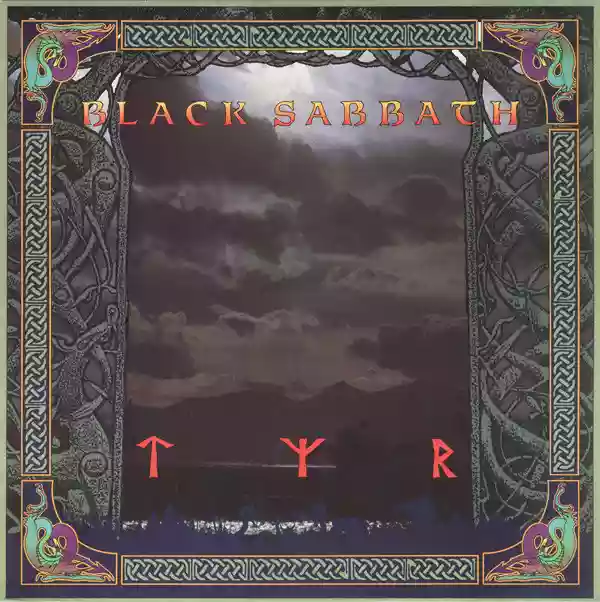
Thus bolstered by a new path that seemed to finally yield the desired results, in '90, Sabbath returned with “Tyr,” an album that, from the cover, seemed to distance itself from what had been done until then, with runes framing a dark sky that well represented this new incarnation of Sabbath, with the B-horror movie lyrics of the previous record set aside in favor of lyrics inspired by Norse mythology.
“Anno Mundi (The Vision)” is one of the best pieces ever written by Black Sabbath, an appetizer for a record that will remain at very high levels throughout. A guitar riff introduces a Latin chant, right before the scene is led by the ever-praised Tony Martin, who hits truly stratospheric notes, whose interpretation is excellently supported by one of the best rhythm sections in British hard rock, with the aforementioned Cozy here alongside Neil Murray's bass, recreating a pair that had already proven successful in the days of Whitesnake. “The Law Maker” is a pounding, compact and fast piece, quite unusual for a band like Black Sabbath, always accustomed to much more moderate tempos, embellished by a thunderous Powell like in few occasions and an Iommi who strings solos one after the other. Geoff Nicholls' keyboards, always present, even if behind the scenes, create the sound backdrop of “Jerusalem,” which combines melody and power and provides a chance to catch one’s breath after the LP’s explosive start. “The Sabbath Stones” brings the Sabs back to the evocative atmospheres that characterized albums like “The Eternal Idol” and “Headless Cross,” managing to alternate dark and slow passages with decidedly more uptempo ones, with a result so majestic and fascinating that it brings the group closer to areas hitherto unexplored, namely those of epic metal. The second side of the vinyl, in terms of epicness, certainly does not want to be inferior to the first, with “The Battle Of Odin” and “Odin's Court,” completely played on Nicholls’ keyboards, leading the listener, it must be said, to the gates of “Valhalla,” yet another forgotten gem of a vast discography. Despite the thousand line-up changes, the Sabs have rarely found themselves choosing the wrong musicians: the ever-praised Cozy Powell reveals himself once more as a robust but precise drummer, a true added value to a group really in a state of grace. Tony Martin, here the singer of icy lands and battles with a mythical flavor, remains a great mystery in rock: how such a singer is not counted among the best is inexplicable. “Feels Good To Me” is a decent melodic hard rock, a piece that seems written specifically for hoping for some radio play, and in fact, IRS, the record label, promptly made both a video and a 45-rpm single. The conclusion arrives with “Heaven In Black,” bringing the 33 rpm back to the atmospheres that permeate the entire work, with the Sabs here too dabbling in a powerful and rhythmic heavy.
“Tyr” was the last great album of Black Sabbath: it can never have the historical importance of a “Master Of Reality,” but the quality is really very high and should be counted among the group’s best alongside various “Heaven And Hell” and “Mob Rules.” Ironically, however, not only has the record been out of catalog for years, but after the tour, the line-up that had recorded it quickly fell apart, resulting in the dismissal of Tony Martin in favor of the returning Ronnie James Dio. It was a reunion merely out of “interests”: the Sabbath were itching to rejoin the Monsters Of Rock circuit, from which they had been excluded for years, while the singer's career had hit a dead end after the disappointing “Lock Up The Wolves” of '90. Naturally, the idyll lasted very little, and Iommi eventually found himself having to call back Tony Martin, who was condemned to the role of eternal spare tire. There have been talks for a long time about a series of reissues of the Martin era LPs, but so far nothing has been seen: the records are still available in streaming online, along with many recordings of the tours from that time; definitely a way to fill a gap in a fundamental piece of hard rock history.
Black Sabbath:
- Tony Martin, vocals
- Tony Iommi, guitar
- Neil Murray, bass
- Cozy Powell, drums
- Geoff Nicholls, keyboards
“Tyr”:
- Anno Mundi (The Vision)
- The Law Maker
- Jerusalem
- The Sabbath Stone
- The Battle Of Odin
- Odin's Court
- Valhalla
- Feels Good To Me
- Heaven In Black
Loading comments slowly
Summary by Bot
Black Sabbath's 'Tyr' marks a revitalization of the band in the 1990s with strong performances and a fresh Norse mythology concept. Tony Martin shines as a vocalist, supported by Cozy Powell and Neil Murray. The album blends epic metal atmospheres with powerful riffs and melodic passages. Despite its quality, it remains underrated and out of print, overshadowed by band lineup changes and later reunions. 'Tyr' is a must-listen for fans of classic heavy metal and Black Sabbath's evolving sound.Tracklist Lyrics Videos
Black Sabbath
English heavy metal band formed in Birmingham in 1968, widely credited as pioneers of heavy metal and led musically by guitarist Tony Iommi.91 Reviews
Other reviews
By stargazer
An album unjustly left in the shadows just because it wasn’t played by the most representative line-ups of this band with a long and glorious career.
"Anno Mundi" opens with a sweet arpeggio and a Latin choir, featuring a beautiful chorus where Martin exclaims: As the wind in the night blows cold, your eyes are burning.
By Starblazer
Tony Martin has a wonderful voice, a notch above even the legendary Ronnie James Dio.
Wonderful album, one of the pinnacle expressions of Black Sabbath.
