
 •
Rating:
•
Rating:
THE REVIEW
Let's get one thing clear from the start: this, for once, is a story with a happy ending. Plagued by every imaginable mess, multi-decade feuds, fake reconciliations, deaths, "crazy stuff," and strokes of genius, but still a happy ending.
Because this is the story of four "promising" rough workers from the (sub)proletarian England of the Sixties, born into a socioeconomic context that would be an understatement to call "disadvantaged" and who, at first without even realizing it, went from a rosy future next to an assembly line to treading stages all over the world, not halfway, all of it! End of the fairy tale. Oh, the protagonists are four desperates, to be clear, the class mates of the technical school (those in high school wouldn't even be allowed near) from the last desk, the ones you tell yourself at sixteen "this guy will be a failure for life" and then years later, while on Facebook you were asking "friendship" from some alluring blonde with an unpronounceable name, you find out they have become salesmanagergrandirettorefigliodiputt and that the "loser" has as many blondes with unpronounceable names as he wants. Oh, and if we also add that the "big bang" of it all, the starting point, was a work accident including an amputation, something that could grant you disability pension, the game is set. Because frankly, even looking at them in the face, you wouldn't give these four a broken cent, knowing full well how they would spend it. The drummer would like to have rockstar aspirations but, by his own admission, has "a jazz training," which translates to "if I don't follow the guitar I'm lost," but he's got skills. Then let's not even mention the other two, the bassist is a starry-eyed guy obsessed with horror movies (just because "Star Wars" hadn't come out yet) and the guitarist is a gang-type, half-Italian too (oh, they've got it in their blood). Any comment on that kind of singer, someone who more than singing complains behind a microphone, with a name so "elegant and British" that it seems almost like a joke attached to this jailbird who also stutters, is superfluous.
Surnames and names, please: William Ward, Terence Butler, Frank Anthony Iommi, John Osbourne. It's done, these will be for life on Her Majesty's shoulders, on the taxpayers, and will make the fortune of the local bar. And yet no, the gathering of desperates not only makes it, but shows amazing talents, an extraordinary inventiveness, and simply writes the coordinates of what would be hard rock in the five decades to follow. A masterpiece, it seems like an uplifting 19th-century novel, Comrade Cipputi has become a rockstar. Because the four unrecommendable guys answering to the name of Black Sabbath are just that, four not-too-aspiring-workers who, being in the right place at the right time, made it, starting from what they had, without having to invent anything stratospheric or unimaginable. Listening to them today, the various "Black Sabbath," "Master of Reality," "Sabbath, Bloody Sabbath," you are still amazed at how they made History, with a capital H, records that in themselves are not even that difficult to play, but had a unique attitude and sound, highly recognizable, even if they changed genre from one record to the next, always maintaining a common thread, a distinctive trait, that thin red line that connects the unhealthy blues of the beginnings with the epic heavy metal of the Eighties. To reread their story today is to reread the story of England, which in the Fifties still remembers 'Mustache's' bombs. Desolate suburbs, marginalization, unemployment: in the picturesque suburb of Aston, the possibilities for you, my young pre-metalhead, are two, either you go dealing or the factory. Full stop. Zero. Like your father and his father before him. Practically serfs in jeans and t-shirt. "We were not hippies, and we hated the hippies": of course, how could you? No flower power here, at fifteen you know very well that the best you can expect from life is the rattling of the assembly line, on long, never-ending shifts, sweat, and toil, and watch not to lose a hand under some press. Please, here anyone would escape at the slightest chance. And since here you have to make a virtue of necessity, might as well take the "best" from the situation, exorcise it and... write about it! Possibly in music.
"Wicked World," "War Pigs," "Solitude" are the result of all this: they are the offspring of a working class at the limits of exasperation that sees in four simple chords the hope for a better future. Surely Marx somewhere talks about this too. The lyrics are often hallucinatory, depicting a raw reality but viewed through the distorting lens of a fantasy and horror enthusiast. The war capitalists thus become slippery "pigs," the neighborhood Nazis improbable "fairies," a Sixties horror film an improbable yet real dream. Because in the end in the lyrics of Black Sabbath, despite appearances, there is a lot about everyday life, a reflection of what could be the expectations of a "not too well-off" young man from the most desolate England of the Sixties. And rereading them today, they almost seem like a socio-political compendium of the era: Vietnam, politics, a very first idea of environmentalism, the search for a better future, an unexpected yet hopeful purely Christian spirit, constant references to the rampant drug use. Musically, for the two who do not know, they oscillate between a blues base and prog hints, between psychedelia and a primordial doom.
All this in a handful of albums between 1970 and 1973: if the self-titled debut and the immediate follow-up "Paranoid" (1970), direct children of the Sixties and the heaviest (in every sense) blues, do not disdain pure heavy gems, with Iommi and Butler taking the lead, "Master of Reality" (1971) forty years later has a lumbering and "thick" stride that pales any aspiring gothic-doom group. "Volume 4" (1972) shows some flaws but also a lot of well-calibrated class, up to "Sabbath, Bloody Sabbath" (1973) and its psychedelic-prog touch, "mellowed" as it is by the presence of Rick Wakeman at the keyboards, perhaps the sum of the group's sound. To a band of just barely twenty-somethings, you couldn't have asked for more: what purpose is there to listen to others when someone has already done it and done it better? With Black Sabbath the working class (re)does the revolution, but bass and guitar have taken the place of guns and bombs: Lenin's Goatee would have been proud of them. Naturally, you can't be the megaphone of a generation for life, and all good games end quickly: already by the mid-Seventies the group is in crisis, Ozzy leaves, inspiration is not what it used to be a couple of years before, and a merry-go-round of lineups begins, which would bring into the group even characters who calling improbable would be a compliment. Iommi will do somersaults to keep the show running, almost always with excellent results, it must be recognized, but it will never be the same again. In pure satisfied rockstar style, they will also do a thousand reunions, of course promising every time it will be the last while already letting you know the dates of the next tour, a bit like the Kiss who have done farewell tours for ten consecutive years. Of this sort of social-rockstar fairy tale, this is the abridged version, strictly unofficial, meaning that Their Lords did not show their faces, but certainly at the right moment, they filled their pockets, and, strange but true, it's also the most complete there is, at least before the Black Sabbath turned into the Iommi Band and the microphone passed into the hands of just about anyone.
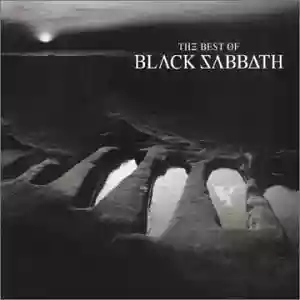
So much has been said about them, but in light of the two-thousandth reunion, a quick refresher on the ABC of rock'n'roll never hurts.
Black Sabbath
Wizard
N.I.B.
Evil Woman
Wicked World
War Pigs
Paranoid
Planet Caravan
Iron Man
Electric Funeral
Fairies Wear Boots
Sweet Leaf
Embryo
Children of the Grave
Lord of This World
Into the Void
Tomorrow's Dream
Supernaut
Snowblind
Sabbath Bloody Sabbath
Killing Yourself to Live
Spiral Architect
Hole in the Sky
Don't Start (Too Late)
Symptom of the Universe
Am I Going Insane [Radio Edit]
Dirty Women
Never Say Die
Hard Road
Heaven and Hell
Turn Up the Night
Dark/Zero the Hero
Loading comments slowly
Summary by Bot
This review chronicles Black Sabbath's rise from disadvantaged working-class roots to pioneers of hard rock and heavy metal. It praises their raw sound, socio-political lyrics, and lasting influence through classic albums and key tracks. Despite lineup changes and struggles, their early work remains a cornerstone of rock history. The 'Best Of' collection captures the essence of their groundbreaking style and spirit.
Black Sabbath
Black Sabbath are a British heavy metal band formed in Birmingham in 1968. The classic lineup featured Ozzy Osbourne, Tony Iommi, Geezer Butler and Bill Ward, with later acclaimed eras fronted by Ronnie James Dio and Tony Martin. Their influence spans generations; the group released the comeback album 13 in 2013 and concluded with a final tour in 2017.92 Reviews
