
 •
Rating:
•
Rating:
THE REVIEW
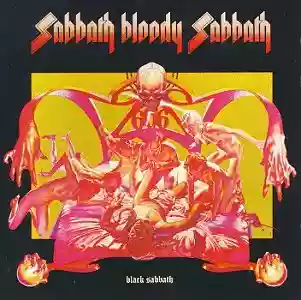
It's 1973, and Black Sabbath, now at the peak of their fame thanks to the global success of Paranoid (1970), release the fifth act of their musical saga: Sabbath Bloody Sabbath. Just by looking at the cover (which features demons, skulls, and the 666, the biblical number of the Antichrist), you can sense the atmosphere that surrounded the Black Sabbath in those years...
The album opens with the marvelous title track characterized by the heavy riff (in pure Tony Iommi's style) that serves as a seismic backdrop to Ozzy Osbourne's awkward and malevolent voice. Excellent are the parts where Iommi "strangles" the distortion to create a certain "jazzy" effect that blends perfectly with the voice of "Madman" Osbourne. Shaken by the passage of "Sabbath Bloody Sabbath," our ears are then assaulted by the tomb-like cadences of the riff in "A National Acrobat," a track that somewhat echoes "Electric Funeral" (present in Paranoid) due to its typical doom-laden pace. After the instrumental "Fluff" (a true Iommi magic), we reach the rockish "Sabbra Cadabra" (undoubtedly the most "cheerful" track on the album) which slightly eases the bleak atmosphere experienced until now with a decidedly less catacomb-like tone. The bad thoughts return with the subsequent "Killing Yourself To Live," where even the title alone explains many things... Suggestive and rich with dark charm is "Who Are You," in which the sound of "mustache" Iommi's guitar marries beautifully with the keyboards (played on this occasion by Rick Wakeman of Yes), creating an alluring yet atypical blend for a band like Sabbath... The next "Looking For Today" is cheerful but somewhat predictable (certainly the least successful song on this wonderful album...) preparing the ground for the triumphant entry of "Spiral Architect," a track that rivals the title track as the album's jewel. The opening is entrusted to a "lysergic" arpeggio by Iommi that serves as a launch pad for the entrance of Ozzy's voice. Characterized by a fairly complex arrangement (Iommi unleashes his more "progressive" inclinations), the track flows delightfully as if gliding gracefully over a carpet of roses (beware of the thorns though...!); probably one of the best compositions by Iommi & Co.
This album can be described as a "fresco" of the Black Sabbath's career, where all the elements that characterize the band's sound are highlighted. Surely Sabbath Bloody Sabbath represents the creative peak of the first lineup; in the following years, Sabbath will still produce excellent albums, but they won't be able to recreate the charm and madness of the period with Ozzy Osbourne on vocals...
Loading comments slowly
Summary by Bot
Sabbath Bloody Sabbath, released in 1973, marks Black Sabbath's creative peak. The album combines heavy riffs, Ozzy Osbourne's eerie vocals, and Tony Iommi's innovative guitar work. Tracks like the title song and Spiral Architect highlight the band's progression toward complexity and atmosphere. The album balances dark, heavy moodiness with moments of lighter rock, showcasing the band's dynamic range. It remains a landmark in heavy metal history.Tracklist Lyrics Videos
Black Sabbath
English heavy metal band formed in Birmingham in 1968, widely credited as pioneers of heavy metal and led musically by guitarist Tony Iommi.91 Reviews
Other reviews
By mista
'Sabbath Bloody Sabbath' is a wonderful link between the Sabbath eras.
I love this album and I recommend it, I hope the review gets some comments so that we can debate the band to which we owe everything good that metal has given us over the years.
By sanvalentino3
Incredibly, Ozzy’s singing is effective and indispensable to the pieces.
'Sabbath Bloody Sabbath' is a heavy progressive album. Unrepeatable and unrepeated.
