
 •
Rating:
•
Rating:
THE REVIEW
Within the discography of Black Sabbath, a legendary band that over the years would be "plundered" by any "heavy" formation, there exists what we could define as the "trilogy of the underrated," albums that are valid but for various reasons have never achieved the status of classics, despite having all the credentials to become, if not cornerstones of heavy, at least be included among the best in the discography. Part of this "trilogy" includes "Born Again" (1983), "Seventh Star" (1986), and "The Eternal Idol". If over time a sort of "cult" developed around these works among the most hardcore fans, the general public largely snubbed them without much issue, usually attributing post-Ozzy Black Sabbath to not being up to par with the originals. The problem, in fact, lies all here: while the historical group laid the foundations for a completely new way of conceiving music, entering rightfully into the history of rock, from the eighties onwards, Iommi and company had to settle for being "only" an excellent heavy group. If at just over twenty, all your friends, more or less, managed to find jobs as workers or at best as employees around working-class Birmingham while you instead came up with albums that would make history, it is certain that people will have enormous expectations of you. And it doesn't take much to disappoint the "average" fan: an unconvincing record, an unwelcome line-up change. And so Black Sabbath, or what was left of it, if in the early seventies they were a sort of Beatles of hard rock, in the eighties they found themselves living on reflected glory, conscious of both the "heavy" name (in every sense) and the difficulty of keeping the lineup together.
After managing to regain some of the acclaim with two hugely successful tours featuring Ronnie James Dio behind the microphone, Tony Iommi and Geezer Butler found themselves having to deal with yet another reshuffle, aggravated by the need to change the singer once again. And here comes the "miracle." The manager at the time, Don Arden, father of Sharon, Ozzy's wife and manager, severed any professional ties with the two and from this moment would have only one purpose: to relaunch, purely out of spite, the name Black Sabbath. And he partly succeeded in this too: bringing back a now alcoholic Bill Ward to the lineup and making him "even" play decently for forty minutes of music is no small feat. But what about the vocals? Here comes the masterstroke! Ian Gillan, the historical "screamer" of Deep Purple, friends-rivals of the four from Birmingham, had always been on good terms with Iommi and company and, after some selections, it was officially announced that he would take over the microphone of the Black Sabbath. But how did it go? What might seem like the "marriage" of the year according to official statements, hides under a much simpler and, if you will, playful reality. Iommi, Butler, and Gillan met in a pub to discuss the matter and after a few too many beers, the new Sabbath formation was ready. However, when they sobered up, the reaction was apparently something like: "Oh no, we actually did it!" Clearly, none were truly convinced that such an operation could succeed, they least of all themselves. Even Gillan himself, years later, would say that he accepted the gig purely for economic reasons. Black Sabbath never disappoints: with a singer on the hunt for money and an alcoholic drummer, the conditions for having a stable lineup are all there. Stable for the next six months, of course. The result of a story that was by now more intricate than a Brazilian telenovela was precisely "Born Again", an album that was overall good and at least had two songs become proper classics in its favor, namely the title track and "Zero The Hero", later also covered by a group like Cannibal Corpse, an evident sign that the "plundering" spoken of at the beginning does not only concern the Ozzy period. The album is steeped in a sulfurous, malevolent atmosphere, so much so that it almost seems like returning to the times of that proto-doom masterpiece that was "Master Of Reality": Gillan sings like a madman, the rhythmic section is there and it can be felt, Iommi enhances the whole thing with great riffs. Despite this, though, something doesn’t work: the album sells poorly and the tour would be the first of a long forgettable series, with Gillan, despite his commitment, failing even to remember the lyrics of the songs. Oh, naturally Ward had quit for umpteenth time (but would return again in a few months) and for the occasion, he was replaced by Bev Bevan, already known for his experience with ELO. In the end, however, the real problem with the album was not even the fact that they were presenting themselves with yet another singer within a couple of years, but a truly subpar production. For years, the Black Sabbath brand had been synonymous, in addition to great rock, with quality, proposing an album with such sound was simply a suicidal choice: muddled guitars, a bass too loud, unclear drums. Why? Officially the master of the disc had been affected by humidity and nothing could be done to save the situation. And by then, the damage was done. It matters little anyway, so "Born Again" would still remain an isolated episode in the English discography: Gillan quits at the first opportunity to return to Deep Purple and the Sabs attempt in vain to find a singer worthy of that name. However, there remains a bitter taste for an experience that could have been better.
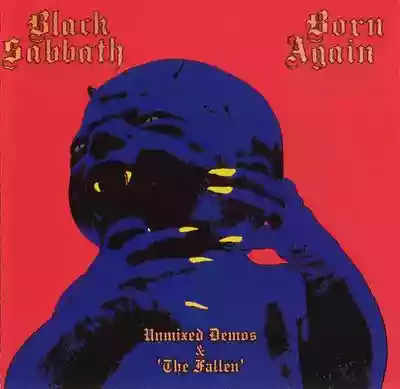
And here we arrive at the paradox. For years now, bootlegs have circulated which, in addition to containing demos of that legendary album, even present unreleased tracks left out of the final lineup. But what is this "paradox," you may be asking? That the demo has a better sound than the final product. The sound, naturally, does not stray much from the album that we all know, but it still results clearer, cleaner, with the various instruments clearly audible: thus, we are far from the "mush" which, unfortunately, we found ourselves listening to. Here and there, being demos, there are discrepancies with the final work, but they really are small things. We could almost say this is "Born Again" as it was "conceived." As mentioned earlier, the whole is enhanced by "Fallin'" (also known as "The Fallen"), a perfectly valid track but which was preferred to be excluded to make way for the dispensable "Keep It Warm". And it's a shame because it is a small gem, a nice driving track, supported, besides a great performance by Gillan, by a truly inspired rhythm section (the drum attack is earth-shattering and shows how much Ward still could have given to the world of rock) as well as a Tony Iommi in great form. If the entire work had been published, it would have benefited positively. However, the short instrumental "The Dark" is missing, evidently subsequent to the demo recording, but instead, there is a version of "Stonehenge" much longer than the one later published, with Geoff Nicholls' keyboards as evocative as usual. In conclusion, I can say that it is undoubtedly an interesting product, not too difficult to find and which helps us understand how, in intentions, an album unfortunately not always appreciated should have sounded.
Musicians:
Ian Gillan: vocals
Tony Iommi: guitars, flute
Geezer Butler: bass
Bill Ward: drums
With the participation of:
Geoff Nicholls: keyboards
Tracklist:
"Hot Line"
"Keep It Warm"
"Fallin'"
"Digital Bitch"
"Stonehenge (full version)"
"Trashed"
"Zero The Hero"
"Born Again"
"Disturbing The Priest"
Loading comments slowly
Summary by Bot
Born Again is part of Black Sabbath's underrated trilogy, featuring Ian Gillan on vocals amidst lineup struggles and production flaws. Despite a few standout tracks, poor sound quality and instability marred its impact. Demos reveal a clearer, stronger version of the album, hinting at what could have been. This album remains a fascinating but bittersweet chapter in Sabbath’s history.Tracklist Lyrics Videos
Black Sabbath
Black Sabbath are a British heavy metal band formed in Birmingham in 1968. The classic lineup featured Ozzy Osbourne, Tony Iommi, Geezer Butler and Bill Ward, with later acclaimed eras fronted by Ronnie James Dio and Tony Martin. Their influence spans generations; the group released the comeback album 13 in 2013 and concluded with a final tour in 2017.92 Reviews
Other reviews
By Fidia
Born Again is perhaps the heaviest and darkest album in Sabbath’s discography.
If the partnership had continued, Black Sabbath would have surely delighted us with other musical gems.
By Starblazer
'Born Again' is a dazzling forge of emotions, with Ian Gillan showcasing all his monstrous abilities.
The opener 'Trashed' is one of the most devastating pieces in the entire Sabbathian repertoire.
By Sasquatch
The only one to blame for this MASTERPIECE is Tony Iommi.
The true gem of the album is the one that gives it its title, slow with a goosebump-inducing Gillan and the other three who are equally impressive, a true unrecognized classic.
