 •
Rating:
•
Rating:
THE REVIEW
Perhaps their talent has never been sufficiently appreciated, or maybe they never wanted to conform to market logic. Or, much more simply, they are just that good.
The Biohazard (their debut dates back to almost sixteen years ago, in 1990), are a virtuously perfect band, capable with a few notes of conveying anger, grit, character, the will to live, to survive, and of communicating messages, sometimes perhaps a little ambiguous, but still solidly effective.
Evan Seinfeld (bass and vocals), Bobby Hambel (guitar), Billy Graziadei (vocals and guitar), and Danny Schuler (drums) are four naughty and brilliant guys: in the late Eighties, they tune their music and instruments to the sound of New York's periphery using the language of rap (but not the noisy and vulgar kind of many rap groups emulating across half of Europe, including Italy), but their speed is insane, and follows the rhythms of metal with the anger of the fiercest and most vigorous hardcore in their veins.
They have enormous potential: knowing how to mix metal, rap, and hardcore is not an everyday thing, and few could do it. However, their debut surprisingly leaves one puzzled and somewhat disappointed: "Biohazard" contains a handful of little songs and a gem ("Survival of the fittest") that nevertheless do not convince the very first pioneering fans. They redeem themselves widely with their second album, "Urban Discipline," but reach great heights only with their third record, "State of the World Address," a magnificent album that paradoxically marks the end of dreams and glory: Hambel will leave to go solo (embarking on a miserable solo career), and the fourth album, "Mata Leao," aside from being a solemn commercial flop, will soon prove to be empty and suffocating.
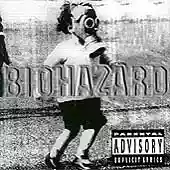
"State of the World Address," however, is a little gem that, if not definable as a masterpiece (though it comes close), could easily be qualified as a 'missed masterpiece'. Finally signed by a famous production company, the WB, the Biohazard's perfect and unyielding crossover finally transforms into pure musical delight: coherent, and violent, to the bitter end, and they are never ashamed to say what they think: the title track is a fierce accusation against certain American-made hypocrisy and is violently thrown in the face of both the public and critics (and even reaches the often somewhat deaf ears of the American Government), while "Tales from the Hard Side" reaffirms the concept of fusion between rap, metal, and hardcore. All naturally, with great elegance and great style.
The fierceness of Biohazard could be, at times, even unsustainable and shocking (at least for those coming to this genre of music for the first time), but it is their grit and anger that are the keystones of their success, which, as I mentioned at the beginning, would deserve (or rather, would have deserved) a wider and less niche audience, especially in Europe where their art has always been very little received.
Living and surviving in New York is very difficult, but listening calmly and patiently to Hambel's beautiful guitar solos always, even after yet another listen, gives a little shiver. Not everything goes smoothly, and at least a couple of tracks can be mainly categorized as mere fillers, but "State of the World Address," whether you like it or not, is still an album of tremendous impact and remarkable performance.
But if you love Biohazard, stop here: going further and listening to the subsequent albums might bring you sadness and melancholy. This is where the story ends, and here the dreams end.
Loading comments slowly
Summary by Bot
Biohazard’s third album, 'State Of The World Address,' represents the band at their peak, expertly fusing rap, metal, and hardcore into a coherent, powerful record. While some tracks serve as fillers, the album remains impactful and stylistically elegant. It captures gritty themes of survival and social criticism with raw honesty. This record is seen as a ‘missed masterpiece’ before the band’s initial decline.
Biohazard
Biohazard are an American hardcore/metal crossover band from Brooklyn, formed in 1987 by Evan Seinfeld, Billy Graziadei, Bobby Hambel, and Danny Schuler. They fused hardcore punk with heavy metal and hip‑hop elements, breaking through with Urban Discipline (1992) and State of the World Address (1994).07 Reviews
