
 •
Rating:
•
Rating:
THE REVIEW
One of the most interesting European bands of the early Eighties, among the few capable of blending and fusing rock with elements from Scottish musical tradition and Celtic folk.
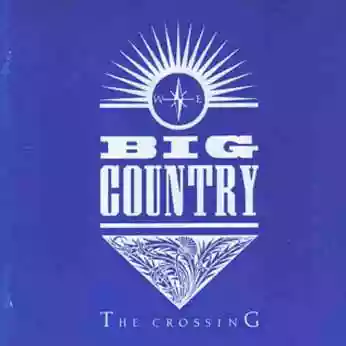
Big Country was formed in 1981 by the talented Stuart Adamson and his friend Bruce Watson, who were joined by the solid bassist Tony Butler and drummer Mark Brzezicki. Adamson had some small musical experiences, having been a member of the Skids for a period, a punk-pop band whose greatest success was the album "The Absolute Game." After an unfortunately not particularly successful debut single ("Harvest Home"), Big Country broke into the British charts in 1983 with the next two tracks: the very famous "In A Big Country" and "Fields Of Fire," quickly followed by their debut album "The Crossing." Produced by the skilled Steve Lillywhite, "The Crossing" is a compact, interesting, well-crafted and extremely well-performed work. The critics coined the term "bagpipe rock" to describe it. The guitar interplay created by Adamson and Watson indeed evokes that of Scottish bagpipes; this folk foundation, combined with powerful rock, ensured the album a good audience success. "The Storm," "Porrohman," and "Lost Patrol," three very evocative and Celtic-inspired tracks, are the standout moments of a successful album that remains pleasing even today and stands alongside other works released during that period such as "War" by U2, "Declaration" by The Alarm, and "New Gold Dream" by Simple Minds. Particularly notable is Stuart Adamson's use of the E-bow on the guitar, an effect that made the band's sound even more evocative and recognizable. Big Country's career would continue successfully throughout the Eighties thanks to the excellent "Steeltown," an inspired and committed album, the decent yet widely sold "The Seer," and the faded "Peace In Our Time." Unfortunately, due to a lack of originality, the quartet continued to wearily replicate their established musical formula into the next decade, producing less successful and uninspired albums such as the disappointing "No Place Like Home," the inconsistent "The Buffalo Skinners," and the predictable "Why The Long Face."
From this point onwards, Big Country began an unstoppable descent into the minor circuits. Despite a continuous and frenetic live activity, evidenced by various albums, signs of a timid artistic recovery would only emerge in 1999 with the album "Driving To Damascus," inspired by a certain American rock. Unfortunately, this would also be Big Country's last studio work, as the tragic suicide of Stuart Adamson in December 2001 brought their adventure to a close here and on a lower note.
Loading comments slowly
Summary by Bot
Big Country's 1983 debut album The Crossing skillfully mixes rock with Scottish and Celtic folk, creating a unique 'bagpipe rock' sound. Produced by Steve Lillywhite, the album features standout tracks like 'In A Big Country' and 'Fields Of Fire.' Despite a successful start and lasting appeal, the band later struggled with originality, culminating in a tragic end with Stuart Adamson's death. The Crossing remains a highlight of Eighties rock.Tracklist Lyrics Videos
Big Country
Big Country is a Scottish rock band formed in 1981 by Stuart Adamson and Bruce Watson, joined by Tony Butler and Mark Brzezicki. Known for Celtic-tinged “bagpipe” guitar lines often crafted with the e-bow, they scored major success with The Crossing (1983), Steeltown (1984) and The Seer (1986). Stuart Adamson died in 2001; the group later returned to the stage, including shows with Mike Peters.05 Reviews
