
 •
Rating:
•
Rating:
THE REVIEW
English, class of '70, Folk voice, electro attitude and an inferiority complex about her (too tall) height, forgive the pun.
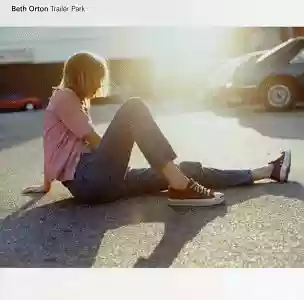
Beth Orton debuted in the early '90s as a guest vocalist on electronic projects including Orbit and Chemical Brothers (remember the legendary "Alive Alone" in "Exit Planet Dust"?), with the former, during those years, she began a partnership (also an affectionate one) which led to "SuperPinkyMandy," an album from '93 released in a few copies only in Japan and in '96 in "Trailer Park", which can be considered her true debut and manifesto of "Folktronica", a sound that would characterize all her works from then on, at least up until the beautiful "Daybreaker".
"Trailer Park" rightfully fits into at least two key trends of the '90s, namely Electronica (Trip-Hop, Drum n' Bass) and the more classic Female Singer-Songwriter tradition (even though in this album she's not the author of all the tracks), in fact, if on one side the electronic influences (and given her background they were inevitable) are very evident, on the other hand, the Myth of the Shy Girl with folk-tinged dynamics, armed with guitar, finds in Orton a perfect fit revealing its true essence.
But this shouldn't be misleading, "Trailer Park" is not a dichotomous album but rather linear and alluring and if one of the two stated influences serves the other, it's Electronica that becomes the "substrate" because here, in the end, we are faced with a Folk Album, updated to the Fashion (an ugly term but bear with me) of the time but it remains Folk all the same.
Right from the opening "She Cries your Name" (co-written with Orbit) all these elements are clarified, indeed, while the good William enjoys creating a muted atmosphere, Orton's haunting voice (a voice that is among my favorites of those years) and the basic guitar accompaniment make flourish that typical melancholy of the folk-singer-songwriter tradition, baptizing a kind of sound so particular that Ortonian compositions are recognizable from a mile away.
The subsequent "Tangent" and "Don't Need a Reason" confirm these characteristics and in fact emphasize even more the fact that marrying sounds (and productions) typically electronic with strongly '70s elements wasn't really such a gamble and in their small way, they paved the way for moments of experimentation that in the following years would have ample room (all of this, in a somewhat more avant-garde way, can be compared to what Beck was doing in America, first with "Mellow Gold" in '94 and "Odelay" in '96). All this while always staying within the confines, if not of "easy listening" ("Live as you dream" and "Touch me with your love", for example) at least within those of compositional simplicity, avoiding unnecessary and ineffective "ambient" diversions, typical of certain "synthetic" compositions of the era.
In addition to the aforementioned songs, one of the most interesting moments is the "Philspectorian" "I Wish I never saw the Sunshine", a divertissement where Orbit revels in his natural environment (or almost) which is that of Rmx (even if it's not exactly a remixed song).
In conclusion, a very pleasant Album that can be appreciated both by nostalgics (including myself) and by those who are encountering for the first time the two influences mentioned at the beginning (indeed it can be considered an excellent entrance avenue...), never over the top and above all imbued with a melancholic streak (which we like very much, despite those who call any strongly introspective artist "whiny") never grotesque, easy but not predictable (am I overdoing it with the wordplay?).
Loading comments slowly
Summary by Bot
Beth Orton's 1996 album Trailer Park stands as a defining work of the Folktronica genre, blending folk melodies and electronic production. The album balances electronic substrates with folk songwriting, highlighted by Orton's haunting vocals. Collaborations with William Orbit add depth without overshadowing the introspective lyrical themes. Overall, Trailer Park offers a melancholic yet accessible listening experience for nostalgic fans and newcomers alike.Tracklist Lyrics Videos
Beth Orton
Beth Orton is an English singer-songwriter from Norwich known for blending folk songwriting with electronic textures, a style often dubbed folktronica. Early collaborations with William Orbit and the Chemical Brothers preceded her breakthrough with Trailer Park (1996) and Central Reservation (1999). She received Mercury Prize nominations for both albums and won the BRIT Award for Best British Female Solo Artist in 2000, later releasing Daybreaker, Comfort of Strangers, Sugaring Season, Kidsticks, and Weather Alive.04 Reviews
