
 •
Rating:
•
Rating:
THE REVIEW
One might begin on a sweltering August day, in a remote cemetery on the edge of Darby Creek, where Pennsylvania and New Jersey overlook the Delaware River. It is 1970. A solemn Janis Joplin pays homage with a brand new headstone to what she calls "the greatest blues singer of all time", not knowing that, in just a few months, she would join her in a tragic end.
Fate sometimes plays cynically, and in the case of an America at the center of the last century, it prematurely elevates its leading actors to the status of a legend.
Bessie Smith was one of these.
But she was by no means the goddess raised above the common people and indifferent to events: she was the spirit of her time, touched by the experiences of her world to the core, experiencing firsthand the paradoxes of a nation entering the twenty-first century.
The blue, from George Colman to the spirituals of black Americans, is the color of the melancholic, of the suffering. The blue devil that gripped Bessie Smith was perhaps the same one that looked Robert Johnson straight in the eyes, waiting patiently on some street in the deep south.
Like a star rocketing across the celestial arc at a mad pace, shining with a light too intense to allow her to live long, Bessie Smith knew how to seize that leading role that would accompany her throughout the 1920s. The golden era of Blues and Jazz will forever be grateful to her. Capable of influencing a generation of singers who will make history in the years to come (including Janis Joplin herself along with Billie Holiday, Etta James, Ella Fitzgerald, to name just a few), this voice from Tennessee managed to establish herself as a unmatched bastion in expressing the most bittersweet and elegant blues that exists.
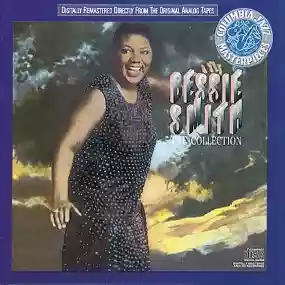
She began performing as early as 1913, although success came with the early 1920s recordings, including a version of "Downhearted Blues" from 1923 (the year Smith signed with Columbia). This track opens the collection under review, almost serving as a forerunner to Smith's golden period. It would still be difficult not to mention all sixteen tracks of this 1989 collection. "'Tain't Nobody's Bizness if I do" is of disarming beauty, "St. Louis Blues" (a traditional performed in duet with Louis Armstrong) descends gently to touch the most intimate and hidden chords, "Gimme A Pigfoot" requires no words to describe it. Every single track attests to an incomparable aesthetic fascination, a document of an era that sounds distant yet still stands unchallenged against anything that comes close to it. A very special mention should go to "Nobody Knows When You're Down and Out", a track from her later period. In a few words: the synthesis of perfect composition, the precious gem that everyone will want to emulate in the future, yet remains unchallenged to mark an unattainable path.
The collection presented here, despite its admirable capacity for synthesis, omits some of Smith's best pieces. Tracks such as "Safety Mama", "Take it Right Back", "After You're Gone", and "Alexander's Ragtime Band" should definitely be retrieved. Nonetheless, this collection adequately conveys the sound of an era thanks to a voice that, in every single nuance, manages to give the sensation of the sublime, of the unreachable (as perhaps only Etta James in "At Last" will manage to do later).
The crisis of '29 unfortunately led to the closure of many venues where Jazz and Blues had made their fortune. As a consequence, the light by which Bessie Smith shone gradually dimmed, following a tumultuous descent that would lead to her tragic death in September 1937. Bessie Smith left this world after a troubled life, tested repeatedly by the adversities surrounding her.
She died like a star, leaving a glow destined to spread for years, like an immovable bastion.
Loading comments slowly
Summary by Bot
This review honors Bessie Smith as a pivotal figure in blues and jazz, highlighting her powerful voice and influence on generations of singers. The collection showcases key tracks that capture the soulful spirit of the 1920s. Though some notable songs are missing, the album remains a vital document of an era. Smith's tragic life and enduring legacy are poignantly portrayed.Tracklist Lyrics Videos
01 Downhearted Blues (03:28)
03 My Sweetie Went Away (03:15)
04 Weepin' Willow Blues (03:13)
07 You've Been a Good Ole Wagon (03:30)
08 I Ain't Gonna Play No Second Fiddle (03:24)
09 Young Woman's Blues (03:12)
10 Muddy Water (A Mississippi Moan) (03:10)
11 Mean Old Bedbug Blues (03:15)
12 Empty Bed Blues, Parts 1 & 2 (06:26)
14 Black Mountain Blues (03:12)
Bessie Smith
Bessie Smith was an American blues singer from Chattanooga, Tennessee, celebrated as the “Empress of the Blues.” She rose to fame in the 1920s with Columbia Records, shaping vocal blues with landmark recordings and collaborations, including work with Louis Armstrong. She died in 1937 following an automobile accident near Clarksdale, Mississippi.01 Reviews
