
 •
Rating:
•
Rating: THE REVIEW
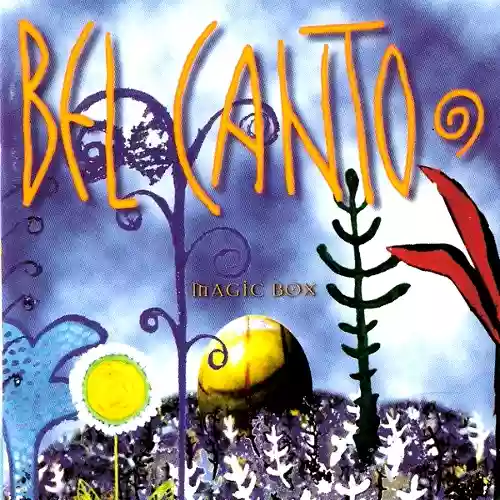
Throughout their history, Bel Canto have often resorted to the element of surprise, and their fourth album, "Magic Box" from 1996, is the best and clearest example of this: it opens and closes with a dreamy lullaby accompanied by the tinkling sound of a music box, and the nocturnal and shaded colors of its beautiful cover might make one think of an album in the vein of "Shimmering, Warm And Bright", but appearances can be deceiving: there's not much room for ethereal and contemplative atmospheres in the magic box, and above all, it's an album that marks a clear break from the past. Nils and Anneli had probably already sensed that continuing in the same vein as the excellent SW&B would lead to a slow but certain artistic death (did someone say Enya?), and it was time for bold and radical choices: crossing the Rubicon, almost completely revolutionizing their sound, opening a new cycle. In the end, the result is "Magic Box", an album that launches bass and electric guitar, practically never used before by the Tromso duo, opening up to funk and soul influences; a lively work, the brightest and most outgoing, as well as the most immediate and easily accessible for a casual listener.
However, it is not a total leap into the unknown; "Magic Box" is a Bel Canto record 100%, and it feels so, the folk bases and the imaginative aura that have always been the trademark of the Drecker & Johansen duo are still there, but the musical approach is decidedly more direct, more "concrete" compared to the past. The energetic funk contaminated by Middle Eastern harmonies of "Freelunch In The Jungle" and "Didn't You Know It?" is perhaps the most emblematic example of this new course, expressing an almost unprecedented dynamism, a positive energy that also finds one of its best expressions in a more folk musicality piece like "Kiss Of Spring", idyllic and carefree, with the always splendid Anneli delighting in joyful and bubbling vocalizations. Another important feature of "Magic Box" is the heavy use of Oriental sounds, particularly with the evocative "Bombay" and "In Zenith", which starts quietly before exploding into a majestic triumph of strings and refined vocal interplays, strengthening the link with the more visionary and spiritual component of Bel Canto, thus ensuring an ideal bridge with the past even in an album of clear change like this. A wise choice especially in hindsight, given that when, two years later, they choose the path of total discontinuity, it will truly be a struggle for Nils and Anneli.
Not only the sumptuous ceremony of "In Zenith" but also more introspective and philosophical tones like those of "Sleepwalker", a soft and minimalist march that floats hypnotically over a slow and lingering tempo, punctuated by the bass and accompanied by a sitar, comparable in approach and musicality to some episodes of early Joni Mitchell. Even in terms of slow songs, "Magic Box" operates on very high levels and offers many noteworthy passages, such as reiterating the importance of black music influences with "Rumour", an elegant and reflective soul/R'n'B midtempo that, with some minor arrangement modifications, could seem like a classic by Sade. From an emotional standpoint, the peak is reached in "Paradise" and "Big Belly Butterflies": the former has strength and a great emotional impact; it focuses entirely on electronics accompanied by a few simple guitar phrases, resulting in an intense, deep, and poignant love song, crowned by an interpretation rich in pathos and lyricism, among the best and most evocative of the more "pop" Anneli Drecker, while the latter focuses on a more candid, almost childlike approach; it dances on a lulling and delicate rhythm, rising in intensity in a theatrical crescendo of vocalizations and offering sensations balancing between euphoria and fragility.
After "Birds Of Passage", Bel Canto once again achieve perfection with a record that (deliberately) does not reach the unattainable peaks of the 1989 masterpiece, positioning itself in a completely different perspective: immediacy and ease of listening but no compromise on quality, a winning and inspired combination that makes "Magic Box" an exciting, eclectic, and captivating listening experience, with a consistently high level and freshness that renders it superior to the previous "Shimmering, Warm & Bright". Unfortunately, the phase following this new masterpiece will not be managed as wisely and prudently as happened in the post-BOP, with destabilizing effects that will undermine the harmony between Nils and Anneli, eventually leading to the breakup of the duo after a few years, but that is another story, one that has nothing to do with "Magic Box".
Loading comments slowly
Summary by Bot
Bel Canto’s 1996 album Magic Box marks a radical and successful shift from their previous ethereal style to a brighter, funk- and soul-infused sound. The album balances fresh energy with folk bases and oriental influences, delivering accessible yet artistically rich tracks. Highlights include dynamic songs like 'Freelunch In The Jungle' and emotionally charged vocals on 'Paradise'. Despite future challenges, Magic Box stands as a high-quality, eclectic masterpiece in their discography.Tracklist Lyrics Videos
Bel Canto
Bel Canto is a Norwegian electronic/dream-pop group from Tromsø, formed in 1985. The original trio featured Anneli Drecker, Nils Johansen, and Geir Jenssen (later known as Biosphere). Key albums include White-Out Conditions (1987), Birds of Passage (1989), and Shimmering, Warm & Bright (1992).07 Reviews
