
 •
Rating:
•
Rating:
THE REVIEW
Analyzing the career of the Bee Gees from 1970 to 1973 is akin to venturing into a bumpy and uneven path marked by much confusion, much indecision, few and sporadic flashes of note, and a steep decline in impact. That abysmal concentrate of treacle titled "Trafalgar", an album of irritating and spineless whining that tries to mask a total absence of ideas with suffocating and hypertrophic arrangements, yet inexplicably enjoys a certain credit and reputation, is the clearest example of this, even more than smoky and inconclusive concoctions like "2 Years On" and "To Whom It May Concern," in which there is at least a desperate attempt to continue proposing eclectic and original sounds. The Bee Gees were a pale shadow of their first golden period, 1967-1969, clinically dead in fact, and an immediate turning point was needed, otherwise they would face artistic agony in the most total anonymity. The volcanic Barry, the elder brother and more broadly visionary songwriter, had the winning idea: he realized it was time to cut ties with ballads; the days of "Let There Be Love," "Massachusetts," and "First Of May" were definitively behind them, and the future lay in rhythm, adrenaline, and vitality, and his foresight would be widely rewarded with the rapid revival of the Bee Gees' name.
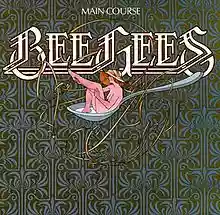
After an album like "Odessa," it was no longer possible for the Bee Gees to sustain the compositional effort of an all-encompassing pop; it was better to narrow the field to a more limited but more incisive and modern stylistic range and give a fresh overhaul to the trio's image, which also went through the creation of an official logo proudly displayed on the cover of "Main Course." However, these are not yet the Bee Gees of "Saturday Night Fever" and "Spirits Having Flown," the compositional process is still equally divided among the three brothers, Barry's voice is predominant but not yet hegemonic, and his falsetto, which makes its official debut in "Main Course," is still confined to a few moments. Ultimately, "Main Course" is a sumptuous pop album with strong funk, soul, and RnB undertones, divinely produced, enriched by fantastic vocal harmonies and top-notch songwriting. Tracks like "Fanny Be Tender With MY Love", "Nights On Broadway", and "Jive Talkin'" are now history, they are pop music standards, but there is also a thrilling "Wind Of Change", perhaps the album's dance peak, the bold and almost martial stride of "All This Making Love", lazier moments like "Come On Over", "Baby As You Turn Away", the predecessor of "How Deep Is Your Love," and two wonderful ballads, "Songbird", written with an ear to Elton John, and "Country Lanes", the only moment of glory for Maurice in "Main Course," one of the most beautiful melodies ever written by the Bee Gees enriched by breathtaking vocal harmonies.
"Main Course" is an album that satisfies everyone, fans of the Bee Gees from the late '60s as well as admirers of the disco period, and it is simply one of the most important and influential albums in pop history: incontrovertible, impossible to deny. An album that still sounds very fresh, because the purest class is one that never wilts, an engaging, electric, and electrifying record, with a touch of sensuality and a thoroughly renewed compositional verve, one of the clearest cases of a second youth in musical history. Perfect arrangements, great songs, and a Barry Gibb finally at the peak of his vocal abilities ready to take the reins of the trio: the orchestral and sentimental pop of Maurice had had its day, it was part of the past, and the vocal charisma of the elder brother and today the only surviving Gibb brother would inevitably come to the forefront, with all the pros and cons that would entail. "Main Course" is the beginning of the transformation process but does not renounce the past, and for this reason, it is so perfect, and listening to it is always a sheer joy.
Loading comments slowly
Summary by Bot
The review highlights Bee Gees' Main Course as a pivotal album marking their shift from ballads to vibrant funk and soul influences. It praises Barry Gibb's emerging falsetto and the album's timeless songwriting and production. Main Course is seen as a renaissance that prepared the band for their iconic disco era while maintaining their classic pop roots. Overall, it’s celebrated as a fresh, electrifying, and essential pop record.Tracklist Lyrics Videos
Bee Gees
Bee Gees were a British pop group formed by brothers Barry, Robin and Maurice Gibb, known for close vocal harmonies and major hitmaking success across multiple eras, especially the late-1970s disco period.11 Reviews
