
 •
Rating:
•
Rating:
THE REVIEW
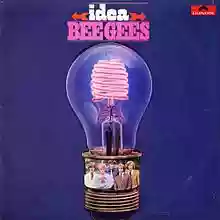
The 1967 exploit was not a fortuitous coincidence: the following year the Bee Gees made a comeback by releasing two albums within nine months: the first, "Horizontal," dominated by enchanting ballads like the singles "World" and "Massachusetts," but rather static and negligible in its few "sparkling" episodes; the second, "Idea," is instead one of the cornerstones of the trio's discography. Leaving aside the baroque sounds of "Bee Gees' 1st," this LP turns towards an eclectic pop with progressive tendencies, very refined and meticulous in terms of sound and arrangements: more varied and mature compared to its predecessor "Horizontal," it paves the way for what will be the most complex and ambitious album by the Gibb brothers, namely the double "Odessa" the following year.
Among the many winning ideas of this record, there is undoubtedly the wonderful opener "Let There Be Love," a romantic ballad with an emphatic and almost epic progression: standing out are the majestic orchestrations by Maurice Gibb and the crystal-clear sound of the harp that accompanies the first verse; the instrumental sophistication is indeed a typical characteristic of the Bee Gees during that period and particularly of this album: the harp, accompanied by the flute and xylophone, also peeks in the bucolic "In The Summer Of His Years," a pristine ballad that recalls the best episodes of "Horizontal," to which "When The Swallows Fly," the sweet lullaby "Swansong" and the single "I've Gotta Get a Message To You" also refer. However, this album is much richer in... ideas compared to the previous one, which as the name implies, suffered from a certain flatness: among the most original are "Down To Earth," with its booming piano notes and its lost and echoing vocals, creating an almost disorienting atmosphere, hitherto unknown to the Bee Gees, the sly "Indian Gin And Whiskey Dry," a brief experiment in psychedelic pop with a hypnotic refrain repeated endlessly, "Kilburn Towers," which offers a folk with rather rarefied and meditative tones, accompanied by the flute and evocative orchestrations, the ironic march "I Have Decided To Join The Air Force Today," arranged in a deliberately clumsy and pompous manner and finally, the only Bee Gees song not signed by the Gibb brothers: "Such A Shame", composed and performed by rhythm guitarist Vince Melouney, a pleasant Merseybeat with country rock reflections, accentuated by numerous harmonica passages. Notable too is "Kitty Can," a brilliant folk diversion marked by the rhythms of maracas, perhaps the most likable track on the album, and of course the second single from the album, "I Started A Joke," with an innocent and captivating melody, just touched by a hint of melancholy, expressing in between the lines a subtle discomfort and existential unease well interpreted by Robin's trembling voice.
Lush kaleidoscope of a pop that is chronologically distant but (or, rather, precisely because of this) interesting and never predictable from every point of view, "Idea" is an almost perfect album and, if desired, also seminal, not only for the Bee Gees themselves, it only falters in a barely sketched title track lacking personality and perhaps seems a bit less spontaneous and "artisanal" compared to "Bee Gees' 1st," but that's enough to briskly surpass the four-star threshold and be counted among the fundamental albums of a genre as rotten and decayed today as it was lush, artistic, and brilliant in those happy times for all music.
Loading comments slowly
Summary by Bot
The Bee Gees' 1968 album Idea marks a crucial step in their evolution, showcasing eclectic, refined pop with progressive tendencies. Featuring standout tracks like "Let There Be Love" and "I Started A Joke," the album balances sophisticated instrumentation with emotional depth. It surpasses its predecessor Horizontal in variety and maturity and sets the stage for the ambitious Odessa. Despite a minor dip in the title track, Idea is deemed a seminal, almost perfect album in pop history.Tracklist Lyrics Videos
Bee Gees
Bee Gees were a British pop group formed by brothers Barry, Robin and Maurice Gibb, known for close vocal harmonies and major hitmaking success across multiple eras, especially the late-1970s disco period.11 Reviews
