
 •
Rating:
•
Rating:
THE REVIEW
As the Nineties approached, Beat Happening, led by Calvin Johnson, after having created a truly independent reality (even from the dynamics of the independent circuit itself, in terms of ethics and aesthetics), began to become aware of their own potential.
The shy candor, itself a mask of well-concealed ‘softness’, expressed through naive explosions such as “Beat Happening” and the opus “Jamboree” - representing the here and now as current and concretely real expressions, detached from technical, rhetorical and ‘adult’ processes - begins here to thin out, eventually merging with the progressive musical growth of the Olympia trio. Which, in practical terms, translates into an enrichment of the sound arsenal and range of expedients, as well as less approximate and lo-fi recording (this statement, however, always to be related and limited to the microcosm of Beat Happening, even before K Records).
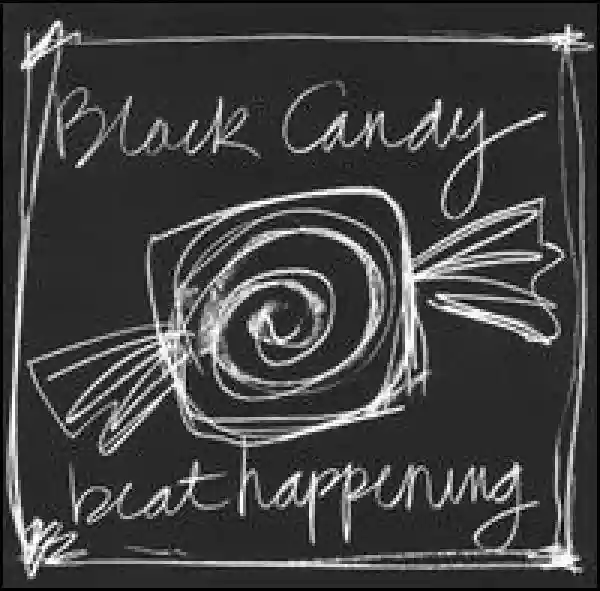
It's no coincidence that the opening of the dances is entrusted to “Other Side,” the first duet between Heather Lewis and Calvin Johnson, and that the album closes with the electric peaks of “Ponytail,” romantic poetry on a bed of almost Shoegaze guitars. On display is the 'usual' range of solutions - which in turn have become a trademark - at the trio's disposal: apple-flavored nursery rhymes (“Playhouse”), monotonous guitar ragas (“Black Candy”), Calvinian one-man shows (“Gravedigger Blues”), Crampsian reminiscences (“Pajama Party In A Haunted Jive”), innocent Rock'n'Roll for female voice (“Knick Knack”) and, above all, melodic blasts with a strong anthemic scope (“Cast A Shadow”).
“Black Candy” is the most ambitious project released so far by Beat Happening, with its gaze well beyond Olympia, but it loses in points compared to its predecessor (“Jamboree”), precisely because in the process of meta-musical self-complacency the compositional immediacy that had made infantilities like “Indian Summer,” “Bad Seeds,” or even “Ask Me” (where the Beat Happening ethic was fully revealed, with Lewis's gradual awareness as the song progressed) great was somewhat lost. There were still a couple of years to go before the International Pop Underground, but Johnson and his peers were already looking beyond. After all, this is the first step towards the swan song “You Turn Me On,” which will splendidly close (just a year from the aforementioned festival) a completely independent epic that will stand as a beacon for the post-1991 generation, which K Records itself will continue to document diligently up to the present day.
Loading comments slowly
Summary by Bot
Black Candy marks a pivotal moment for Beat Happening as they expand their sound beyond earlier lo-fi simplicity toward more ambitious musical expression. While enriched with diverse styles—from nursery rhyme pop to shoegaze-influenced guitars—the album still lacks the immediate compositional magic of its predecessor Jamboree. It signals the band’s growing awareness and their move toward the iconic final album, You Turn Me On, cementing their influence in indie music history.Tracklist Videos
Beat Happening
Beat Happening are an American indie pop/lo‑fi trio formed in Olympia, Washington in 1982 by Calvin Johnson, Heather Lewis, and Bret Lunsford. Pioneers of a minimalist, bass‑free sound and DIY ethics on Johnson’s K Records, they released five studio albums between 1985 and 1992 and became touchstones for twee pop and lo‑fi scenes.05 Reviews
