
 •
Rating:
•
Rating:
THE REVIEW
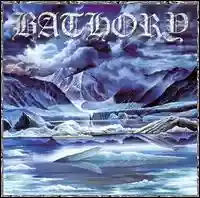
No one seems to remember the latest effort, "ne troppo remota, ne molto recente," of one of the most important musicians of the last century: Ace Quorthon.
This work is titled "Nordland II," an album that put an end to many projects: it was, first of all, the final chapter of a saga that began months earlier with "Nordland," "but if he were still alive, we could also talk about Nordland III and IV," and above all, it concludes in more than a worthy manner the most important thing: a career almost free of mistakes, studded with successes and imbued with warlike and obstructionist ideologies (obviously directed towards the church), but entirely justified. "Nordland II," however, is not just the final stop: a one-of-a-kind album (which, due to various dissimilarities, distinguishes itself from the previous one). The desperate cries of the songbook are moving, just thinking that what he is saying is practically his last words; in short, it's an album that one needs to hold in hand to be able to fully talk about it.
The compositions completely kill both Black Metal and the satanic lyrics of the beginnings, "a process that had started since the times of Hammerheart." By now, Quorthon has spent every word contesting Christian philosophy, and wisely decides to speak about his land, those who lived there, and those who, in the past, made it famous; another topic he was an expert on. The group offers us a metal as heavy as ice sheets, based on melodic Viking music and enriched with male choirs dedicated to honoring the sound, and a chilling yet slow epic. Unfortunately, it must be acknowledged that Quorthon starts to show evident shortcomings, disappointing quite a bit due to a voice occasionally flat and incompatible with the sound fabric of the tracks.
Nothing more epic, cold, and solemn was ever conceived by the band: an intro, an outro, and eight pieces, each containing more than one emotion. The evocative Fanfare transports us to the shores of a frozen lake, and in the distance, a threatening Viking ship approaches. Just as the Vikings land, the battle begins: perhaps the folk motifs of Sea Wolf and the slightly expressive singing of Vinland do not convince at first approach, but the magnificence of The Land cannot go unnoticed. Then follows the violent Death and Resurrection of a Northern Son and the majestic piece The Messenger, but the cosmic purity is only reached by the finale: The Wheel of Sun, where the voice vaguely recalls that of "Blood Fire Death" and "Hammerheart", while remaining clean, and the drums play a relaxing second fiddle, at times non-existent; by now, everything has been looted, everything destroyed, everything razed to the ground.
Dedicated to Quorthon: a man who influenced a huge slice of metal; his intelligence made him a legend, just like the myths of which he recounted the deeds in his songs.
Loading comments slowly
Summary by Bot
Nordland II is a powerful and solemn Viking metal album by Bathory, representing the final chapter of Quorthon's influential career. Moving away from his black metal roots, the album combines melodic Viking themes and epic compositions. Despite some vocal shortcomings, the music's atmospheric and emotional depth stands out. It encapsulates Quorthon's lasting influence on metal music and his dedication to Norse mythology.Tracklist Lyrics
Bathory
Bathory was a Swedish extreme metal project led by Thomas “Quorthon” Forsberg, widely credited as a key early architect of black metal and an origin point for Viking/epic metal. The project began with raw, satanic-leaning black/thrash records and later shifted toward epic, Norse-myth inspired works such as Hammerheart and Twilight of the Gods. Forsberg died in 2004.26 Reviews
