
 •
Rating:
•
Rating:
THE REVIEW
It is quite unlikely that metal enthusiasts have never heard of Thomas Forsberg; and if we add the name Quorthon, the concept of "never heard" becomes impossible to conceive.
Multi-instrumentalist, author, and composer, Quorthon gave body and soul to Bathory, his most famous musical project, now one of the most important acts in Scandinavian music. He was among the pioneers of extreme metal and the founding father of a genre based on the fusion of epic and black metal: viking. With Bathory, Quorthon was able to demonstrate to the world his multifaceted artistic skills: from possessed poet to raging viking, to becoming a pagan ascetic during the period when he composed his deepest works, before his lamented passing, which etched him into history as a modern and memorable bard of Scandinavian tradition.
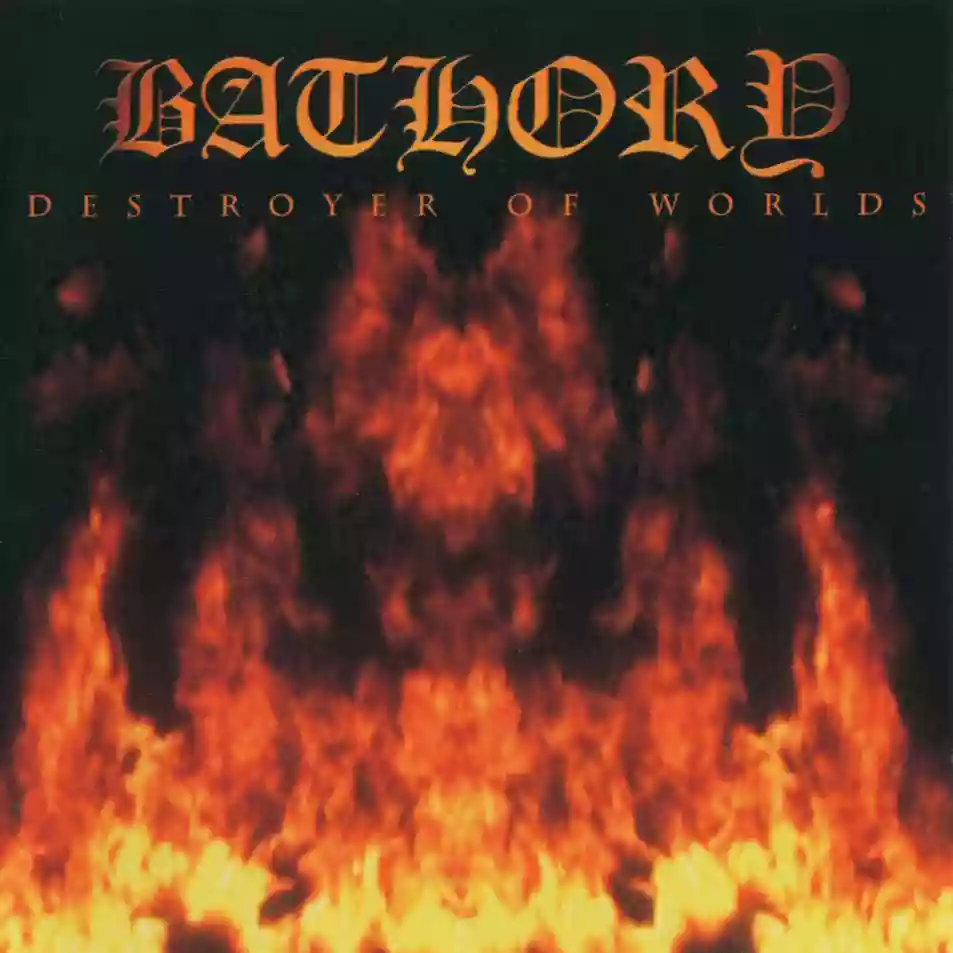
Let's now analyze the most discussed work of the Swedish musician, the ambiguous Destroyer of Worlds from which emerged some of the most boisterous, sarcastic, grotesque (and sometimes even ecstatic) thoughts ever conceived by critics and fans, after the release of an album with the Bathory logo on the cover.
Released in 2001, Destroyer of Worlds was born after a troubled production process during which Quorthon was pressured by the record executives of Black Mark who kept asking about the progress of the composition, thus preventing the musician from gaining the peace of mind that would have allowed him to compose more clearly. As if that weren't enough, Quorthon also faced pressure from fans who couldn’t accept the stylistic choices of the new Bathory project. In a press release, the musician stated that for Destroyer of Worlds, he was preparing pieces more prog-oriented, aiming to revolutionize his musical proposal. But the idea was rejected by the audience, which collectively clamored for a return to the past glories of black and viking, so Quorthon was forced to shelve the project to prepare a series of pieces that alternatively included all facets of his music. This resulted in a disorganized and confusing album, with stylistic jumps so abrupt it seemed more like a compilation than a collection of unreleased tracks.
Sung and played by Quorthon alone (Bathory had not been a band for several years), Destroyer of Worlds recycles material from the anonymous Requiem and Octagon (the most thrash albums of the Scandinavian one-man-band), but also proposes some pieces inspired by the viking period, resulting in alternating emotions: moments of musical brilliance and refined Nordic lyricism alternate with poor episodes of metallic inelasticity with ineffective fervor, combining the whole with some isolated episodes of curious sound experimentation. The record is thus capable of simultaneously showing the best/worst Thomas Forsberg you can imagine.
Leaving aside the useless tracks (among which the decent and "flashy" heavy/thrash of Death from Above stands out), the album hides a series of truly remarkable songs. This is the case with the opener Lake of Fire or the poignant Ode (both reminiscent of the immortal Twilight of the Gods), the latter being something inconceivable from an emotional perspective, with Quorthon choosing clean singing with a grand and desperate tone that explodes in a climactic final, where the acoustic guitar (constantly alongside the electric riffs), weaves a harmony that seems to reproduce the sound of a mournful music box. Excellent alsoPestilence, built on powerful doom-colored verses, enriched by sublime epic breaks and a gentle acoustic outro. The title track, on the other hand, is a piece that brings a certain freshness to Quorthon's music: it opens with massive riffs and thundering drumming, then a bridge with oriental melody, and a refrain that explodes in all its epic rawness. The same goes for the powerful thrash of White Bones, a track inflamed by dirty vocals, then softened in a prog-tinged choral outro. It all closes with the suite Day of Wrath, a viking track that seems to evoke the Nordic darkness of Blood Fire Death.
Destroyer of Worlds offers at least forty minutes of excellent material on which to reflect. But the bad tracks are there, and they certainly cannot be ignored. A record of unprecedented strangeness, capable of alternating mighty masterpieces with incredible ugliness. After this daring step, in October 2001, Quorthon presented between 2002/2003 the Nordland saga, his invaluable musical testament, before a myocardial infarction forever ended his extraordinary existence.
Federico “Dragonstar” Passarella.
Loading comments slowly
Summary by Bot
Bathory's album Destroyer of Worlds showcases a bold and experimental mix of viking, thrash, and progressive metal. Despite facing production pressures and fan backlash, Quorthon's solo efforts deliver moments of musical brilliance alongside inconsistent tracks. The album stands as a divisive but intriguing entry in Bathory's discography, highlighting both the best and worst of Quorthon's creativity before his last works.Tracklist Lyrics
Bathory
Bathory was a Swedish extreme metal project led by Thomas “Quorthon” Forsberg, widely credited as a key early architect of black metal and an origin point for Viking/epic metal. The project began with raw, satanic-leaning black/thrash records and later shifted toward epic, Norse-myth inspired works such as Hammerheart and Twilight of the Gods. Forsberg died in 2004.26 Reviews
