
 •
Rating:
•
Rating:
THE REVIEW
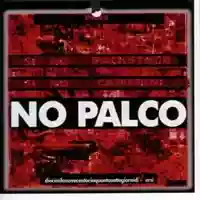
To review the live CD "No Palco" by BMS, one could start with: "Once upon a time there was Banco del Mutuo Soccorso, the best Italian progressive group and one of the best in Europe." With prog buried, unfortunately, the Roman group has also passed away, which wanted to celebrate its thirtieth anniversary with a concert held on July 6, 2002, at the Ippodromo Le Capannelle in Rome in front of, probably, a few close friends, assuming the quantitative evaluations for each applause are real.
This album, released almost unnoticed and amidst general indifference, might appeal to those who, like the author, went crazy for Banco in its heyday (and even beyond), but certainly cannot promote prog to the younger generation.
The "guys" are out of shape, and especially the vocal part is terrible. Unfortunately, Francesco "Big" Di Giacomo no longer has a voice; he cannot hold a high note for more than a measure and does not convince even from an interpretative point of view, which, in the golden age, was his strong point. When vocally supported by other members of the group, the result is even worse. The instrumental part is much better, even though there is excessive heaviness in the execution. Vittorio Nocenzi hits the keys a bit too hard, exactly the opposite of what a great keyboardist, which he undoubtedly was, should do. Rodolfo Maltese is relegated to the guitar only, except in Traccia II where he finally plays the instrument he excels at: the trumpet. As a guitarist, he has always been very formal and not very creative. Former members like the legendary Gianni Nocenzi on piano, always reliable, and Pierluigi Calderoni, a drummer much improved since the golden age, reappear as guests. As for the new members of the group, it's better to overlook them as they leave no particular imprint and slip away almost unnoticed.
So why give this work a full passing grade? Because those who remember the great concerts held by Banco between the seventies and eighties partly find the same atmosphere. The pieces are not the same as the studio recordings, but offer something different and new, giving the concert the aura of a unique and unrepeatable event (as all "live" performances should be).
Included in this CD is, much to my pleasure, the extended version of the track "Quando la buona gente dice", taken from "Come un'ultima cena", which on the original record is little more than an interlude lasting about two minutes. In the live performance, on the contrary, it is expanded to over six minutes, with a structure like a mini-rock symphony; I remember that this made it, at the time, a little "cameo" to remember.
Another pleasant surprise is the two "Tracce" (I and II), which close the CD, giving it a scent of nostalgic regret, slightly softening the disappointment for the entire work. The other pieces are normal routine, and only "Non mi rompete" is performed with vitality and energy, although not with much originality, and it still manages to move.
Missing, and I'm sorry, is the splendid trumpet solo that Rodolfo Maltese used to perform unfailingly at the beginning of every encore. It would have been an excellent opportunity to let even the uninitiated of the genre (and the group) hear it. The participation (out of esteem) of some prestigious guests like Morgan, strangely employed on bass and not on piano where he shines, Federico Zampaglione and Mauro Pagani, unrecognizable on violin, are insignificant.
Ultimately, an album that is, and will be, listened to only by diehards, like me, but which, objectively, could have been better prepared.
A thank you nonetheless to Banco for what they have given us in these thirty years.
Loading comments slowly
Summary by Bot
This review examines Banco del Mutuo Soccorso's live album 'No Palco,' marking their 30th anniversary concert. While the band's legendary status and instrumental performances shine in parts, vocal struggles and a lack of energy characterize much of the album. Some tracks stand out, providing moments of nostalgia and unique live reinterpretation, making the album primarily appealing to longtime fans despite its imperfections.Tracklist Lyrics
Banco del Mutuo Soccorso
Italian progressive rock group famed for 1970s symphonic, keyboard-driven concept albums and the distinctive voice of Francesco Di Giacomo; later work moved toward more pop-oriented sounds in the 1980s.29 Reviews
