
 •
Rating:
•
Rating:
THE REVIEW
Being a fan of Progressive music in all its forms, I couldn't miss providing a review of an album by "Banco Del Mutuo Soccorso," one of my favorite bands and one of the most internationally representative.
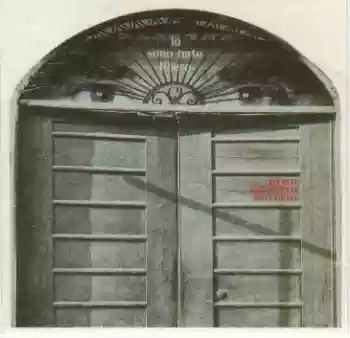
The album in question is "Io Sono Nato Libero," the first I discovered and one of the most beautiful, alongside "Darwin." I remember the first time my father played these songs for me and told me their stories, meanings, or the historical context: I was immediately captivated by the sounds of their works. They were sometimes dark sounds, or effects reminiscent of Psychedelia, which a child couldn't make sense of, yet at the same time you get involved and become part of the album's melodies. Indeed, the album spans many genres (as the Porg culture imposes): sometimes there are Jazz flashes, sometimes almost Ethnic, and with a good dose of Psychedelia and Classical Music.
"Io Sono Nato Libero" was released in 1973 after the highly acclaimed "Darwin," in which the group combines very high-level sounds with the lyrics and voice of Di Giacomo, always present with a unique voice and with themes inspired by freedom and its relationship with war. With this album, the lineup of the group sees a slight change: a certain Rodolfo Maltese replaces Marcello Todaro, although Maltese appears as a temporary guitarist on the album, but would become a mainstay of the group. Gianni Nocenzi, brother of Vittorio, also contributes to the album, signing "La Città Sottile," along with the usual Francesco Di Giacomo (vocals), Pierluigi Calderoni (drums and percussion), Renato D'Angelo (bass and acoustic guitars), and Marcello Todaro (electric and acoustic guitars). The album has 5 tracks, including 2 suites of about 15 minutes, and the other 3 of shorter duration, yet equally beautiful and interesting. The 2 tracks are long, but listening is fluid and smooth (for fans of the genre; those who do not like extreme Prog should stay away from Banco).
The album starts with a piano whispering an intense melody, to which an inspired Di Giacomo adds his voice; by the second minute, it kicks off a faster, very syncopated track where everyone stands out, creating a truly lively atmosphere, then culminating in a slow guitar arpeggio that revisits the initial motif. But the track is not over: now you can hear a Psychedelic section that spills into a rhythmic Jazz section, where the harmonies are truly dissonant yet interesting and captivating, where the Nocenzi brothers indulge in solos and twisted harmonies. Now there is a truly beautiful acoustic guitar interlude, with percussion adding an ethnic tint to the track, which reconnects with the Jazz piece that concludes the suite. The second track is "Non Mi Rompete," a quiet song for acoustic guitar and voice, which became a staple for the group. The track features a simple melody and a short and immediate text, where everyone is invited to be free and undisturbed. The third track is "La Città Sottile," a track with harmonies very inspired by Jazz and Psychedelia, plus the addition of drums and bass to complete the atmosphere on which Todaro (or Maltese) develops a solo, linked to a section of pure Psychedelia. "Dopo Niente È Più Lo Stesso" is the fourth track and the second suite: an intro of keyboards, on which develops a melody dictated by a fairly sustained rhythm, with a short piano interlude connecting it to the second piece which is more rhythmic than the first, where guitars and keyboards take the lead. Now, in my opinion, there is one of the most significant moments of the album: the classical atmospheres provide the backdrop to a dialogue between two people, where Banco's point of view on the relationship between religion and war is very clear (widely shared by me). Now the track repeats the previously played pieces before concluding. The final track is "Traccia 2," a brief instrumental where Nocenzi demonstrates his skillful use of synthesizers and possesses a formidable technique understood from previous albums).
In conclusion, I would say that Banco is one of the Progressive groups of all time, having the wisdom to blend very studied and challenging music with themes of protest or where their often contested or ignored nonconformist theses were expressed.
Loading comments slowly
Summary by Bot
This review celebrates Banco Del Mutuo Soccorso's 1973 album Io Sono Nato Libero as a landmark progressive rock masterpiece. It highlights the band's blending of psychedelic, jazz, ethnic, and classical influences across five dynamic tracks. The reviewer shares personal memories and praises the meaningful themes of freedom and protest woven throughout. The album's complex yet fluid musical structure and Di Giacomo’s distinctive vocals receive special acclaim. Overall, it urges prog enthusiasts to explore this legendary work.
Banco del Mutuo Soccorso
Italian progressive rock group famed for 1970s symphonic, keyboard-driven concept albums and the distinctive voice of Francesco Di Giacomo; later work moved toward more pop-oriented sounds in the 1980s.29 Reviews
Other reviews
By Grasshopper
Io Sono Nato Libero (1973) is their third album and in my opinion, the unsurpassed peak of a long parabola.
"Why do you want to disturb me if I might be dreaming of a winged journey on a wheel-less cart pulled by mistral horses, in the mistral... flying."
By Bonzo
The greatness of the bands that have marked the history of music lies largely in their boundless ability to surprise and enchant.
How to make the listening of fifteen minutes of denouncement music unforgettable and encapsulate in an essence first sweet and then neurotic, the work and message of Banco.
