
 •
Rating:
•
Rating:
THE REVIEW
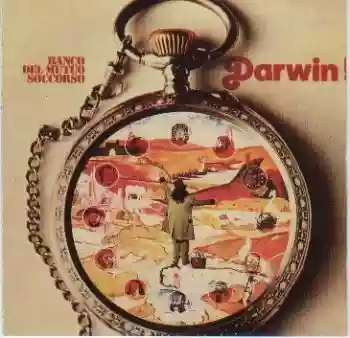
Good morning! I am new here and this is my first review. I see that there is only one review of "Darwin!", an absolute masterpiece of Italian Progressive!
The year is 1973 and Banco released their second album after the self-titled one, this time a concept based on the theme of evolution. The album opens with "L'evoluzione", a track just under 14 minutes long, in which Di Giacomo shares his thoughts on the origins of man. The keyboards of the Nocenzi brothers make their presence felt. The piece is essentially divided into two parts. In the second, Di Giacomo wonders if we descend from men, as religion says, or from quadrupeds. The theme of the first part is revisited at the end. The second track is "La conquista della posizione eretta", mostly instrumental and about 10 minutes long. The lyrics narrate how man's back has straightened over the years, with countless attempts. Here too the keyboards dominate. Side A of the vinyl ends here.
Side B, which includes shorter songs, opens with the light "Danza dei grandi rettili", which almost wants to relax us after the two previous pieces. The track, completely instrumental, opens with the piano (almost blues), to which the other instruments then join. The next "Cento mani e cento occhi" is considered by many to be a masterpiece. I'm sorry to tell you that it doesn't drive me crazy, although it's an excellent song. The MASTERPIECE of the album is "750000 anni fa.... l'amore?", a poignant ballad of a crude prehistoric man who sees his beloved going to the well to drink and wants to possess her. The piano conveys incredible emotions and culminates in something I can't describe. "Miserere alla storia" is unsettling. You can already feel it from the sound of the keyboards. The distorted voice also adds to the frightening message: "How much life does your intellect still have, if behind you your race disappears?" The album closes with the non-exceptional (and long-titled) "Ed ora io domando tempo al tempo ed egli mi risponde... non ne ho!".
This album is the pinnacle of Banco, surpassed neither by the first LP nor by the overrated "Io sono nato libero". I don't think I've added anything new to what has already been said, but I simply wanted to review one of my favorite albums.
Loading comments slowly
Summary by Bot
This review praises Banco Del Mutuo Soccorso's 1973 album Darwin! as a pinnacle of Italian progressive rock. It highlights the album's concept based on evolution, the impressive keyboard work, and the emotional intensity of key songs. The reviewer regards it as the band's best work, surpassing their other albums. Despite minor critiques, it remains a beloved classic.Tracklist Lyrics Videos
Banco del Mutuo Soccorso
Italian progressive rock group famed for 1970s symphonic, keyboard-driven concept albums and the distinctive voice of Francesco Di Giacomo; later work moved toward more pop-oriented sounds in the 1980s.29 Reviews
Other reviews
By mayhem
"It just so happens that the first words of Francesco Di Giacomo say: 'Prova, prova a pensare un po’ diverso...but the created created itself.'"
"All of this mixed with many digressions that are never boring and highly evocative, with the sound of mellotron, piano, and guitar solos."
By mojo
Expansive fills, sweet little pianos fading away, galloping horses, organ battles, voice power rising, the words first a kind of ‘De rerum natura’ to say the birth of the world and then a kind of something else to say disillusionment.
The splendor of the beginning (a fabulous progressive orgy) eventually gives way to a sad folk song: 'Everything changes and yet nothing changes, the old sperm of fathers’... the sense of the world couldn’t be expressed better.
