
 •
Rating:
•
Rating:
THE REVIEW
The relentless Monday survey has demoted the expression “shades of grey” to the last place, with a dignity coefficient of 0.53%. Worse than “trucco e parrucco” (0.59), “impiattare” (0.62) and “frappuccino” (0.68).
What to do to change its fortunes? Just throwing it out there. From cellulose to pavilions: let's all take back 1996 and some “shades of grey” with balls. Actually, gray. We are, after all, on the other side of the Atlantic.
A difficult gestation, that of the gray race. Everyone knows why: Brett Partitaiva Gurewitz says goodbye frowning and splits his time between rehab and invoices; The Ph.D. golden throat must prove he is cool and punk despite a dramatically low heroin average. There’s the question mark of Baker, a luxury backup, who declined the fat offer from R.E.M.: will he be able to integrate into the group? Or, at least, the needle in the arm? Finally, on the horizon loom the dark clouds of a major, already burdened with the publication of a too radio-friendly “Stranger than Fiction.”
In short, the big question is: given the travails of the formation and the Atlantic, will “The Gray Race” still sound punk?
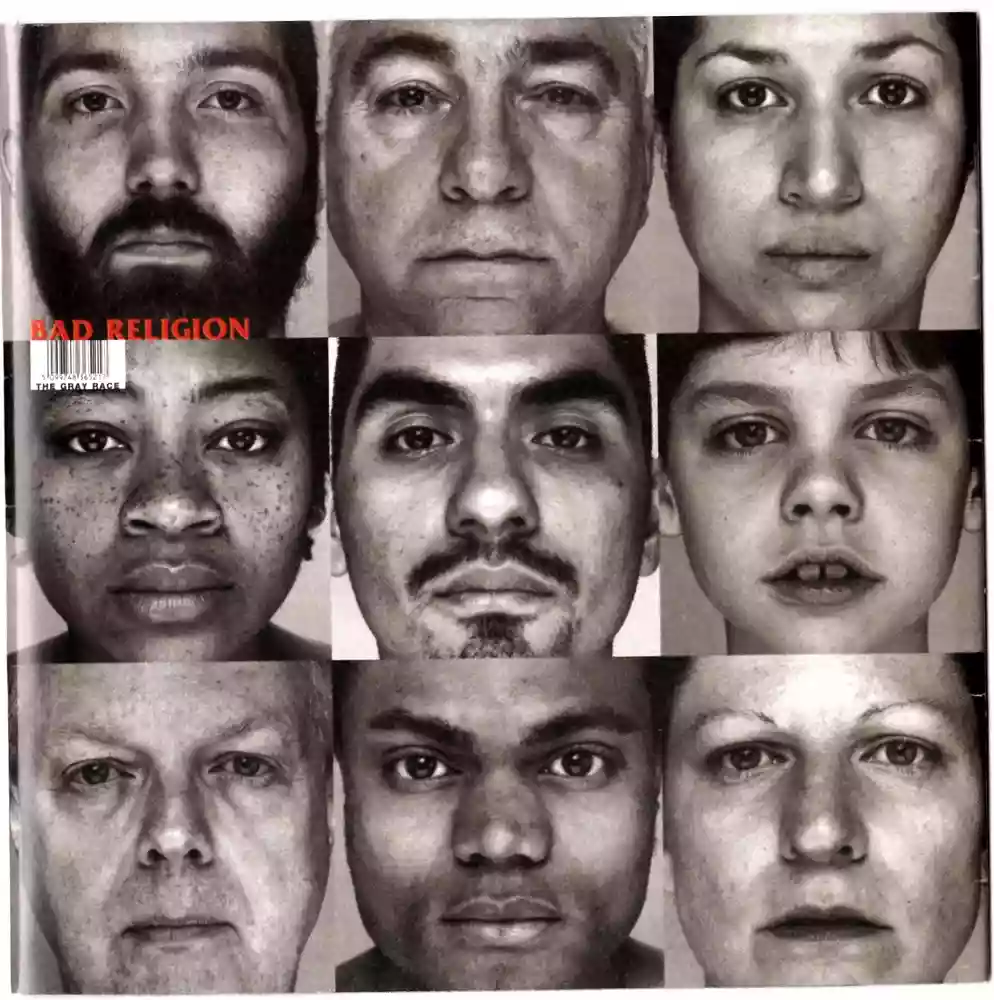
The answer is yes. The gray race is a beautiful album which, although removed from under the aegis of mother Epitaph, knows truly unique moments. A definite step forward compared to the previous admirable work that, among guest appearances and big hit singles, seemed like the antechamber to armageddon.
Away with the “cheerful” arrangements of “Stranger than Fiction”: the atmosphere is leaden, gloomy, melancholic.
Grey, indeed.
Abrasive and lo-fi guitar work that, on more than one occasion, winks at “Suffer.”
And in Suffa the title track would have been just right because in its 126 seconds it lashes out with angry pride, knowing it hurts. A disillusioned and sad elegy. The theme is very current: man, intoxicated by emotional shades – of infinite “shades of gray” – mortifies his complexity in the aut aut of black/white.
- What is more dismal, indeed, than black and white? Mine was from Cosenza, met yesterday. He considered Sculli ‘a regret.’ No, I say, Sculli. El pibedelocri. Mavabbé -
The protean humanity is trivialized in the depressing language of the tools it manufactures. The binary code, the majority awards, sharing on social media (always seen as an end, never as a means), the optimistic and superficial enlightenment coding: frigid dichotomies that cannot appreciate the infinite projections of the creative intellect.
Fact: we’ve set up the world like a roulette. Red comes out, black comes out. Cynical, yet undeniably pragmatic. Effective, instinctive. Equal to animals, which attack or flee. Sleep or search for food. They are or are not in heat, but they don’t make love.
Hence the dilemma: to fulfill himself in his world, what must man do? Revel in the splendid inefficiency of his emotional spectrum or adopt a more cynical and instinctive attitude, reducing every complexity to an aseptic crossroads?
The Manichaean opposition of values and ideals is, in any case, the leitmotif of the entire work: from censorship to racism (“Them and Us”) to the exaltation of the free spirit that challenges the establishment (“A Walk”, “Punk Rock Song”), passing through the incommunicability of experiences (“Parallel” – reprise of “Best for You”), interested proselytism (“Come Join Us”) and the hypocrisy of those who always believe they can save the world (“Spirit Shine”, with evident references to the “brother christian whose actions speak too loud” of “I Want to Conquer the World”). Oppositions that, needless to say, are the eloquent aftermath of the deep rift that affected the band members.
The “tormented” genesis of the album also reveals a true double soul in the arrangements: the guitar abrasions offspring of surf-punk (“Ten in 2010”, “Nobody Listens”) soften in the intimacy of the lyrics and in the melancholic sweetness of the vocal lines (“Victory”, “Drunk Sincerity”), outlining Greg Graffin’s confidence with folk, sealed in “American Lesion” the following year.
But the deep emotionality does not denature the product. Brian Baker proves himself worthy of the role, bringing along Dag Nasty (read “The Gray Race” and think of “Can I Say”) and a bit of Minor Threat: he finalizes the rhythmic assists of the much-lamented Hetson (only note: perhaps solos a bit too similar, with the inevitable tail of octaves) and supports Graffin in the singing of the everyday apocalypse.
The supreme poet of Wisconsin made it even on his own: calm, always at ease, beyond good and evil, he writes yet another great page of his secular gospel. Moved and participatory nihilism, but also aware of its essence. The vanities of the world may mislead us, inflame us with its ideals, but we must not be ensnared by the drunken charms of the carneade of the moment: we are not immortal. Neither us, nor our ideas. Much less our promises. The entropic forces will push us into the abyss, lulled by the eternal peace of oblivion: everything – the ephemeral everydayness of grass, the millennial pride of the empire – must cease.
Yes, “Cease” in the lot is the star, the unexpected fantasist. It is a highly refined compendium of Bad Religion’s ethics and style.
The sum of all punk philosophy, it exalts in its guitar slashes and in the final epilepsy of the solos, before finally falling asleep, an antechamber of eternal chaos, leaving you with two ancestral questions:
- How much must someone hate themselves to record “Punk Rock Song” in German?
- Why did Brett found that crap of Daredevils? No, because the professor alone is good but then you find yourself moshing to things like “proclaim yourself an expert thanks to the detailed inferences of your divulgations.” But a “Fuck the system”? No, huh?
Loading comments slowly
Summary by Bot
The Gray Race by Bad Religion is a powerful 1996 punk album marked by challenges within the band but delivering a gritty, melancholic sound. It steps away from more commercial sounds to embrace abrasive guitars and deep lyrical themes tackling social and political issues. Guest musician Brian Baker enhances the dynamic, supporting Greg Graffin's confident vocals and poetic nihilism. The album balances punk energy with introspective moments and remains a significant work in the band's catalog.Tracklist Lyrics Videos
Bad Religion
Bad Religion is an American punk rock band formed in Los Angeles in 1979, known for pioneering melodic hardcore and for close ties to Epitaph Records.27 Reviews
