
 •
Rating:
•
Rating:
THE REVIEW
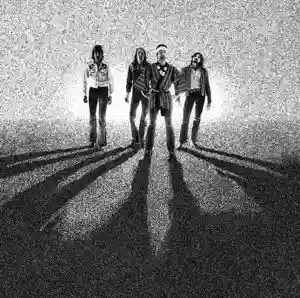
The fourth album by Cattiva Compagnia was released in 1977, at the height of the disco and punk boom, with a not quite groundbreaking cover: a grainy silhouette of the quartet with frontman Paul Rodgers at the forefront, dressed in unsightly Japanese robe and bandana.
The work remains within the (very good) quality average of the group... There are a couple or maybe three truly remarkable tracks, but more generally one appreciates their habitual way of creating rhythm and melody with very few ingredients: a riff here, a slide guitar strike there, a few piano chords on top, a bass groove underneath, and so on. The exceptional vocal texture and the splendid blues attitude of the poorly dressed frontman, after all, would manage to give a rock dignity even to a possible Abba cover. And then there's always Mick Ralphs’ guitar teaching everyone how to proceed with few but clear ideas, fearlessly inserting wide syncopations between chords, thus allowing the songs to breathe and better savor the fine nuances of his singer's voice. The metronomic and powerful drumming of Simon Kirke and the simple yet intelligent bass of the late Boz Burrell (he passed away in 2006) close the circle.
The album opens magnificently with the song that titles the entire work, characterized by a penetrating up-tempo from Kirke, who cyclically anticipates the snare hit on every second fourth beat. Rodgers begins to describe apocalyptic visions inspired by a dream, but it's curious that for a visual representation, an image inside the cover of the Catinaccio, one of the most spectacular and rugged Dolomite groups, was chosen, with the marvelous Vajolet Towers in the foreground as they appear from Santner Pass, but with the blue sky tinged in burning red.
The prelude of "Burning Sky" and the whole album is a classic thunder, while the second track "Morning Sun" opens with an equally classic bell... it's somewhat predictable, but certainly not the voice of Rodgers, who here bravely leans on a persistent guitar arpeggio drenched in flanger, an effect extremely fashionable at the time. It's all curiously lightened by a flute in the hands of guest Mel Collins, a friend of bassist Boz given their previous common involvement in King Crimson.
"Leaving You" is a robust Free-style rock blues (the group of origin of both Rodgers and Kirke), i.e., thrifty to the max: few guitar chords, and then it's up to the singer to warm the spirits and dignify the piece. The excellent Ralphs grants himself the first solo, at his typical maximum speed of ten notes per minute, but on this occasion, he seems to focus on the style of the late Paul Kossoff of Free (who died the year before), a true and unsurpassed devil in the realm of one-note-at-a-time tortured guitar solos.
"Like Water" is a bluesy, ancestral, and mannered ballad, without verses, with just the chorus cycling, the only variation being a delightful and mellifluent slide guitar solo in the style of George Harrison. The subsequent "Knapsack" is merely an interlude, a drunken choir surely organized on the spot in the studio after abundant intake of substances for amusement.
"Everything I Need" steals the chords just like "Sweet Jane" by the Velvet Underground, but Rodgers diversifies it with a rhythm&blues-style singing, pushed to the extreme limits of his (not impressive) vocal range. The lyrics are particularly insignificant, as are the lyrics of the subsequent "Heartbeat", although it is decided and piercing in its role as a filling rock piece.
"Peace Of Mind" is composed and... presented by drummer Kirke, who speaks the first words of the text. It is a modestly inspiring ballad, and Ralphs lets us know he agrees with me by living through it distractedly, inserting a few insignificant semi-clean guitar licks. The next one, pianistic "Passing Time", is also not up to par, somewhat clumsy and poorly mixed... It's a situation I would call classic: fillers in albums are placed three-quarters through the tracklist, after firing the best cartridges at the start and before the grand finale with one or two really worthy tracks, just to leave a good memory and the desire to listen again.
And here comes the grand finale: first "Too Bad", a sweaty and heavy rock, with a textbook blues riff, often proposed during our career concerts (and occasionally also with some guest performing solos... in this regard, seen Neil Schon and Slash, for example). Even better is the penultimate "Man Needs A Woman": the words and melody of the chorus are just right, and Rodgers' voice here is more sonorous than a warning siren! It's an irresistible rock'n'roll that not even Collins manages to ruin with some uncertain alto sax honking, fortunately followed by a good tenor solo, an instrument with which he feels decidedly more at ease.
The closure "Master Of Ceremony" is dragged out, boozy and experimental among reversed tapes, an incredibly lascivious and sing-song Rodgers proceeding interminably, with an organ (probably in the hands of the same singer) holding it all together; once again Mick Ralphs, a guy of all rationality and rigor, is not having any fun and throws in four easy notes... After all, he fled years earlier from Mott The Hoople precisely because he couldn't stand glam, glitter, various drugs, chaos, and self-indulgence.
An album of old seventies rock blues, simple but made superb by the great attitude of the performers, all four of them indiscriminately, or almost (there's only one Rodgers in the world, God bless him).
Loading comments slowly
Summary by Bot
Burnin’ Sky, Bad Company’s fourth album released in 1977, remains a strong example of classic 70s rock blues. The album showcases Paul Rodgers' exceptional vocals, Mick Ralphs' skillful guitar work, and the solid rhythm section of Simon Kirke and Boz Burrell. Highlights include the title track and standout closing songs, while some fillers exist. Overall, it’s a simple but superb record powered by the band’s great attitude.Tracklist Lyrics Videos
Bad Company
Bad Company are a British rock band formed by Paul Rodgers and Simon Kirke (ex-Free), Mick Ralphs (ex–Mott the Hoople), and Boz Burrell (ex–King Crimson). Their 1970s run delivered radio staples like Can’t Get Enough, Feel Like Makin’ Love, Shooting Star, and Rock ’n’ Roll Fantasy, built on Rodgers’ powerhouse vocals and Ralphs’ economical riffs. Later eras with Brian Howe and Robert Hart steered toward polished AOR while keeping the band’s no-frills punch.09 Reviews
