
 •
Rating:
•
Rating:
THE REVIEW
Commonplaces have a grain of truth. "Blacks have rhythm in their blood." It's true. They have been the masters of "rhythmic music," as opposed to the melodic one passed down for centuries by the white European tradition. Rhythmic music, such as blues and its derivatives, rock included. If anyone had ever thought for a moment that there was a genre in the History of Rock that had been invented (or at least inspired) by the "white" culture, this would evidently be punk (and its younger, but much smarter brother: U.S. hardcore). It would be. Yet, in part, it's not. Because the blacks, those who, once deported from Africa, made modern Western music great, have left a fundamental imprint on the most intense and extreme rock ever. Indeed, if it is correct to say that "G.I.," the only LP by the formidable Californian Germs of Darby Crash, released in 1979, marked the transition from punk to hardcore (although not everyone agrees, attributing the parentage of the music, but especially the HC ethic, to the fellow Black Flag of Greg Ginn), one cannot pretend not to notice that, more or less at the same time, on the other coast, there were those making music perhaps even more violent, frenetic, and shocking. They were the Bad Brains. And they were black. All four of them.
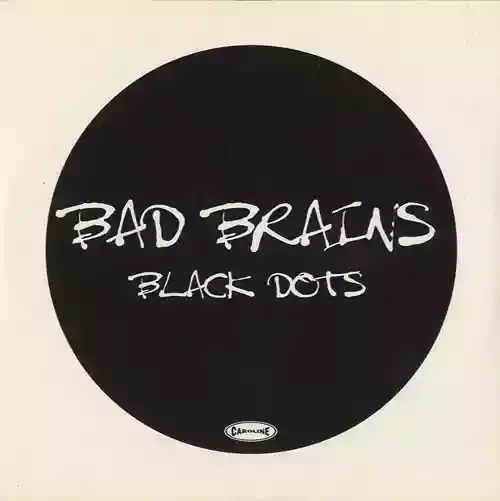
They lived in Washington D.C., but soon they were banned from the District and retreated to New York. Needless to say, they influenced both the DC-core of Dischord and the hc-metal of the Big Apple (this for the early '80s, because if we were to extrapolate until mid-decade, we would discover that their second LP, "I Against I," practically invented the so-called "crossover"... in short an indispensable band, really). They were skilled musicians, refined, knowledgeable, and expressive. Before discovering punk, they played jazz and fusion. Imagine the speed, the power, the extremism, and the intransigence of old-school hardcore, in the hands of jazz musicians. Perhaps only Fear, at the time, boasted the same explosive combination of violence and execution skills, but Fear was another story. The misfortune of the Bad Brains is that their first LP only came out in 1982, by which time the seminal debuts of the various Minor Threat, Black Flag, Adolescents, etc., had already been published... Thus the discographic history relegated them to an explosive band, but not pioneering. The release in the '90s of "Black Dots," a collection of material from 1979, brought justice.
There's the devastating "Pay To Cum," the quintessence of hardcore, practically the Ramones at triple speed, with bitterness. There's the masterpiece "Black Dots," which unleashes intoxicating blues scales played at supersonic speed. There's "At The Atlantis," dejected, with H.R.'s abused falsetto seeming to slip off a cliff vomiting tears and Dr. Know's guitar oozing dismay from every chord; then there's "Don't Need It," immersed in the same fiery atmospheres of the legendary "Land Speed Record" that the Huskers recorded in Chicago a couple of years later. It's already mature hardcore, full of digressions, changes in tempo and style: "Supertouch Shitfit" starts like a slimy garage-blues track in the style of the Stooges, slows down with a menacing proto-Metallica riff and then takes off again at full throttle, a bit like "Overkill" by Motorhead. It's always a controlled chaos with the Bad Brains. The rhythm section, even when it seems to abandon itself to sheer percussive delirium, never loses compactness and precision, even allowing itself moments of poetry, as in "Regulator," opened by the leaden ghost-bass of Darryl Jennifer strolling on the tide stirred by Earl Hudson's cymbals. The latter often relies on the tambourine, a drumming stratagem of more classic rock, to kick off the band's burning restarts, while Jennifer is the invisible director of the songs' sudden mood swings, and Dr. Know also finds time for searing solos in a Jimmi Page style; H.R., for his part, showcases the raw spectrum of emotions a human being can feel, from euphoria to despair. In short, four musicians at the top of their form.
For those who don't know, the Bad Brains were Rastafarians and also proposed a reggae repertoire. Contrary to what emerges from their first LP, where the HC style never merges with the Caribbean one, in this collection there are a couple of tracks, "Why'd You Have To Go" and "The Man Won't Annoy Ya," where the reggae part is interpreted with the visceral spirit of hardcore. There are also tracks like "Attitude", "How Low Can A Punk Get" and "Banned In DC", which will be reprised in a much more reinforced version on the same "Rock For Light" a few years later. "Redbone In The City" is the only mediocre track on the record, an unpleasant epigone of the Sex Pistols.
An unmissable collection for hardcore enthusiasts with stars and stripes and for all those who ask strong emotions, extreme, absolute from music.
Loading comments slowly
Summary by Bot
Black Dots by Bad Brains is a seminal hardcore punk collection showcasing the band's jazz musicianship and relentless energy. Recorded in 1979 but released later, it highlights their influence on punk and hardcore, blending intense speed with reggae and blues elements. The album is praised for its raw power, precision, and emotional depth, offering essential tracks for hardcore fans. It corrects their historical recognition by revealing their early pioneering role in the scene.Tracklist Lyrics Videos
04 Supertouch/Shittfit (03:02)
05 Regulator (01:28)
06 You're a Migraine (01:41)
07 Don't Bother Me (02:36)
09 Why'd You Have to Go? (02:55)
10 The Man Won't Annoy Ya (02:42)
11 Redbone in the City (02:06)
12 Black Dots (01:12)
13 How Low Can a Punk Get? (02:39)
14 Just Another Damn Song (01:57)
16 Send You No Flowers (01:52)
Bad Brains
Bad Brains are an American band formed in Washington, D.C., known for fusing hardcore punk with reggae and for explosive live shows. The classic lineup features H.R. (vocals), Dr. Know (guitar), Darryl Jenifer (bass), and Earl Hudson (drums). Their self-titled ROIR release (1982), Rock for Light (1983), and I Against I (1986) are widely regarded as landmark recordings.07 Reviews
