
 •
Rating:
•
Rating:
THE REVIEW
It's difficult to describe a masterpiece. You must find the strength and courage not to utter nonsense driven mostly by the emotional transport it exerts. Well, I've firmly decided to do it, not caring about how many exaggerations I'm about to write.
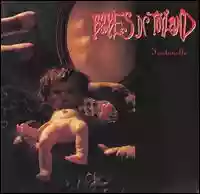
The Babes in Toyland reached their compositional pinnacle with "Fontanelle," their third effort considering the debut "Spanking Machine" and "To Mother," EP of '91. They achieved an impressive lyrical and melodic maturity and a remarkable qualitative leap compared to the aforementioned works: while these last ones had a decidedly punk imprint, albeit with grunge and noise-rock diversions, "Fontanelle" is characterized by an original and heterogeneous style, while staying within the confines of alternative (that is, without overdoing the experimentalism... for that, one can refer to "Painkillers," EP of '93). The most disparate genres are touched: punk, grunge, but also no-wave, noise, and blues, yet none of these labels manages to better articulate what Babes in Toyland practically invented with this album. What strikes the most is the visceral quality, the genuineness of what Kat Bjelland and her associates express in words and music: true life, theirs, not the one they would like to live or pretend to live. A life that never reserved anything positive for them (except, belatedly, fame): Bjelland met her mother only at the age of 19 and her figure continues to haunt her; Lori Barbero, on drums, underwent sexual abuse and suffered from drug and alcohol addiction, all moral and physical violence translated into their art, which in "Fontanelle" is particularly sublimated.
The tragic sound of Lori Barbero's drums begins "Bruise Violet," where Bjelland's voice alternates between desperate-angry and angelic-disillusioned tones. The lyrics are a tirade against ex-bandmate Courtney Love ("You, fucking bitch, well I hope your inside's rot"): there was never any good blood between the two, probably due to the fact that Kat expelled Love from her bands several times (for which, incidentally, Love dedicated a verse to her in the song "Good Sister/Bad Sister" which went: "I'll be the biggest dick that you've ever had/Hey, want it bad, you want it bad"). Beyond the textual importance, "Bruise Violet" ranks high on the album for Bjelland's guitar style, vaguely metal and very spasmodic, and Barbero's decidedly innovative way of playing the drums: for her, the kick drum, snare, and high-hat are complementary, not essential. But the absolute peak is represented by "Right Now," dominated again by Lori's tribal rhythm and a grave, powerful, tragic bassline that supports the verse along with Kat's whispers, denouncing the pain felt for the absence of a maternal figure in her life. A pain entirely externalized through the power of the chorus, in which Kat, with graceless and inhuman screams, quietly blames her mother for the shitty adolescence she had to endure because of her ("I'm in the right, now") and is invigorated by an emotional, exaggerated, hard guitar riff. In the bridge, Bjelland is an angel singing over sharp metal guitar passages and the devastation of the drums.
In "Bluebell" the vocal register is that of a sassy child turning into a wicked witch. In fact, this is also the essence of her kinderwhore look characterized by contrasting elements like childish dresses and tattered stockings. Another episode of lyrical relevance, in which Bjelland claims the right to be respected by man, self-imposing assertiveness: "You're dead meat, motherfucker, you don't try to rape a goddess." Perhaps the most immediate track, so to speak, is the devastating grunge of "Handsome & Gretel," where Kat's screams rise above everything, accompanied by a simple but frighteningly effective guitar riff. In the lyrics, the leader shows she's not exactly a good girl: "I've got a crotch that talks, it talks to all the cocks, it's been twelve city blocks." The originality of Babes in Toyland is evident in a piece like "Blood": a schizoid guitar like few others, rampant screams, an unconventional drum, and sarcastic-mocking lyrics are ingredients no other riot grrrl will be able to procure.
Lori Barbero is also an appreciable songwriter; she demonstrates this in "Magick Flute," a piece that perfectly blends punk and blues. The irresistible bass line by Maureen Herman (in my opinion the best bassist in foxcore, alongside Elizabeth Davis of 7 Year Bitch who often drew from her nonetheless), which follows the drum in its own way to constitute the martial rhythm section. In all this, Kat "limits" herself to creating beautiful guitar phrases, between anxious and mewing. However, she will be the absolute protagonist in "Won't Tell" and "Spun," where childlike vocal attitudes again alternate with unimaginable peaks, which have left many riot grrrl with open mouths. "Quiet Room" is instead an instrumental episode represented by a very long guitar arpeggio intertwining with Maureen Herman's enchanting bass play, recreating a magical, almost medieval atmosphere.
The few but extremely relevant experimental moments: "Jungle Train" is so disturbed among the guitar noises, Kat's evil witch screams, her whispers overlapping with the literal vomit of guest Stu Spasm, leader of Lubricated Goat and at the time Kat's husband; "Gone" instead is an intimate outburst of the singer and sees glass bottles shattering over a distorted rhythm guitar base and regrets that are both whiny and moving.
Towards the end of the album, the masterpieces are concentrated: "Pearl," with its disdainful approach, guided by a rough and sharp guitar; "Realeyes," where Maureen Herman's bass again amazes (ah, if only I could find a bassist like that for my band!) and the thrilling "Mother," the most heartfelt and complex at a psychological level, pure psychic-physical violence transmitted in full through the singing and instruments, more tense than ever. The text reveals Kat's soul disturbances, who at first throws fierce insults at her mother and finally identifies with her; not even Freud would understand it anymore.
The greatness of Babes in Toyland lies in telling themselves, in authentically expressing what they feel, perfectly combining technical skill and "artistic nature".
Loading comments slowly
Summary by Bot
Fontanelle marks the peak of Babes In Toyland’s artistic evolution, showcasing a unique blend of grunge, punk, no-wave, and blues. The album's raw emotional power stems from deeply personal and painful lyrics delivered through innovative instrumentation. Standout tracks like "Bruise Violet," "Right Now," and "Mother" highlight the band's exceptional songwriting and visceral expression. This album is a genuine representation of the band’s complex experiences and musical prowess.Tracklist Lyrics Videos
Babes in Toyland
Babes in Toyland are an American alternative punk/noise rock band from Minneapolis, formed in 1987 by vocalist/guitarist Kat Bjelland and drummer Lori Barbero. With bassist Maureen Herman, they forged a ferocious sound across releases including Spanking Machine, Fontanelle, and Nemesisters.03 Reviews
Other reviews
By Armand
"Women are a constant instigation to risk, to audacity... Despite everything, alive!"
"A piece like 'Mother' releases the silence of suffered violence and rips off your testicles to cook them as if they were two fried eggs."
