
 •
Rating:
•
Rating:
THE REVIEW
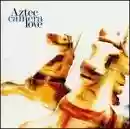
When I asked a fellow student what the cover of the album "Love" by Aztec Camera reminded him of, I was rather disappointed. "A carousel," he replied, not without some reason. On closer inspection, it was the most obvious and probably the correct answer. At the time, however, in my full philosophical "altered state," another one seemed more correct and even predictable to me: the myth of the winged chariot and the charioteer, the one found in a Platonic dialogue, "Phaedrus," where, lo and behold, love is also discussed. It couldn't have been a simple coincidence. The third album from the cultured Frame, which I'd been waiting for over three years after the previous two had delighted me, thus appeared even more laden with expectations in my eyes. I couldn't believe that the excellent Roddy, now a one-man-band, could alleviate the copious heartaches that season had reserved for me. So, even before placing it on the record player, influenced by that challenging cover, I was convinced that from listening to this album I would derive a benefit, not just aesthetic. I wasn't disappointed, even though there was little that was philosophical in a strict sense.
Because the troubled creation of "Love," produced "no less than" by Tommy LiPuma and Russ Titlman, which would take our album, not just musically, to the New Continent, was truly what was needed for a "sick person" aspiring to "recovery." The amoristic casuistry, with its sweet pains and vertiginous highs and lows, is represented in the best way, starting from the idyll of "Deep & Wide & Tall" (..."Are we going to live together / Lovers over all / One unending understanding / Deep & wide & tall..."), a sparkling vintage pop from the highlands that marries the black. Then come the crises, the inherent contradictions, which find space in the exciting new soul of "How Men Are" ("It's called love / And every cruelty will cloud it / And his lie / True love could never allow it / 'Cos it's a lie that we have ceased to believe / We've said good-bye but it won't take its leave / Why should it take the tears of a woman / To see how men are..."). There had to be the transition to "love and nothing else," which believes it can do without conventions ("We make love in the face of it all / Feel the freedom and the purity / And what we need is not security / Something more than a law...") and the exaltation that only true passion can offer, described with the naive but contagious rock'n'roll of "Somewhere In My Heart" or with the pen dipped in honey, as in the case of the luminous, it really is the case to say, metaphor of "Working In The Goldmine" ('Cos I believe in your heart of gold / Automatically sunshine / Yeah, glitter, glitter everywhere / Like working in a goldmine..."). The journey ends with a fork: the unexpected and dazzling happiness of "Paradise," another pure-pop tinged with "black"; or the melancholy and recriminations, seasoned with copious libations, of "Killermont Street."
In another more famous Platonic dialogue, love is seen as the restoration of a mythical union, the reunion of two complementary halves separated by the gods due to the arrogance of men. Well, let's say that with "Love," Frame, in his small way, reminds us how tormented and at the same time exhilarating the search for our lost half can be.
Loading comments slowly
Summary by Bot
Aztec Camera’s third album 'Love' blends vintage pop with soul influences to explore the complexities of love. The review highlights the album’s thoughtful covers, production by Tommy LiPuma and Russ Titlman, and standout tracks like 'Somewhere In My Heart.' Drawing inspiration from Platonic philosophy, the album balances heartache and passion with melodic sophistication. Overall, it’s praised as a deeply emotional and musically rich work.
Aztec Camera
Aztec Camera is a Scottish band formed by Roddy Frame in 1980. Their debut, High Land, Hard Rain (1983), became a cornerstone of indie pop. They are known for singles like Oblivious, Walk Out to Winter, and Somewhere In My Heart.03 Reviews
