
 •
Rating:
•
Rating:
THE REVIEW
When one settles into the serene certainty that there is nothing new left to express with the electric guitar, one can be just as certain that sooner or later, someone will come along to prove the opposite. Not by inventing from scratch, of course, but by doing enough old things in new ways and, above all, in an interesting order: a transfiguration of raw material, that is, the generator through which new things are born.
One such person is Ava Mendoza.
Ava was born on July 18, 1983, in Miami, Florida, and grew up in Southern California before attending the Interlochen Arts Academy in Michigan, where she studied classical guitar. In that setting, she became familiar with and assimilated works by great masters like Heitor Villa-Lobos, Leo Brouwer, and J.S. Bach.
Later, she moved to Oakland, California, to study at Mills College, where she was a student of another great master – a certain Fred by the last name of Frith – from whom she took lessons in improvisation.
At some point, she realized she didn’t want to continue as a classical musician, nor did she wish to fully embrace the role of a straight jazz player. Regarding this, she recounted how, as a young woman, she walked into a record store and came out with albums by Stockhausen, Merle Haggard, and Crass, wondering if, with such tastes, she would ever find a clear artistic direction.
I first heard about her through Frith, who years ago pointed her out as one of the very few up-and-coming guitarists who were actually doing something interesting with the instrument. Since then, Mendoza has released several albums, and her musical voice has only grown stronger.
The first trait that separates her from many contemporary guitarists who tirelessly copy, without any imagination, the aesthetics of the great glories of the past, is her total disregard for that high-definition, polished tone—of blues/rock/jazz/fusion descent—traditionally associated with the image of the “guitar hero.” Her solo writing doesn’t favor endlessly legato licks, long sustain, and regularly resolved musical phrases, in other words, those elements that tend to elicit squeals of joy from a specific type of audience (and guitarists); the same kind of performative attitude Zappa loved to poke fun at on stage (“he sounds smoother than Jeff Beck to me”).
She can play fast, for sure, but her goal is to communicate something. If that calls for cascades of notes like fragments of a re-entering space probe, single notes clanging into the void, or pure noise, then that’s perfectly fine.
Moreover, she retains enough of her classical background to be able to play solo and still dominate the sonic space, alternating restraint and intensity with ease, with a sense of proportion and the wisdom to know when to play and when not to. This kind of judgment—regarding timing, intensity, and space—certainly doesn’t come by chance, but is the fruit of broad and in-depth experience with the instrument, from which a knowledge of its potential applications derives.
Speaking of equipment, she is one of the few guitarists that come to mind for whom her preferred instrument (a slightly modified Fender Classic Player Jaguar Special HH with rather thick strings) is not a random choice, but truly an instrument of identity.
In an interview, Ava’s motivation for playing the electric guitar is soon revealed: deep down she would have liked to be a saxophonist. The electric guitar thus becomes a means to achieve what a wind instrument naturally provides: sonic presence, timbral plasticity; the ability to color notes, to shape their attack, and to obtain a sound that is both piercing and full-bodied.
This attentive approach to expressiveness is clearly reflected in the way Mendoza has absorbed her influences. In her music, you can hear Jim Hall and Bill Frisell, but she doesn’t sound like either of them. She has learned from their approaches, from their acute sense of what is right for them as musicians—not simply imitating their mannerisms or sound.
In this sense, everything I’ve outlined so far makes some of the standards contained in this debut album a fertile ground in her hands, because Ava’s interest is not to interpret a historical document with philological reverence, but to treat what’s left as open, moldable material.
Already from the first track, an oblique, dissonant yet still particularly “welcoming” version of “The Tennesse Waltz,” the bones of her style are crystal clear. She dives into unexpected detours, explores side streams and pools, but the melody is always there. And within this essential melodic structure that serves as a point of orientation, Ava can move freely and explore the terrain. The result is transfigured material, completely personal, brought back to life as fresh, new material.
In the end, what remains is not so much the arrangements on this particular album, but Mendoza’s unique perspective on music itself. Listening to “Goodnight, Irene,” “I’m So Glad,” or “The Tennessee Waltz” in her hands means following her on this personal, intense, and unpredictable journey that transforms familiar material into something living, constantly metamorphosing and recognizably her own. It is this ability to make every sound significant, skillfully filtering influences through her own vision, that makes her work as compelling as it is worthy of attention.
Loading comments slowly
Summary by Bot
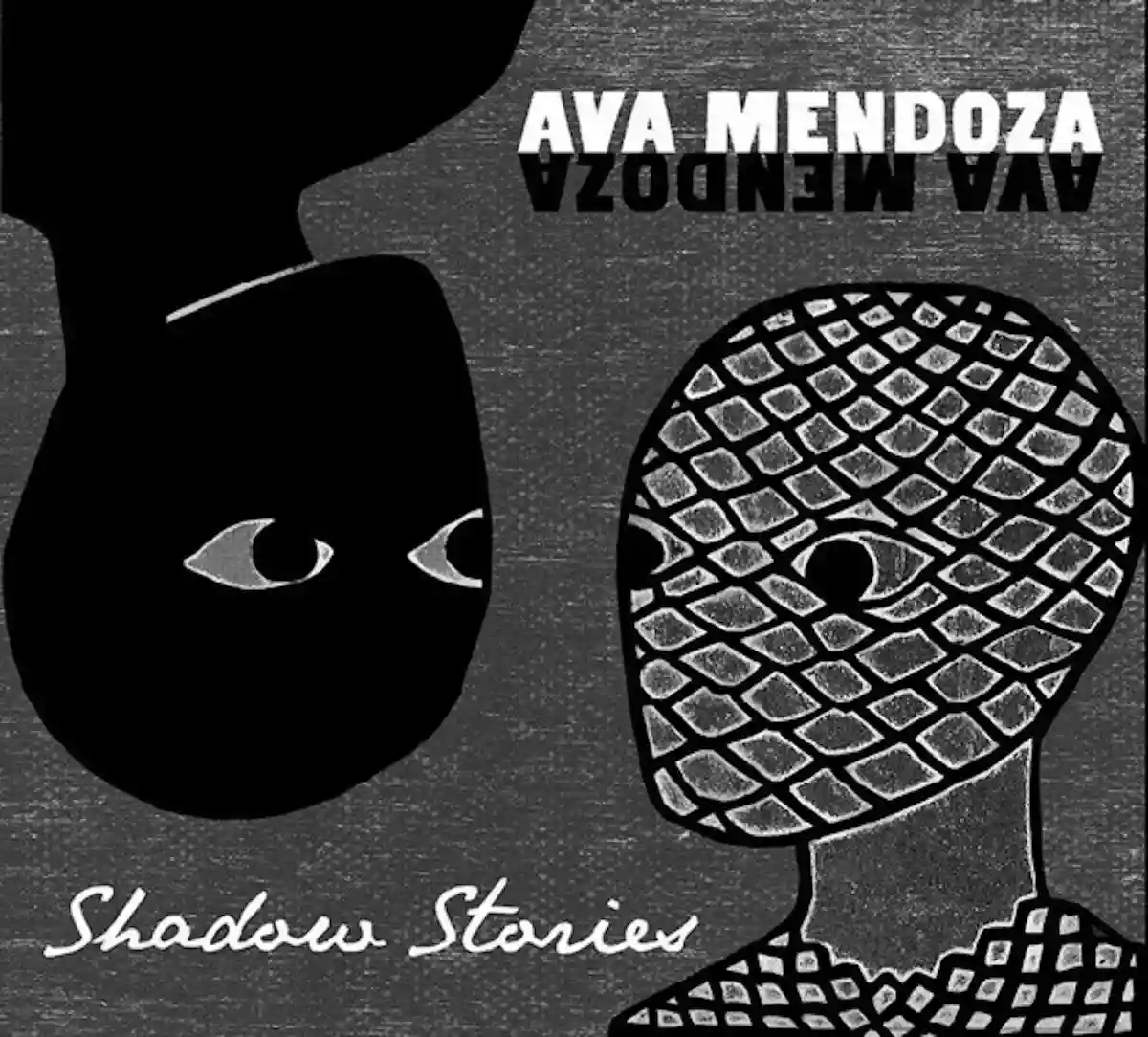
The review examines Ava Mendoza's album 'Shadow Stories', providing a moderate rating of 3 out of 5. The reviewer comments on the musical direction and overall execution. While acknowledging notable aspects, the review suggests the album has both strengths and areas that could be improved. The tone remains balanced and objective throughout.
Ava Mendoza
Ava Mendoza is an American guitarist described in DeBaser’s review as blending classical training and improvisation into a highly personal electric-guitar voice, transforming familiar songs into unpredictable, expressive performances.01 Reviews
