
 •
Rating:
•
Rating:
THE REVIEW
Every night I pick the locks on that white Victorian box...
I find buttons and bones, tiny soldiers, toy trains and murder...
There is a book by Saul Bellow, next to a white Victorian box, on the desk. The book is titled "The Adventures of Augie March" and tells the picaresque story of a man who departs for Mexico in search of new experiences, but above all, of himself.
The story could very well take place in a city in Australia, where a certain Glenn Richards plays in a local band, inspired by the literary pop of the 'Decemberists' and early 'Belle and Sebastian'; and he has a life like many others.
Your store is a small one, your goods have no buyers,
Your parents are raising your children.
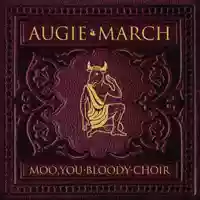
We can imagine that, like a character from Dickens, Glenn finds refuge at night in that small box, which contains his most precious memories. We can imagine that he opens it and holds their third album, "Moo, You Bloody Choir", with a mix of tenderness and anger; and thus we can imagine the rest. The day of departure...
At ten o'clock is when I rise from my grave,
and cast my eyes over the ideas that I couldn't save,
become regret and break upon me now wave after wave,
bid me remember what I done....
the excitement of the moment, the thought of abandoning, along with the places, also the years of his life; the blood rushing through his veins; the Grant Lee Buffalo-style electric guitars ("Just Passing Through").
He looks out the window to gaze one last time at the small street in Melbourne where he has lived his last years, and everything seems to him a re-edition of old atmospheres, of Beatles records ("Thin Captain Crackers") listened to by his parents and carefully lined up inside an old and dusty cabinet.
There's a place I've been told, and when I grow old I may go there,
I've been told that my family's bones may lie under the snow there,
And with my little bag, and with my little dog,
He prepares; then goes out into the street and begins his adventure. A blind beggar plays a ballad imitating Bob Dylan ("Bottle Baby"). Perhaps, not everything is as it seems.
Emotions overlap: the country nostalgia for the lost times ("Baron of Sentiment"), the melancholy (sister of Smith from From a Basement On the Hill) that takes him as he walks down that street he has known for so long - too long? - ("Bolt and Dunstan Talk Youth"); until the final liberation ("Clockwork"), for having left everything behind.
It could be the story of any other person, a pop story as we've heard before; but also an anachronistic poem that does no harm, in these times, to listen to.
Loading comments slowly
Summary by Bot
This review explores Augie March’s third album, Moo, You Bloody Choir, highlighting its rich literary and emotional themes. Drawing comparisons to The Decemberists and Belle and Sebastian, the album conveys feelings of nostalgia, melancholy, and personal journey. The guitars, evocative lyrics, and storytelling evoke both Australian settings and universal experiences. Overall, the album is praised as a poetic and heartfelt musical adventure.Tracklist Lyrics Videos
