
 •
Rating:
•
Rating:
THE REVIEW
One can be a slave to oneself or just a slave, that is either be too much or be nothing.
Ferdinando was obviously too much and had not managed, as he says at the end of the novel, to not give a damn about anything.
Not giving a damn about anything and remaining sane is the only philosophical principle worthy of the name.
Only that philosophy is essentially the impossible and disgust can take unexpected paths.
"There's nothing good in houses," Ferdinando used to say, and he, like all those who are too much, locked the door with a double lock.
In houses, one rots and only the street is good...the usual eternal poetry of the wanderer...in this case, the urban wanderer, because the country roads are awful and lead nowhere.
That's it, one must not give a damn and be wanderers...even if this is just poetry...But men, indeed, only understand money and poetry, that is absolutely nothing.
(then of course the most flamboyant prose of the century...) tra-la-la...(or rather the most flamboyant music of the century) tra-la-la tra-la-la...(since writing is music) tra-la-la tra-la-la tra-la-la
ps: I wrote philosophical, but it is a novel...
Loading comments slowly
Summary by Bot
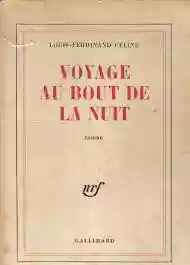
The review delves into the existential themes of Celine's novel, focusing on the protagonist's struggle with self-imposed slavery and disillusionment. It highlights the novel's philosophical yet impossible ideal of indifference as the key to sanity. Urban wandering is praised as poetic, while the powerful prose is compared to music. Ultimately, it appreciates the work as a profound novel filled with flamboyant expression.
Louis Ferdinand Celine
Louis-Ferdinand Céline (born Louis Ferdinand Destouches, 1894–1961) was a French novelist and physician, author of Voyage au bout de la nuit.01 Reviews
