
 •
Rating:
•
Rating: THE REVIEW
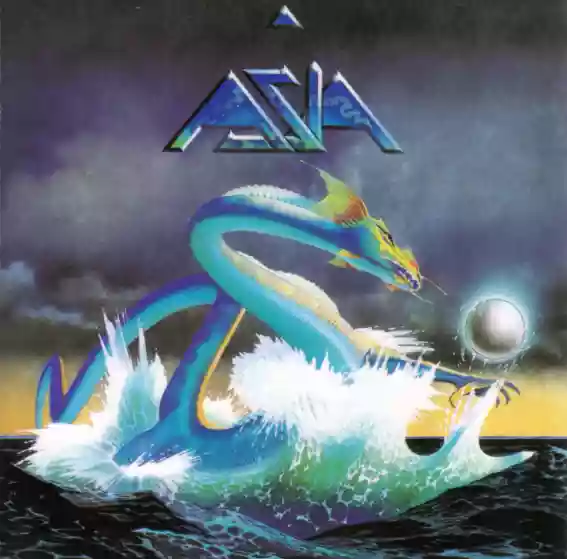
We all sometimes fantasize about unlikely groups that feature that keyboardist we like so much, that phenomenal drummer, and so on, but when this becomes a reality, the expectation of hearing who knows what great music is not always fulfilled. The case of Asia reflects this observation: the supergroup was born in the early '80s and in its most genuine incarnation includes authentic monsters of progressive rock, Carl Palmer on drums, Steve Howe, former guitarist of Yes, John Wetton on bass and vocals, and Geoff Downes, former Buggles and Yes on keyboards and backing vocals. When their debut self-titled album was released in 1982, it was immediately a huge success; the idea of seeing those musicians together fueled the market impressively. The group's style actually has little to do with the old prog; in some keyboard passages by Downes, something resonates, but for the most part, Asia produces rock tilted toward certain very sustained rhythms, with the use of keyboards and vocals that recall certain pseudo Heavy Metal music of those years.
The result is very disappointing, music designed for large arenas does not capture, and songs like "Heat Of The Moment" are indeed suggestive but seem deliberately crafted for immediate chart success, which promptly occurs for both the single and the album. The same goes for "Only Time Will Tell," with Downes' bombastic keyboard opening introducing Wetton's singing, Howe on guitar evokes some emotion for what is perhaps the group’s best track. The rest fades into anonymity, decent consumable rock pieces, "One Step Closer," "Sole Survivor," combined with pieces seeking a more complex atmosphere, "Wildest Dreams." The closure is again fast and pompous rock, "Here Comes The Feeling" in which Palmer shows once more that he is a great drummer, and Downes plays with keyboard riffs accompanying Wetton's singing. In the end, the judgment cannot be positive; the album works for the first listens but then tires and falls into a weak repetition ofsounds and rhythms devoid of feeling, after all, the group's career will immediately enter a downward slope, losing musicians along the way, today only Downes remains to keep alive this band that was born already old. What leaves one puzzled is the enormity of the talent wasted by the four; they made a manner album to survive the '80s, and in part, they succeeded. Howe returned to Yes where he enjoys his luxurious retirement with the others (still in great shape), Palmer occasionally reappears in ELP together with colleagues Lake and Emerson, but otherwise, there's little to remember.
Loading comments slowly
Summary by Bot
Asia's debut album brought together legendary prog rock musicians but shifted toward arena rock with mixed results. While hits like "Heat of the Moment" captured attention, much of the album feels repetitive and lacks emotional depth. Despite individual talents, the album ultimately fails to leave a lasting impact beyond initial success. The band's trajectory soon declined, leaving only Geoff Downes to continue the legacy.Tracklist Lyrics Videos
Asia
Asia are a rock supergroup formed in 1982, widely associated with AOR/pomp rock and arena-oriented songwriting despite members’ progressive-rock backgrounds. The classic lineup is frequently cited as John Wetton, Geoff Downes, Steve Howe, and Carl Palmer, and later eras discussed in the reviews include John Payne on vocals/bass alongside Downes.14 Reviews
Other reviews
By Johnny Bobo
Simply.........................................................................................................................................................................................................................................................
FANTASTIC!!!!!!!!!!!!!!!!!!!!!!!!!!!!!!!!!!!!!!!!!!!!!!!!!!!!!!!!!!!!!!!!!!!!!!!!!!!!!!!!!!!!!!!!!!!!!!!!!!!!!!!!!!!!!!!!!!!!!!!!!!!
