
 •
Rating:
•
Rating:
THE REVIEW
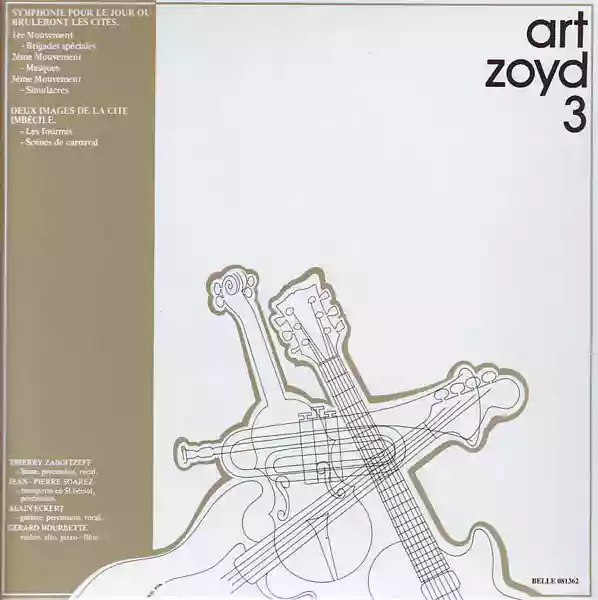
Angles, angles, angles, perfect, like in a nice brutalist project. But also curves, sinuous and justly naughty curves, sudden sharp turns down an urban gorge. No fear of putting the colors of the electric bass alongside woods and a purely colorful piano in the spotlight. No problem with stepping on the noble pedal of the most honest expressionism, yet no hesitation in adorning music with attentive lights and chamber music dynamics. A perfect wonky machinery, in this sense jazz, with a taste for iteration that might remind one of an electronic project based solely on the obsessive sampling of some early-century composer, a sick result, which combines the urban evoked by the bass with the purely white legacies of the strings, a kind of glance into the future in the eyes of a Trakl, or someone similar, horrified by the tentacularity of the modern metropolis. The day when cities will burn. A white blues with a strong touch of catharsis from the ties of convention. But in the end, more grounded, a much less universal result than one might understand from this review, pure seventies distilled in the light of the results most distant from pop AND gratuitous polemic, scandal. Nothing, in the end, outstanding; nothing truly new, nothing banal or easy. But ultimately also modernity in listening, or rather the freshness that can be found in this, perhaps, free jazz but without slippage and dada AND in this modern art incarnated, indeed, in a fixed structure, with ample spaces dedicated to dissonance (or to be more precise: to flair, to freedom), regulated, dissonant as expected, simply fantastically atmospheric, a suitable soundtrack for the favorite artist in describing the modern – or better, the contemporary. The courage of solutions, combined with the follow-up, sparse but present, that the group has enjoyed, makes the album, despite being old, more representative of urban alienation than a new one, perhaps better, but unknown to us (a discourse that can be applied to all of today's avant-garde, perhaps sharp and with a bite but suffering due to the atrophying public caused, also, by projects like this and others even more inhospitable). So in the end, for also getting a group feedback, if we want to call it so, it’s worth returning to these records, which fifty years ago expressed the same things we feel in the desert of 21st-century cities, perhaps in a less accurate way for today, but at least putting a bit of root in a crack of reinforced concrete from some factory still standing and not lost and dispersed in today’s communicative chaos. Again.
Loading comments slowly
Summary by Bot
Art Zoyd's 'Symphonie pour le jour où brûleront les cités' is an intricate work blending brutalist angles with sinuous curves. It combines electric bass with strings within a chamber music context, evoking urban alienation. The album reflects 1970s avant-garde jazz with expressive dissonance and modern structure, offering no easy answers but fresh listening experiences. Despite its age, it remains a relevant and atmospheric commentary on contemporary city life.Tracklist
01 Symphonie pour le jour où brûleront les cités: Simulacres (06:55)
02 Deux images de la cité Imbécile: Les Fourmis (05:35)
03 Symphonie pour le jour où brûleront les cités: Brigades spéciales (13:21)
04 Symphonie pour le jour où brûleront les cités: Masques (08:59)
05 Deux images de la cité Imbécile: Scènes de carnaval (08:51)
Art Zoyd
Art Zoyd is a French avant‑garde music group formed in 1969, known for a chamber‑rock approach that blends contemporary classical writing, electronics, and experimental rock within the Rock in Opposition sphere. Longtime core members included Gérard Hourbette and Thierry Zaboitzeff. The group is acclaimed for albums such as Symphonie pour le jour où brûleront les cités, Génération sans futur, Phase IV, and Berlin, as well as live scores to silent films including Nosferatu, Faust, Häxan, and Metropolis.05 Reviews
