 •
Rating:
•
Rating:
THE REVIEW
“[…] recreate the guitar sound typical of heavy metal on our instruments […] we were interested in developing new techniques for playing the cello […]”
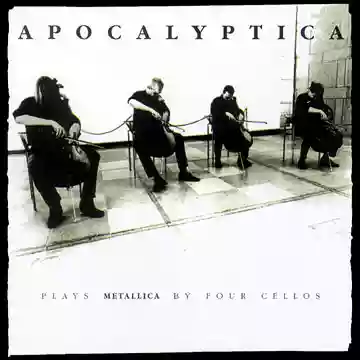
You heard right. Everything can be said about these four cellists of Finnish origin, except that they lack courage. “Plays Metallica By Four Cellos” may be an album of only covers, but it certainly presents a new way of understanding heavy metal. Or rather, perhaps it lays the foundations of what now (this is their debut album, dated 1996), the "Knights of the Apocalypse" love to define as "cello-rock", cello rock. This is probably the greatest merit of Apocalyptica, that of moving away from conventions and presenting to the audience the other side of Metal, the sad and melancholic side that emerges from the low and hoarse notes of a cello; but also that of presenting the flip side of classical music, with the same cello playing on the string of the broken and angry rhythms of a heavy song.
The album contains eight tracks, drawn with fair skill from Metallica's first five albums. Welcome Home (Sanitarium), Master of Puppets, The Unforgiven, Creeping Death, just to name the most successful interpretations. But all deserve a listen. Paradoxically, some tracks have more expressive power than the original, just listen to the chorus of The Unforgiven, as tormented and melancholic as it is rarely remembered from the interpretations of Hetfield and company. Or the intro of Welcome Home Sanitarium, a pizzicato so simple and delicate that it almost seems like an arpeggio, were it not for the naturally low tones of the cello. And the whole song, as in the original, is built on a delicate balance that seems impossible to break, except in the finale crescendo of anger and desperation.
Summing up, I believe this album laid the foundations of a fusion between classical and hard rock desired by many, sought by some, but truly achieved by only a handful of composers on the face of the earth: Paavo Lötjönen and company are among those few who can boast of it, also given the subsequent results achieved with “Cult” and “Reflections.” I believe that anyone who loves musical experimentation will enjoy listening to this group, which by the way is endowed with a considerable amount of technical knowledge (at the time the four met at the Sibelius Academy (Helsinki ?); nor will they be disdained by the lover of pure metal, if I may make predictions, nor the lover of classical music. Once again confirming how thin the line is between genius and madness.
Loading comments slowly
Summary by Bot
Apocalyptica’s debut album redefines heavy metal by skillfully interpreting Metallica songs on four cellos. The album highlights emotional depth and innovative techniques, blending classical music with metal. Known as pioneers of 'cello rock,' they offer a fresh and melancholic perspective on iconic tracks, appealing to both metal and classical music fans. Their technical mastery and bold approach set a new standard in musical experimentation.Tracklist Lyrics
Apocalyptica
Apocalyptica are a Finnish cello-metal group formed in Helsinki in 1993. Trained at the Sibelius Academy, they first gained fame reinterpreting Metallica on four cellos, then moved into original material and high-profile collaborations. Key members include Eicca Toppinen, Paavo Lötjönen, Perttu Kivilaakso, and drummer Mikko Sirén.08 Reviews
