
 •
Rating:
•
Rating:
THE REVIEW
In the vast catalog of Antonio Vivaldi's works (approximately 1,000 numbers including the appendices), chamber music represents a not inconsiderable part and probably one of the least known compared to the very popular concert and sacred production, to which opera has been added in recent years. For the latter, consider, for example, the recent productions by the label "Naive" or the opera arias rediscovered and masterfully performed in concert form by Cecilia Bartoli.
A good part of this chamber production is included in the collections of Opera 1, 2, and 5, easily listenable on record (the complete edition by Philips is quite famous).
A series of Sonatas remain without a unified conception which music historiography (and consequently the record industry) catalog according to the places where the respective manuscripts are rediscovered.
This is the case of this collection of "Sonatas from Dresden" for Violin and Continuo Rv 5, 15, 26, 28, and 34 according to the classification by Peter Ryom, rescued from oblivion through the foresight of Johann Georg Pisendel (1687-1755), a friend before being a student of the Venetian Master, who took them with him when he returned to Dresden in 1717.
A round of applause goes to the trio Biondi, Naddeo, and Alessandrini for giving us the opportunity to listen to these rarities.
With this premise, it is even more difficult for me to express my disagreement with the performance proposed by the three. I do not exclude the possibility that I am mistaken, having formed a wrong idea of how to present Vivaldi's chamber works, which we can simplistically consider as the usual "training ground" for the composer to experiment with his art before astonishing his audience with quite different effects.
That said, I would have expected a "comforting" brilliant reading, extremely rhythmic and flowing, rich in harmonic contrasts and playful with the highlighting effects of the basso continuo that I find in other recordings of Venetian chamber music.
Instead, we are, faced with a performance that I do not want to define as "listless" but at least "strained" - if I may use the term - in the sense of constrained, not very spontaneous. The sound of the violin, prominently over the harpsichord and the cello, has a "fat" sound, anything but elegant, burdening the already difficult digestion of a repertoire characterized by a certain stylistic uniformity.
Therefore, I find it difficult to finish listening to the entire CD, which I am forced to dose over several sessions. At no point can I let myself be carried away by the music, and I am left with the idea that the trio did not dedicate themselves with the right commitment that these pieces require.
Recommended only to "purists" and those who have the expertise to explain if this is how Vivaldi should be performed. In that case, I will consider whether to abandon or pursue these paths...
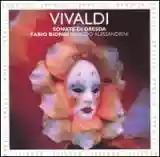
Fabio Biondi (violin), Maurizio Naddeo (cello), Rinaldo Alessandrini (harpsichord), Opus 111, 1996, DDD
Loading comments slowly
Summary by Bot
The review discusses Antonio Vivaldi's lesser-known chamber sonatas from Dresden, performed by Fabio Biondi, Maurizio Naddeo, and Rinaldo Alessandrini. Despite the historical value, the critic finds the performance strained and lacking spontaneity, with an overly heavy violin sound. The reviewer struggles to stay engaged through the CD and recommends it only to experts and purists familiar with Vivaldi's style.Tracklist
01 Sonata Rv26, F. XIII no. 15, in sol minore (00:00)
02 Sonata Rv34, F. XIII no. 16, in si bemolle maggiore (00:00)
03 Sonata Rv5, F. XIII no. 10, in do minore (00:00)
04 Sonata Rv15, F. XIII no.9, in re minore (00:00)
05 Sonata Rv28, F. XIII no. 5, in sol minore (00:00)
06 Sarabanda In Do Maggiore (00:00)
Antonio Vivaldi
Antonio Vivaldi (1678–1741) was a Venetian Baroque composer, virtuoso violinist, and Catholic priest. Renowned for concertos—especially Le quattro stagioni—he worked for the Ospedale della Pietà, wrote operas and sacred music, and influenced composers including J.S. Bach.07 Reviews
