 •
Rating:
•
Rating:
THE REVIEW
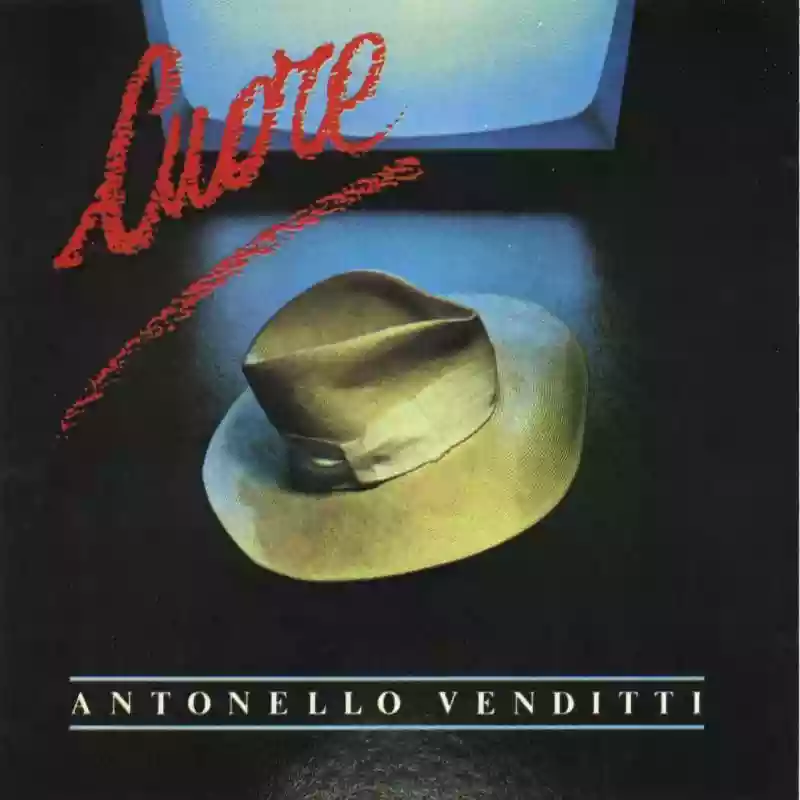
Many long-time fans of Venditti were quite upset when the National Antonello showed us his "Heart" without any reservation. It was July 1984: the years of protest were a very distant memory, and it was indeed the years of excess and social life, of Craxi and Reagan. Even pop music was undergoing a radical transformation: from a compositional point of view, the musical structure was being simplified, favoring emotional and rhythmic transport, with groundbreaking novelties like the fairlight programmable synthesizer, electronic drums from Linn and Simmons, and digital mixing coming to the fore. Everything mixed together to create a sound that was substantial, glossy, clear, soft, and powerful at the same time, of a cleanliness and freshness never heard before, which Peter Gabriel had been the most well-known forerunner of.
"Heart" musically encompasses all of this: despite being over 23 years old, it doesn’t sound old at all, quite the opposite! And the clear break from the previous "Under the Rain" (1982) is evident, which, in comparison, seems much more dated than the mere two years that separate it from the work in question. It is also the first album entirely mixed using the digital Mitsubishi DBX700 technique.
The musical immediacy is overlapped by a spontaneous and unprecedented lyrical immediacy (foreshadowed by "Thanks Rome" the previous year): Antonello in this album lets himself free, liberates himself with vigorous conviction of his inner torments, and precisely for this "Heart" is a sincere, moving, and absolutely not artificial album, which conveys significant energy and good humor to the listener.
No drop in tone across these eight tracks, of which five immediately become authentic and essential cornerstones of all of Vendittiana’s production: the extremely inspired "Night Before Exams" (entirely on piano with the famous orchestral crescendo ending), the photographic "Here", the hit "You Would Need a Friend", the electric reggae of "Piero and Cinzia", and the wonderful "Star", a sincere hymn to hope devoid of rhetoric.
But it would be unfair not to mention "No Video Ever" (the suggestive clear piano notes playing the melody of the refrain), the powerful "It’s Not Cocaine" (with two minutes of instrumental outro between keyboard and electric guitar solos, spiced with Simmons bursts), and above all the very amusing "The Optimist", an effective satire of the socialist in power who had less than nothing of "socialist". The track, which at the time angered the Craxians (famous is Bobo Craxi’s warning), in hindsight is clearly ahead of its time: the verse "he has a serious and frowning look when he talks at length about the State, but then he lights up immensely when lunch time comes" brings back the memory of the "Clean Hands" investigation which only eight years later would finally shed light on all the "magna-magna" of that political class that everyone knew about but no one talked about (for the record, Beppe Grillo would do it at Sanremo 1986 with the famous joke about the socialists in China, and it would cost him a long expulsion from state TV).
Venditti’s essential discography can ideally be divided into three phases: the "committed" one (1972-1977), the "transitional" one (1978-1982), and the "sentimental" one (1983-1992), which find their respective highest expressions in "Lilly" (the absolute masterpiece, in the opinion of who writes, and first great public success, 1975), in "Under the Sign of the Fish" (Italian best-seller of 1978), and in "Heart".
From the second half of the '80s to the early '90s, Venditti’s music would follow the path traced by "Heart", albeit with a few too many smudges, but it would deliver unprecedented greater success to the singer-songwriter: "Heart" would be the best-selling Italian album of new material between 1984 and 1985, "Venditti and Secrets" would be in 1986-1987, "In This World of Thieves" (1,500,000 copies!) in 1988-1989, "Welcome to Paradise" (another 1,500,000 copies!) in 1991-1992.
Loading comments slowly
Summary by Bot
Antonello Venditti's 1984 album 'Cuore' marked a significant stylistic shift toward modern synth-driven pop and digital mixing. Despite initial fan concerns, the album remains fresh and emotionally immediate. It features standout tracks blending music innovation with heartfelt and socially conscious lyrics. 'Cuore' represents the pinnacle of Venditti's sentimental phase and a milestone in Italian pop music.
Antonello Venditti
Italian singer-songwriter and pianist born in Rome in 1949. Debuted in the early 1970s, rose with Lilly (1975) and Sotto il segno dei pesci (1978), and scored major 1980s hits like Cuore and In questo mondo di ladri. Known for Rome-themed anthems and vivid social storytelling.45 Reviews
Other reviews
By Valeriorivoli
Cuore gave me plenty, back in those distant 80s.
Antonello marked all the happy moments.
