
 •
Rating:
•
Rating:
THE REVIEW
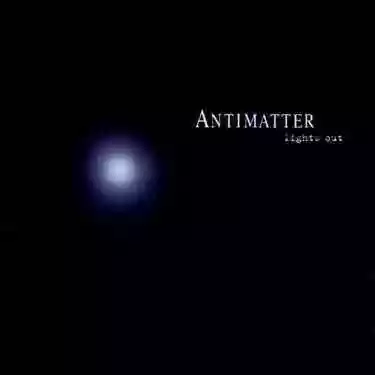
Today I want to hurt myself. I want to explore the deepest recesses of my soul, look into the abyss of solitude and see nothing but an ever-distant light. And no soundtrack could be better than this Antimatter.
Born from a branch of Anathema (for those who don't know them, one of the most brilliant bands on this planet, capable of exploring both the territories of extreme doom-gothic metal and those of the most experimental Radiohead school rock), Antimatter draw heavily from both the trip-hop masters of Bristol, Massive Attack and Portishead (the masters of "whispered discomfort", halfway between electronic and chill-out) and the same gothic and "nocturnal" roots of Anathema.
And this "Lights Out", released two years after the excellent "Saviour", is a hallucinatory journey through the most inaccessible abysses of the human mind. There are no stable points of reference in the 51 minutes of this work, no certainties: the sounds seem to come muffled, undefined shapes produced by a soul that doesn't suffer, that doesn't scream its pain to the world, but that simply resigns itself in the face of the disconcerting cruelty of things. "Everything you know is wrong", everything you know is wrong, says one of the most successful tracks of this work.
The album opens with the piercing sound of a war siren introducing the splendid title track. But the anticipated fury doesn't come to fruition: instead, it dissolves into vague electronic atmospheres, over which a feeble female voice reigns, reciting its solitude. "Lights out as you hit the ground", lights out as you hit the ground...
The following "Stone" is a delicate electronic ballad, interspersed with a rougher part in pure Anathema style, and then closed by a narrated voice in "news style" (did someone say Dream Theater?) and its reflections on human nature.
And now the genuine 3 pearls of the work. "Dream" is probably one of the most heartbreaking melodies ever conceived by the human mind; probably the most easy-listening passage of the entire album, but chiseled with avant-garde touches that make it unique, a female voice follows a melodic line that embeds into the listener's mind from the first listen, while keyboards first and violins later embroider a unique fabric of notes. The percussion work is also remarkable in this track, especially in the finale where obsessive rhythms of a snare drum in delay and toms, dominating alongside the violins, create a very original combination that beautifully closes one of the album's highest peaks.
It's now the turn of the wonderful "Everything You Know Is Wrong", where a male voice expresses its absolute disenchantment. "I'm sorry to confuse you, but everything you know is wrong". It feels like experiencing Descartes again, with his absolute doubt, with his vision of reality as deception. Or the more existentialist Schopenhauer, viewing reality as an illusion... an illusion that can be defeated only by lifting that mysterious "veil of Maya", hiding the cruelest reality from our eyes. The piece is closed by a marvelous keyboard solo, just supported by the deep bass rhythms of Duncan Patterson.
In the subsequent "The Art Of A Soft Landing" the moving voice of Mick Moss peeks in again, crafting a very refined electronic work, where a distorted guitar and a piercing scream appear in the distance only at the end: it's almost the moment of catharsis in the album, a few seconds where inner discomfort takes an almost tangible form, only to suddenly retreat back to the deepest recesses of the self, accompanied solely by the desolate notes of keyboards.
"Reality Crash" is another beautiful ballad, dominated by an absolutely leading bass and a unique instrumental weave, where the delicate melody of a transverse flute appears both at the beginning and at the end.
"Expire" is a track that wouldn't look out of place on "100th Window" or on "Mezzanine" by Massive Attack: 8 minutes of pure trip-hop. The female voice is no longer delicate and muffled as in previous songs, but becomes restless, troubled, while repeating, almost like a mantra, "I've a solution. Final solution", and the electronic bases become cold, artificial, light years away from the enveloping melodic lines emerging from the other songs.
Almost serving as a decompression chamber for the previous track and for the entire album, comes the final "Terminal", an exclusively instrumental track opened delicately by arpeggios of an acoustic guitar first and then by a harp. The hues then become dark in the second part, where the sound of synthesizers deepens and faint background noises start to be heard. The album is then closed by a continuous electronic ticking, almost like the cold sound of a machine monitoring the heartbeats of a dying patient. It is this sound that closes the album, almost symbolizing the death of all hope, while all lights go out.
In conclusion, this "Lights Out" is not an album for everyone. It is an existentialist and "nocturnal" album. It is an album to be listened to with lights out, and even with eyes closed, to let oneself be transported on a journey within one's mind, where the great questions and great fears still reign solitary. It is an album that hurts, especially if listened to many times, penetrating into your guts from the first listen as only great masterpieces can do. And it is a masterpiece unjustly relegated to a niche in the vast musical panorama, a masterpiece almost passed unnoticed, and that would deserve a careful listening by everyone.
Loading comments slowly
Summary by Bot
Antimatter's 'Lights Out' is a haunting and introspective album blending trip-hop, gothic rock, and ambient sounds. The work explores deep existential themes and solitude through atmospheric melodies and innovative instrumentation. Praised as a dark masterpiece, it offers a unique journey into the human mind’s recesses and emotions. It’s recommended for listeners seeking profound and melancholic musical experiences.Tracklist Lyrics
Antimatter
Antimatter is a UK dark/alternative rock project formed in 1998 by Mick Moss and Duncan Patterson (ex‑Anathema). Early albums fused trip‑hop and ambient electronics with acoustic textures and female vocals; following Patterson’s departure after Planetary Confinement (2005), Moss continued the project with a more song‑driven, guitar‑led approach.06 Reviews
